
What this exercise trains
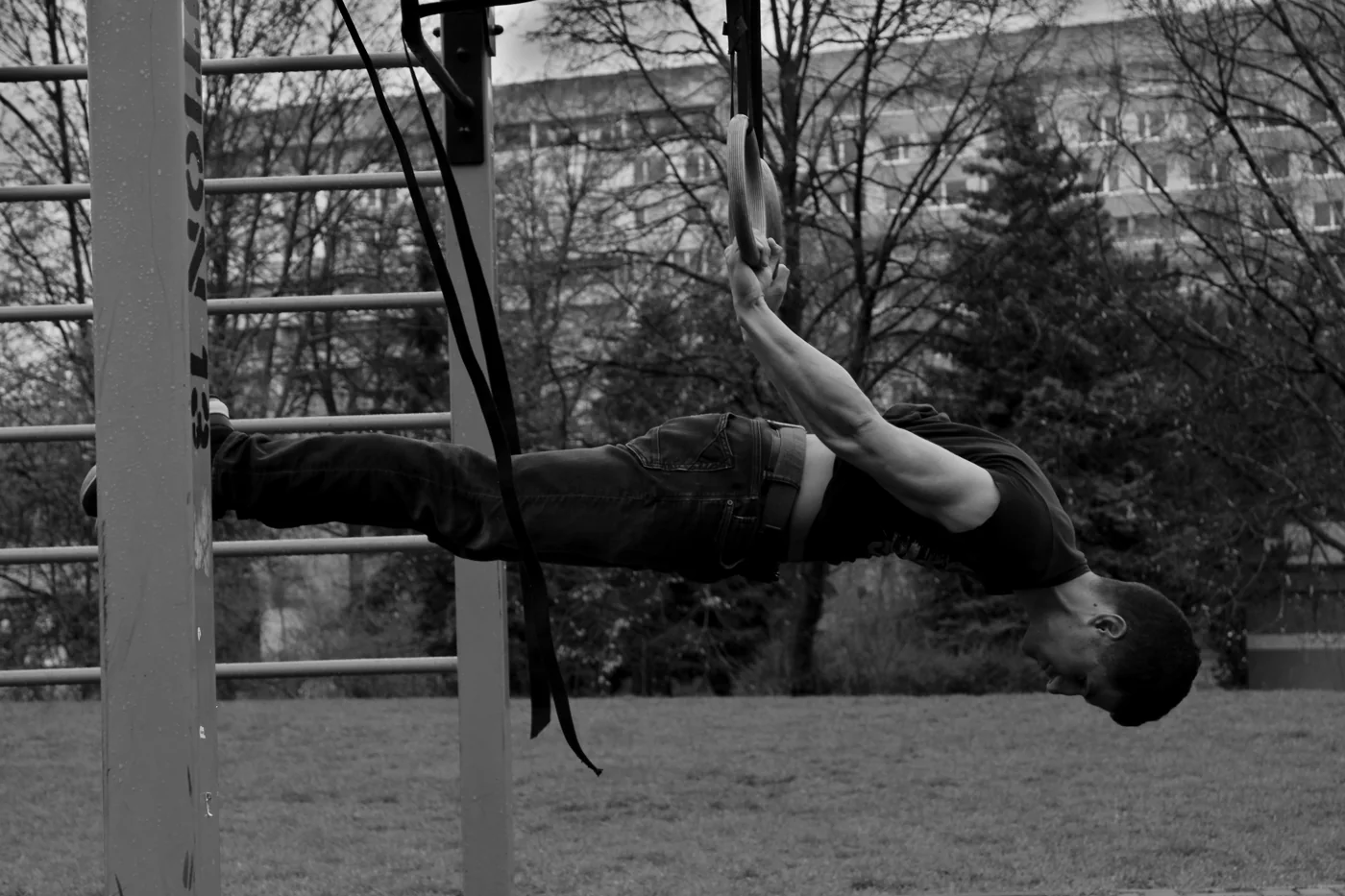
The back lever holds the body facing downward with the arms behind the torso. It requires whole-body tension and shoulder control in a specific position that deserves its own preparation.
Treat the transition into and out of the hold as part of the skill. Build shoulder range and tolerance of straight-arm loading progressively. Supported positions let you learn the route and return while controlling how deeply the shoulders move.
Back Lever
The full straight-body hold creates a long lever with the shoulders extended behind you. It is an advanced rings or bar skill. Shorter shapes and controlled entries come first; do not drop into the position hoping the shoulders will catch you.
- First master a comfortable tucked inversion and controlled shoulder range on low rings.
- From the inverted hang, lower your braced body toward horizontal facing down, arms straight behind you; return under control without forcing your shoulders deeper.
Loading connects to YouTube and sends your IP address and technical data to Google. The written guide works without the video.
PrivacyTechnique points to remember
The back lever loads the shoulder with the arms behind you. Enter under control and keep a way back; do not let fatigue drop you into greater shoulder extension.
Start easier, progress deliberately
Begin with a supported compact tuck and manageable range. Open the hips after entry and exit are steady. A more demanding grip is not a required next step.
Where this exercise fits in your workout
A few attempts early in the session leave time for a calm entry and exit. Record grip, assistance and hold time. Stop if you feel painful pulling in a shoulder or elbow rather than holding through it.
Warm up with easier sets before these working sets.
| Exercise | Sets | Repetitions, duration or distance | Rest |
|---|---|---|---|
| Tuck Back Lever | 3 | 5 seconds | 2 to 3 minutes, longer if needed |
Skin the Cat
This rotation moves the body through an inverted position toward a behind-the-body hang and back. It practises transitions rather than only holding a lever. Low rings, foot assistance and coaching help you learn the route without being trapped at the deepest point.
- Learn supported inversions with a coach before attempting this on secure low rings.
- Tuck your knees and rotate backward slowly through an inverted hang, then reverse; keep elbows straight and stop before shoulder stretch becomes uncomfortable.
German Hang
The body hangs with the arms behind the torso, placing the shoulders in a demanding range. It may form part of advanced skill preparation but is not a general beginner stretch. Use supported, limited exposure with guidance and a clear way out.
- Learn the shoulder position with coaching and foot support on low, secure rings.
- With arms behind you and elbows straight, let your feet control a shallow stretch; keep breathing and leave the position before any pinching or pain.
Tuck Back Lever
Bringing the knees in shortens the body lever while preserving the distinctive shoulder position. It lets you explore holding the shape with less demand than straight legs. The tucked shape still needs preparation; it does not remove the shoulder-range requirement.
- Use secure rings only after coached inversion and shoulder preparation.
- From an inverted hang, tuck both knees and slowly lower your hips behind your arms.
- Keep your torso horizontal facing the floor and elbows straight; return before shoulder control fades.
One-Leg Back Lever
One straight leg lengthens the lever while the other remains tucked. This can provide a step between compact and longer holds. Alternate sides and keep the pelvis aligned; only extend the leg as far as the shoulders and trunk remain controlled.
- Use secure rings only after coached inversion and shoulder preparation.
- From a stable tuck back lever, extend one leg without turning your hips; alternate sides.
- Keep your torso horizontal facing the floor and elbows straight; return before shoulder control fades.
Straddle Back Lever
Spreading the legs changes the lever while keeping both knees straight. It may offer a manageable stage toward a full back lever. The benefit depends on your comfortable hip opening, and extra width should not be forced to compensate for an uncontrolled shoulder position.
- Use secure rings only after coached inversion and shoulder preparation.
- After mastering easier back levers, extend both legs wide while holding your hips level.
- Keep your torso horizontal facing the floor and elbows straight; return before shoulder control fades.
Try a tool
Read next
Sources
- GMB Fitness: Front lever and back lever tutorial ↗
- ACSM (2026): Resistance Training Prescription for Healthy Adults ↗
- FitnessFAQs: How to Back Lever (NEW METHOD) ↗
Ondra7575, Wikimedia Commons · CC BY-SA 4.0 · Resized and converted to WebP for this website.
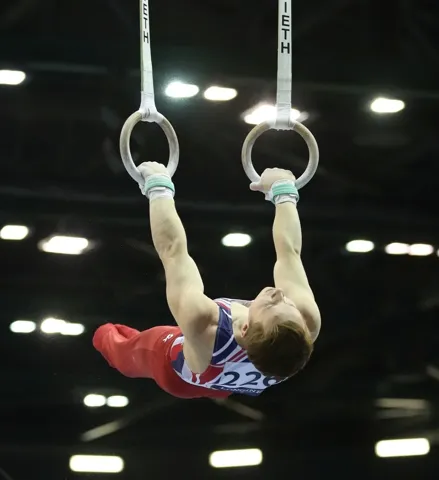
Martin Rulsch, Wikimedia Commons · CC BY-SA 4.0 · Resized and converted to WebP for this website.
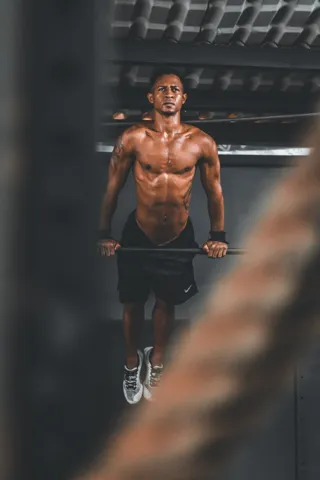
Brian Silva / Pexels · Pexels License · Resized and converted to WebP for this website.
Ketut Subiyanto / Pexels · Pexels License · Resized and converted to WebP for this website.