
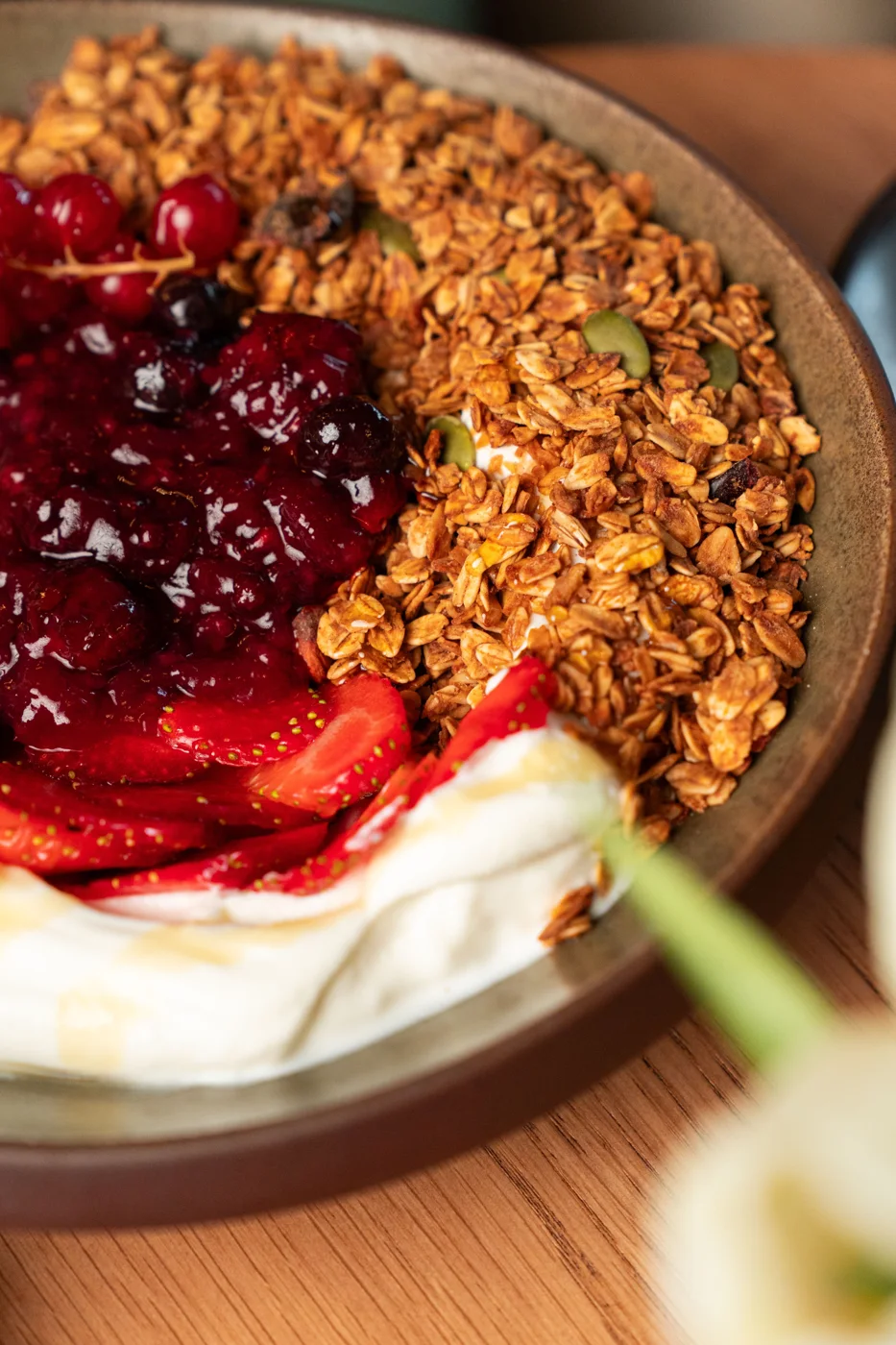
Start with the food, then choose the flavour
A useful breakfast has a noticeable protein food, something that provides energy, and fruit or vegetables you enjoy. Think yogurt with oats and berries, eggs with bread and tomatoes, or tofu alongside rice and vegetables.
The protein food gives the meal a clearer centre than simply adding a few seeds to a bowl of cereal. Bread, oats or rice still belong. If you regularly get hungry soon afterwards, the whole breakfast may need to be larger, not just higher in protein.
For a sweet breakfast, use the yogurt you actually enjoy
Skyr, quark and strained yogurts are convenient options. Their protein content varies, so compare the label rather than assuming every “Greek-style” pot is the same. Add oats or bread on the side, then fruit for flavour and texture. Frozen berries can be useful; follow any heating instructions on their package.
If you avoid dairy, a protein-rich soy yogurt alternative can work well. Coconut and almond versions often have different protein levels. A preferred low-protein yogurt is still usable, but it may need another protein food alongside it rather than being the only one.
For savoury mornings, make more of familiar staples
Eggs on toast, cottage cheese with bread, or tofu with leftover rice give you different textures from another sweet bowl. Beans on toast are another straightforward choice. Vary the vegetables and seasoning according to taste; breakfast does not have to look the same every day.
With only five minutes in the morning, cottage cheese on bread is quicker than a cooked breakfast. Leave the eggs for a morning when you can enjoy making them. If you are packing breakfast to take out, keep chilled foods in the fridge until you leave and use an insulated bag with two frozen ice packs. Put the food back in a fridge when you arrive and keep it chilled until you eat.
How much protein is in your portion?
Use the food label and your usual serving to answer that question. If a yogurt contains 10 g protein per 100 g, 250 g provides 25 g. That is a calculation with an example label, not a universal value for yogurt. The oats or bread add further protein too.
You do not need to turn every breakfast into a competition for the largest number. Your daily amount and other meals matter. The main protein guide explains a useful range for strength training; breakfast is one practical opportunity to spread it through the day.
Prepare breakfast once and save the morning decisions
For an actual make-ahead recipe, the peanut butter overnight oats below include quantities and preparation instructions. They need at least six hours in the fridge. Make them for the next morning and keep them chilled on the way to work. A bag on a warm train is not refrigeration.
Another easy approach is to pack yogurt and fruit together, with dry oats separately if you prefer some texture. Follow use-by dates and storage instructions. You can prepare one breakfast to try before committing to five matching jars and a week of the same flavour.
Adapt it to appetite and training time
If you cannot face a full breakfast immediately after waking, split it: a small portion first and the rest later. For training shortly after getting up, a large bowl rich in fat and fibre may feel uncomfortable. A smaller familiar snack before training and breakfast afterwards can be easier.
If your stomach is comfortable and you have time, eating a normal breakfast before exercise is also an option. The early-morning-training guide helps you choose according to the session. There is no need to force the biggest breakfast into the shortest gap.
Keep two options in rotation
Pick one sweet and one savoury breakfast for the coming week. Buy their main ingredients and try each on an ordinary morning. Notice whether you enjoy it, have enough food and can prepare it without rushing. Those are good reasons to keep it in rotation.
Protein powder can be convenient, but these meals show how ordinary foods can do the job. Start with the version that fits your kitchen, budget and appetite. The habit you can repeat matters more than an impressive breakfast you only make once.
Try a tool
Read next
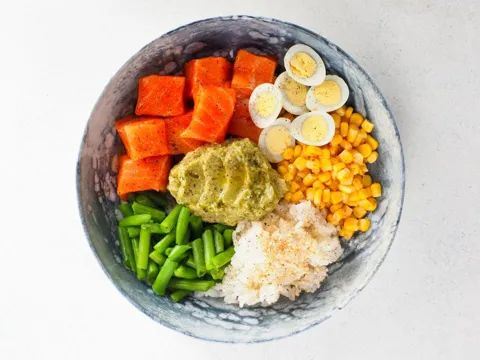


Sources
- British Dietetic Association: Healthy breakfast ↗
- NIH Office of Dietary Supplements: Exercise and Athletic Performance ↗
- VA Healthy Teaching Kitchen: Creamy Peanut Butter Overnight Oats, 2026, p. 24 ↗
- Sports Dietitians Australia: Pre-exercise fuelling ↗
- USDA: Keeping bag lunches safe ↗
Amine Kübranur Çakıroğlu / Pexels · Pexels License · Resized and converted to WebP for this website.
VA Healthy Teaching Kitchen · Public domain · U.S. Department of Veterans Affairs
cottonbro studio / Pexels · Pexels License · Resized and converted to WebP for this website.