
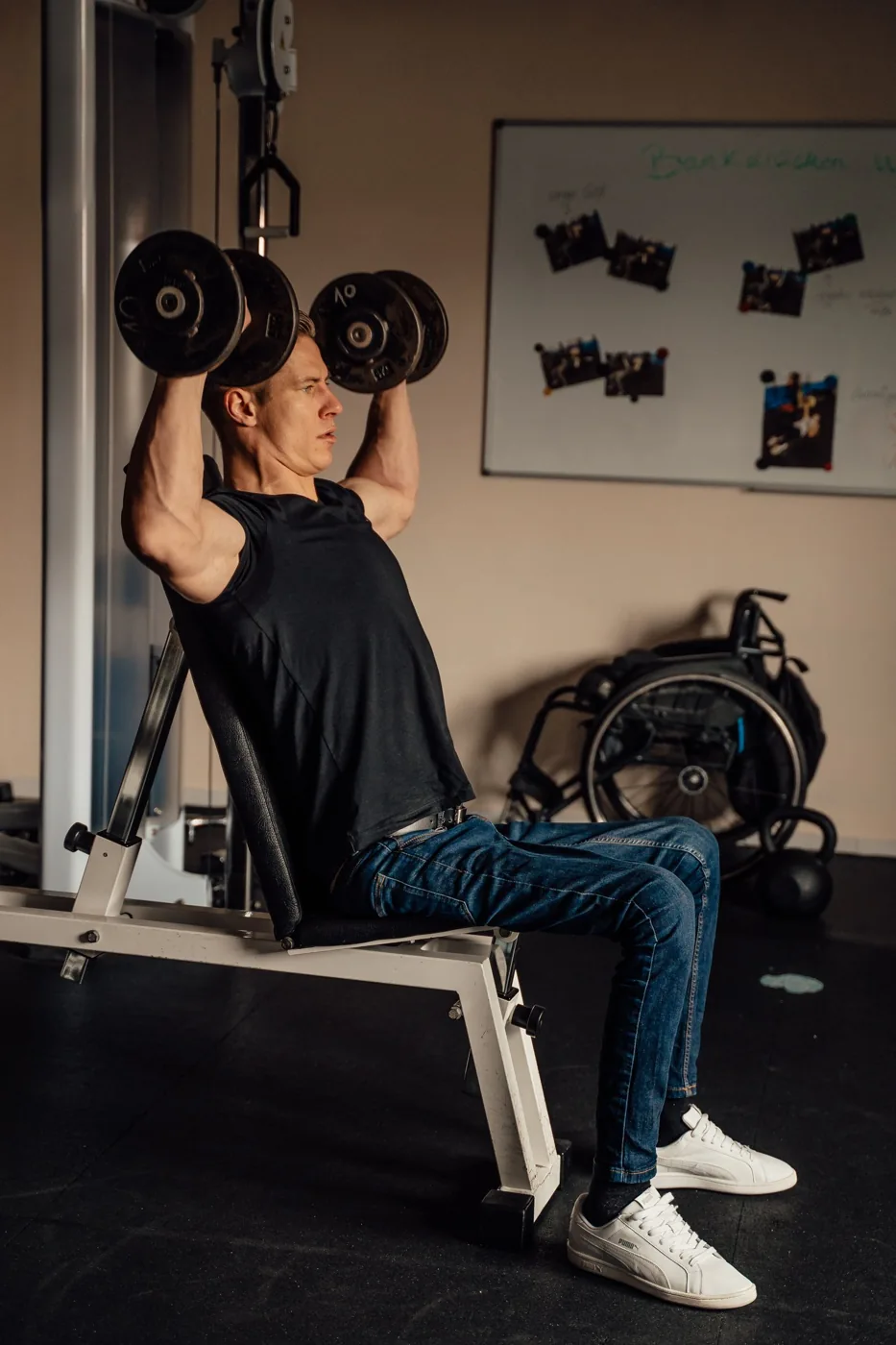
How movement happens
Skeletal muscles generate pulling force and transmit it to bones through tendons. Joints allow movement between bones, while ligaments connect bones and help guide them. Your nervous system coordinates the muscles involved. A squat therefore involves more than your thighs: your hips and trunk also contribute to controlling the movement.
Lower-body bending and straightening
Standing up from a squat involves straightening the knees and hips. The front thigh muscles and gluteal muscles do much of that work. A Romanian deadlift puts more movement at the hips and strongly involves the back of the thighs and the glutes. “Training legs” can therefore describe several different movement tasks.
Recognise the job of a movement
The table names major contributors, not every muscle involved. A muscle can move one joint while helping stabilise another part of the body. Exercise names alone do not reveal the complete training stimulus: position, range and load also matter.
| Movement | Example | Main task |
|---|---|---|
| Knee and hip extension | Squat | Quadriceps and gluteal muscles help you stand up. |
| Hip hinge | Romanian deadlift | Gluteal muscles and hamstrings work as the hip moves. |
| Horizontal push | Push-up or bench press | Chest, front shoulders and triceps work together. |
| Horizontal pull | Row | Back and arm muscles pull while shoulder blades move. |
| Vertical pull | Pull-up | Back and elbow flexors help bring you towards the bar. |
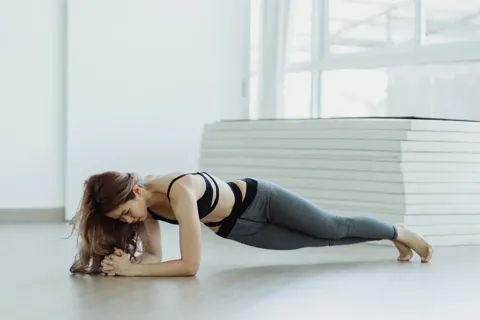
| Resist trunk movement | Plank | Trunk muscles help maintain the position. |
Upper-body pushing and pulling
Push-ups and bench presses combine movement at the shoulder and elbow. The chest, front shoulder and triceps work together. Rows and pull-ups involve several back and arm muscles, with the shoulder blades also moving. Push and pull categories help with planning, but an individual exercise still needs a closer look.
Your trunk can hold and move
Trunk muscles can bend or rotate the upper body and resist an external force. A plank mainly challenges you to hold a position. A controlled trunk curl deliberately changes that position. Both tasks can belong in a programme. Feeling one muscle work does not reveal everything about how the other involved structures are being loaded.
Use anatomy to choose an exercise swap
If a bench is occupied, a push-up or chest-press machine can cover a similar pushing task. A biceps curl cannot cover the whole task of a row, even though the elbow bends in both. Decide which movement and muscle groups you want to keep before choosing the replacement.
For example, a plan already containing squats may use a Romanian deadlift to add a hip-hinge task. That does not make both exercises interchangeable set for set: technique and fatigue differ. Learn the new setup, begin with a manageable variation and record it under its own name so comparisons stay meaningful.
Turn the movement patterns into a routine
A squat, a hip hinge, a push and a pull already cover several major movements. A trunk exercise can complement them, and they can be spread across different training days. Start a new variation with a load you control well. If a movement causes pain, an individual assessment is more useful than assuming one particular muscle must be weak.
Try a tool
Read next


Sources
- OpenStax: Anatomy and Physiology 2e, skeletal muscles and lever systems ↗
- NIAMS: Sports injuries (reviewed 2024) ↗
Alesia Kozik / Pexels · Pexels License · Resized and converted to WebP for this website.
Ketut Subiyanto / Pexels · Pexels License · Resized and converted to WebP for this website.
Andrea Piacquadio / Pexels · Pexels License · Resized and converted to WebP for this website.