
What this exercise trains
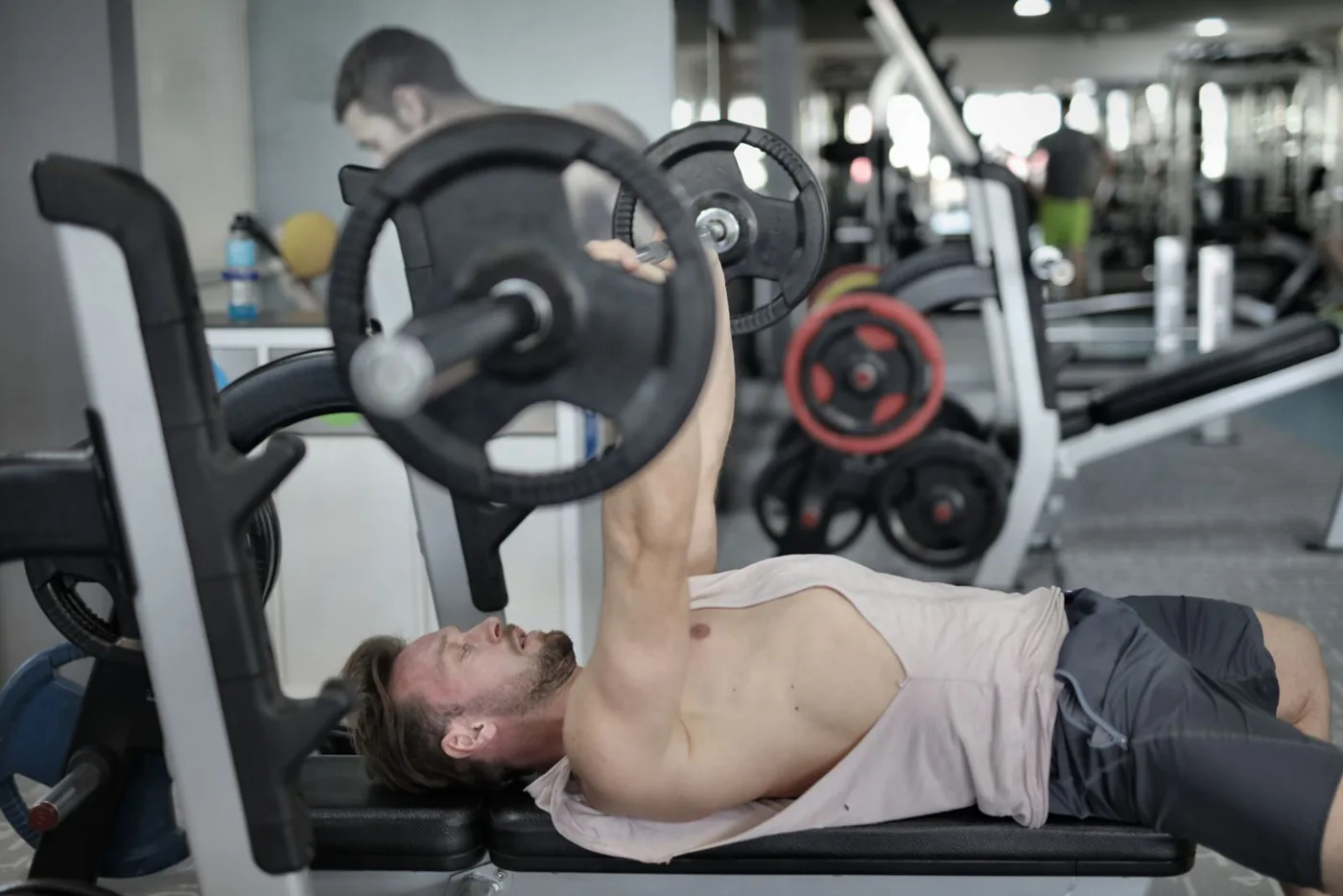
Bench presses build strength in your chest, shoulders and triceps. Your chest brings your upper arms forward, while your triceps straighten your elbows. Whether you want to press heavier weights or build muscle, repeating the same lift lets you see how many reps you can manage with a given load.
Which variation should you start with?
One pressing exercise is enough to get started. A chest press machine lets you focus on pushing and lowering. Dumbbells give you more freedom to choose your grip and arm path. If a stronger barbell bench press is your goal, practise that lift. Inclines, pauses and other variations can come later when they serve a clear purpose.
Bench Press
The bar connects both hands and allows small, measurable load increases. Choose it when you want to track pressing strength systematically or practise the bench press as a powerlifting movement.
- Lie on a flat bench with both feet firmly on the floor.
- Draw your shoulder blades together; keep your upper back and glutes on the bench.
- Wrap your thumbs around the bar.
- Set the rack height so you can unrack without shrugging, then hold the bar still above your chest.
- Lower the bar slowly towards your lower chest.
- Keep your wrists above your forearms and avoid bouncing the bar off your chest.
- Press back up.
- Guide the bar into the rack when the set is over; adjust safety arms beforehand or use a spotter for heavy bench presses.
Loading connects to YouTube and sends your IP address and technical data to Google. The written guide works without the video.
PrivacyTechnique points to remember
Set the rack so you can unrack without shrugging. If your wrists fold back, stack them over your forearms; if the bar bounces off your chest, slow the descent.
Start easier, progress deliberately
A chest press machine or lighter dumbbells can simplify starting and finishing the set. Add repetitions within your chosen range before increasing weight; use safety arms or a spotter for barbell sets.
Where this exercise fits in your workout
Start your chest workout with bench presses when improving your bench is the priority. Follow with flyes or triceps work. If your plan also includes dips or shoulder presses, allow for that pressing work when choosing additional sets.
Warm up with easier sets before these working sets.
| Exercise | Sets | Repetitions, duration or distance | Rest |
|---|---|---|---|
| Bench Press | 2 | 8–10 repetitions | 2 to 3 minutes, longer if needed |
Incline Bench Press
The inclined backrest changes the pressing direction, giving the upper chest and front shoulders more work. Use it as your main press or an accessory when most previous pressing has been flat.
- Lie on an inclined bench with feet supported and shoulder blades together.
- Lower the bar toward your upper chest, keeping forearms nearly vertical, then press up without lifting your hips or shrugging your shoulders.
Decline Bench Press
The head-down bench changes the pressing angle and often the bar's travel. Choose it when this position suits you, with secure leg support and a rack you can reach reliably.
- Secure your legs on a decline bench and keep your shoulder blades together.
- Lower the bar toward your lower chest with wrists stacked over elbows, then press up while keeping your back and hips supported.
Dumbbell Bench Press
With dumbbells, each arm can follow its own path. You can turn your hands slightly to find a comfortable grip. Start with weights you can also get into position and put down smoothly. Practise lying back and sitting up with light dumbbells before making the press heavier.
- Lie on a flat bench with feet planted and a dumbbell over each side of your chest.
- Lower toward your chest with wrists stacked over elbows, then press up smoothly.
- Keep your shoulders supported rather than reaching them forward.
Loading connects to YouTube and sends your IP address and technical data to Google. The written guide works without the video.
PrivacyIncline Dumbbell Press
This combines an inclined pressing direction with two independently moving weights. Choose it for upper-chest work when you prefer to set your own hand position rather than use one fixed bar.
- Lie on an inclined bench with dumbbells beside your upper chest and feet firmly supported.
- Press the weights upward with wrists over elbows, then lower slowly while keeping your shoulder blades against the bench.
Decline Dumbbell Press
Dumbbells allow a free grip on the declined bench. This combination makes sense when you specifically prefer that position and can manage the weights safely while your legs remain secured.
- Lie on a mildly declined bench with legs secured and dumbbells above your chest.
- Lower toward your chest with wrists stacked over elbows, then press up smoothly.
- Keep your shoulders supported rather than reaching them forward.
Larsen Press
Your feet do not provide floor drive in the Larsen press. This lets you practise stable pressing without help from the legs. Use it as a deliberate technique variation at a lighter load than usual.
- Lie on a bench with straight legs and feet off the floor; set rack safeties first.
- Lower toward your chest with wrists stacked over elbows, then press up smoothly.
- Keep your shoulders supported rather than reaching them forward.
Close-Grip Bench Press
A narrower grip changes elbow motion and increases the triceps' role in the press. Use it for additional elbow-extension work, choosing a manageable hand spacing rather than pressing your hands together.
- Lie on a bench with feet planted and grip the bar around shoulder width, not with hands touching.
- Lower toward your chest with wrists stacked over elbows, then press up smoothly.
- Keep your shoulders supported rather than reaching them forward.
Floor Press
The floor stops your upper arms earlier, shortening the bottom of the press. This trains a reduced range and pressing again after a pause, useful when you want to focus on that section.
- Lie on the floor with bent knees and weights above your chest.
- Lower until your upper arms touch the floor gently, pause briefly, then press up without bouncing your elbows.
Dumbbell Floor Press
You need no bench and can choose your hand position. The floor limits depth, making this useful for a dumbbell home workout. Still plan how to bring both weights into the starting position.
- Lie on the floor with knees bent and dumbbells above your chest.
- Lower until your upper arms gently meet the floor, then press up; keep wrists over elbows and avoid bouncing your arms against the ground.
Smith Machine Bench Press
Rails reduce the stabilization task and make repeated sets straightforward. Choose this for guided chest work when you can position the bench so the fixed bar path suits your arm movement.
- Centre the bench beneath the bar and set safety stops above your chest; test the fixed path unloaded.
- Lower toward your chest with wrists stacked over elbows, then press up smoothly.
- Keep your shoulders supported rather than reaching them forward.
Machine Chest Press
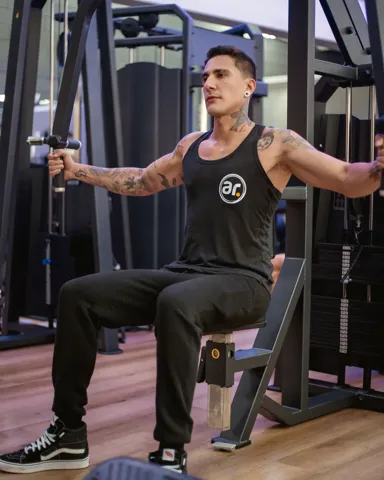
The seat and handles largely guide the movement, and resistance is quick to adjust. This suits learning to press or adding chest work after free weights. Check that the seat and handles fit you.
- Adjust the seat so the handles sit around mid-chest height, with feet supported and back against the pad.
- Press forward without shrugging, then return slowly; use a comfortable shoulder range and do not let the weights slam.
Pin Press
The bar starts on fixed safety supports, letting you repeat a specific starting height. Use it to practise one pressing section, selecting the pin height for that task and settling the bar between repetitions.
- Lie on a bench inside a rack with the bar supported on evenly set pins above your chest.
- Set your shoulder blades, press from the pins, then lower gently to a full stop without relaxing your upper back.
Spoto Press
You pause just above the chest while supporting the load yourself. This practises control near the bottom and a deliberate change of direction. Choose a weight that allows a clear, repeatable pause.
- Set up on a bench with feet planted and shoulder blades stable, using a spotter or safeties.
- Lower the bar to hover just above your chest, pause without touching, then press up while keeping the bar controlled.
Try a tool
Read next

Sources
- Cleveland Clinic: How To Do a Bench Press ↗
- NASM: Barbell Bench Press ↗
- ACSM (2026): Resistance Training Prescription for Healthy Adults ↗
- ACE: Dumbbell chest press setup and execution ↗
- E3 Rehab Exercise Library: Barbell Bench Press ↗
- E3 Rehab Exercise Library: Dumbbell Bench Press ↗
Andrea Piacquadio / Pexels · Pexels License · Resized and converted to WebP for this website.
Maksim Goncharenok / Pexels · Pexels License · Resized and converted to WebP for this website.
Marlon Schmeiski / Pexels · Pexels License · Resized and converted to WebP for this website.
Wolrider YURTSEVEN / Pexels · Pexels License · Resized and converted to WebP for this website.