What this exercise trains
Push-ups train the chest, triceps and front of the shoulders while the trunk holds your body together. They provide a practical pressing exercise at home and a scalable accessory alongside bench pressing.
Hand height is a useful way to adjust difficulty. Choose a version that lets your chest and hips travel together. For muscle-building sets, work hard enough to challenge the pressing muscles without letting your lower back sag.
Push-Up
The floor version loads your pressing muscles with part of your body weight. Use it as a main home exercise or a bench-press accessory once you can maintain your body line throughout the set.
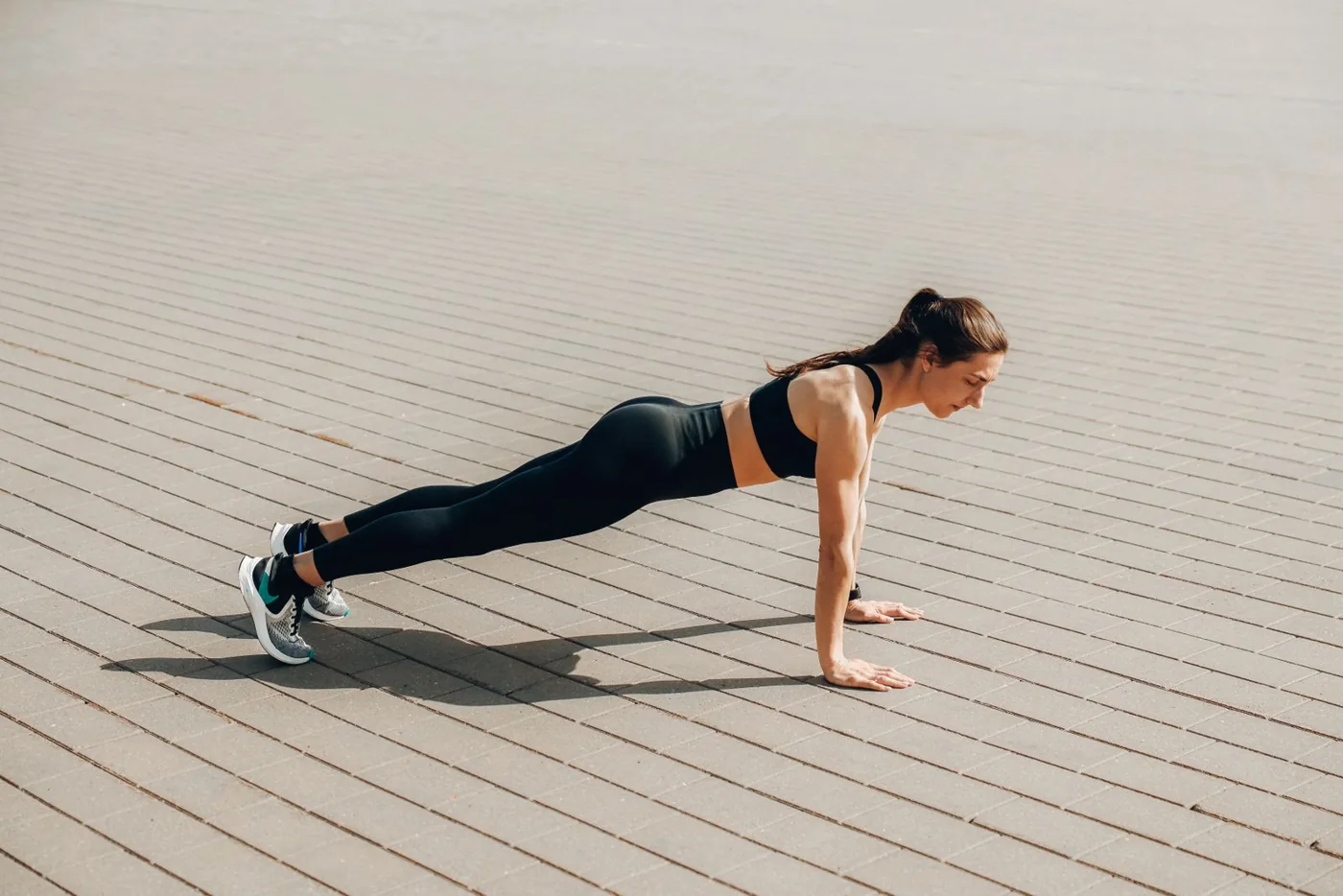
- Place your hands slightly wider than your shoulders and form a straight line from head to heels.
- Bend your elbows diagonally backward to lower your chest, then push the floor away without letting your hips sag.
Loading connects to YouTube and sends your IP address and technical data to Google. The written guide works without the video.
PrivacyTechnique points to remember
Press through your hands and toes, moving chest and pelvis together. If your hips sag, raise your hands; repetitions with a dropping trunk are difficult to compare.
Start easier, progress deliberately
Start at a wall or high bench. Lower the hand support once your body line lasts through the final repetition; rings add a separate stability challenge.
Where this exercise fits in your workout
At home, push-ups can be your main chest exercise; at the gym, they can follow bench presses. Record the height of your hand support so you can see whether you are adding reps or progressing to a lower surface.
Warm up with easier sets before these working sets.
| Exercise | Sets | Repetitions, duration or distance | Rest |
|---|---|---|---|
| Incline Push-Up | 2 | 6–10 repetitions | 2 to 3 minutes, longer if needed |
Wall Push-Up
A wall removes much of the load while you practise pressing with your body aligned. Choose it for your first push-up progression or a deliberately easy movement break during the day.
- Place your hands on a solid wall at chest height, slightly wider than your shoulders.
- Bend your elbows to bring your chest toward the wall, then press away; keep your body straight and step closer to make it easier.
Incline Push-Up
Raising your hands reduces the load while preserving the full-body position of a floor push-up. Use a stable bench or bar, then gradually lower the support as your repetitions become consistent.
- Place your hands on a stable raised surface and step back into a straight-body plank.
- Lower your chest toward the edge, then press up, keeping elbows angled back; choose a higher surface for an easier version.
Knee Push-Up
Resting on your knees shortens the lever and makes pressing easier without needing raised equipment. Keep shoulders, hips and knees aligned so the exercise remains a press rather than a bow at the waist.
- Place your hands slightly wider than your shoulders and rest your knees on a mat.
- Lower your chest between your hands, keeping shoulders, hips and knees aligned, then press up without letting your waist sag.
Close-Grip Push-Up
Bringing your hands closer changes the pressing angle and emphasises elbow extension. Use it as a triceps-focused accessory if your wrists and elbows tolerate the position; your hands do not need to touch.
- Place your hands slightly inside shoulder width on the floor or a stable raised surface.
- Keep your body straight, lower with elbows close to your sides, then push away without letting your hips sag.
Diamond Push-Up
Touching your thumbs and index fingers creates a very narrow hand position with substantial triceps demand. Choose it after comfortable close-grip push-ups, and widen your hands if the fixed position feels uncomfortable.
- Place your hands close together beneath your chest, with thumbs and index fingers forming a comfortable diamond.
- Lower with elbows angled backward, then press up while keeping your body straight; use your knees if needed.
Ring Push-Up
Freely moving rings demand more control and let your hands rotate naturally. Choose them for a harder push-up or preparation for ring work, starting high and adding depth only when you control it.
- After mastering stable push-ups, set secure rings at equal height and hold a straight-body plank.
- Lower your chest between the rings, then press up; keep rings close to your body and raise them if they wobble excessively.
Try a tool
Read next

Sources
- ACE: Be a Chest Day Champion ↗
- ACSM (2026): Resistance Training Prescription for Healthy Adults ↗
- E3 Rehab Exercise Library: Push Up ↗
Maksim Goncharenok / Pexels · Pexels License · Resized and converted to WebP for this website.
Andrea Piacquadio / Pexels · Pexels License · Resized and converted to WebP for this website.
Ketut Subiyanto / Pexels · Pexels License · Resized and converted to WebP for this website.
KoolShooters / Pexels · Pexels License · Resized and converted to WebP for this website.
Ketut Subiyanto / Pexels · Pexels License · Resized and converted to WebP for this website.