What this exercise trains
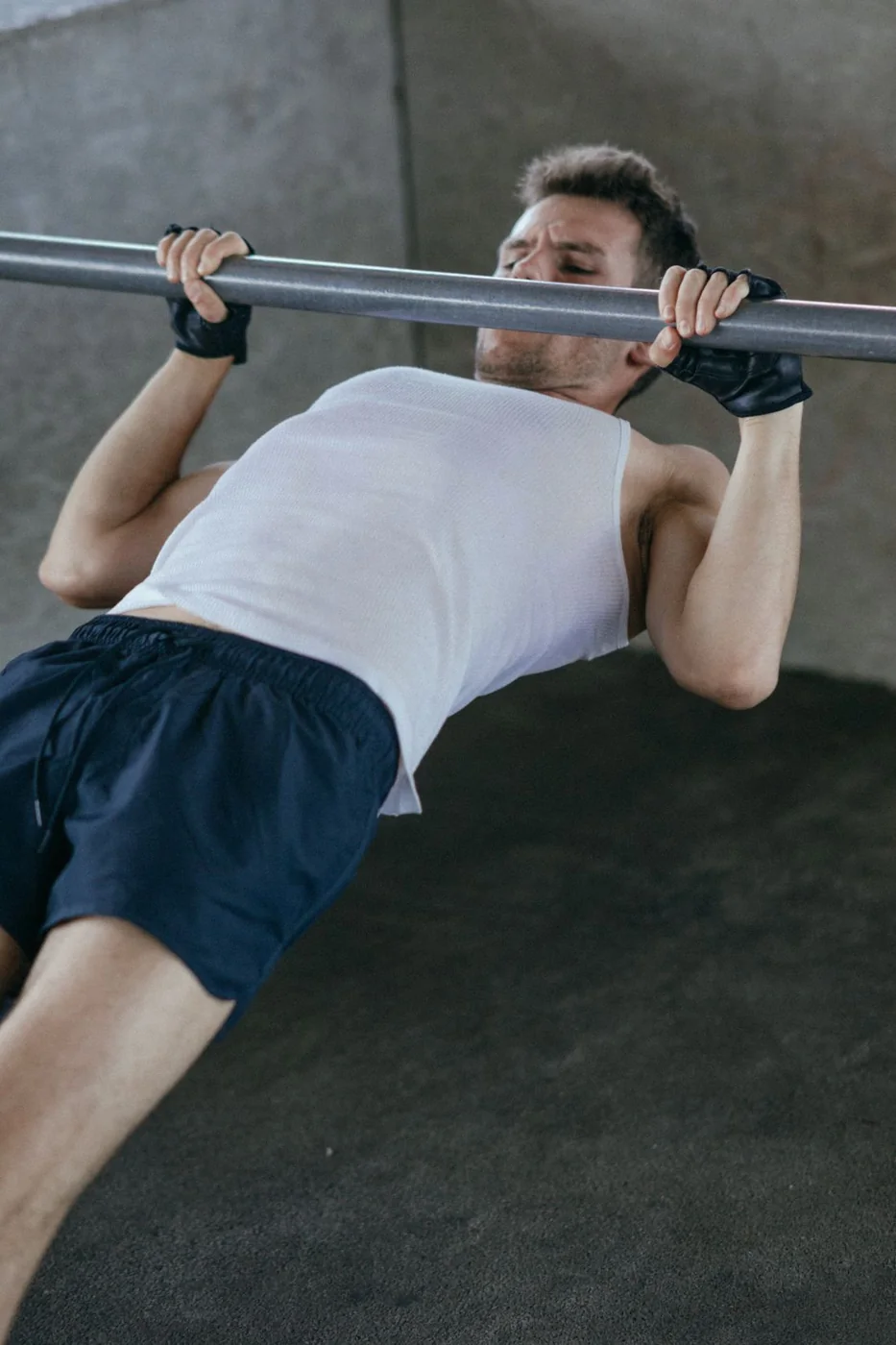
Bodyweight rows pull your body toward a fixed hand position. Back muscles and elbow flexors do the pulling while your trunk and glutes maintain alignment. They provide useful home pulling work when a load-rated bar or securely anchored straps are available.
Your body angle sets much of the difficulty: a more horizontal position beneath the handles generally makes the row harder. That allows the same equipment to cover early practice and challenging working sets.
Inverted Row
An inverted row is the same horizontal bodyweight pulling pattern, often performed under a fixed bar. Choose the stable hand position for repeatable sets, using a higher bar and bent knees to find a manageable starting position.
- Secure a bar or suspension handles and lean underneath with arms extended.
- Keep a straight line through your body as you pull your chest toward the grip; bend your knees to make it easier.
Loading connects to YouTube and sends your IP address and technical data to Google. The written guide works without the video.
PrivacyTechnique points to remember
Plant your feet and pull your chest toward the handles. If your hips drop or only your head reaches forward, use a more upright body angle.
Start easier, progress deliberately
Higher handles and bent knees make the pull easier. Move closer to horizontal or straighten your legs to progress; change one condition at a time.
Where this exercise fits in your workout
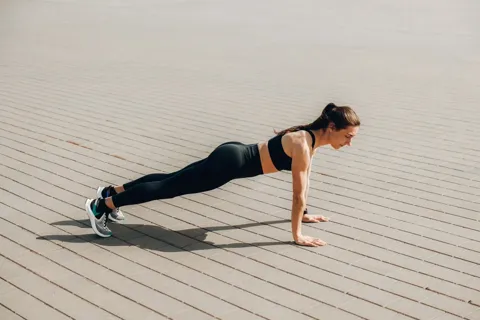
Push-ups and bodyweight rows make a simple home upper-body pairing. Record handle height and foot position. Moving your feet a little can make the next set noticeably harder.
Warm up with easier sets before these working sets.
| Exercise | Sets | Repetitions, duration or distance | Rest |
|---|---|---|---|
| Ring Row | 2 | 6–10 repetitions | 2 to 3 minutes, longer if needed |
Bodyweight Row
You adjust resistance through body angle rather than weight plates. Choose this for early pulling practice or calisthenics plans, starting more upright and recording handle height and foot position for meaningful progress comparisons.
- Secure a bar or suspension handles and lean underneath with arms extended.
- Keep a straight line through your body as you pull your chest toward the grip; bend your knees to make it easier.
Ring Row
Rings let your hands rotate during the pull and allow an individual grip width. Choose them if a fixed bar feels restrictive or you want ring practice, with both straps equally long and securely anchored.
- Hold secure rings and lean backward with feet planted and your body straight.
- Pull your chest toward the rings, then extend your arms slowly; keep shoulders controlled and stand more upright to reduce the difficulty.
Try a tool
Read next
Sources
- NSCA: Resistance Training Progressions for the Older Adult: Pulls and Rows ↗
- ACE: 4 Moves to Help You Master the Pull-up ↗
- ACSM (2026): Resistance Training Prescription for Healthy Adults ↗
- E3 Rehab Exercise Library: Inverted Row ↗
KoolShooters / Pexels · Pexels License · Resized and converted to WebP for this website.
@marcuschanmedia | IG / Pexels · Pexels License · Resized and converted to WebP for this website.
Ali Alcántara / Pexels · Pexels License · Resized and converted to WebP for this website.
Maksim Goncharenok / Pexels · Pexels License · Resized and converted to WebP for this website.
Ketut Subiyanto / Pexels · Pexels License · Resized and converted to WebP for this website.