
What this exercise trains
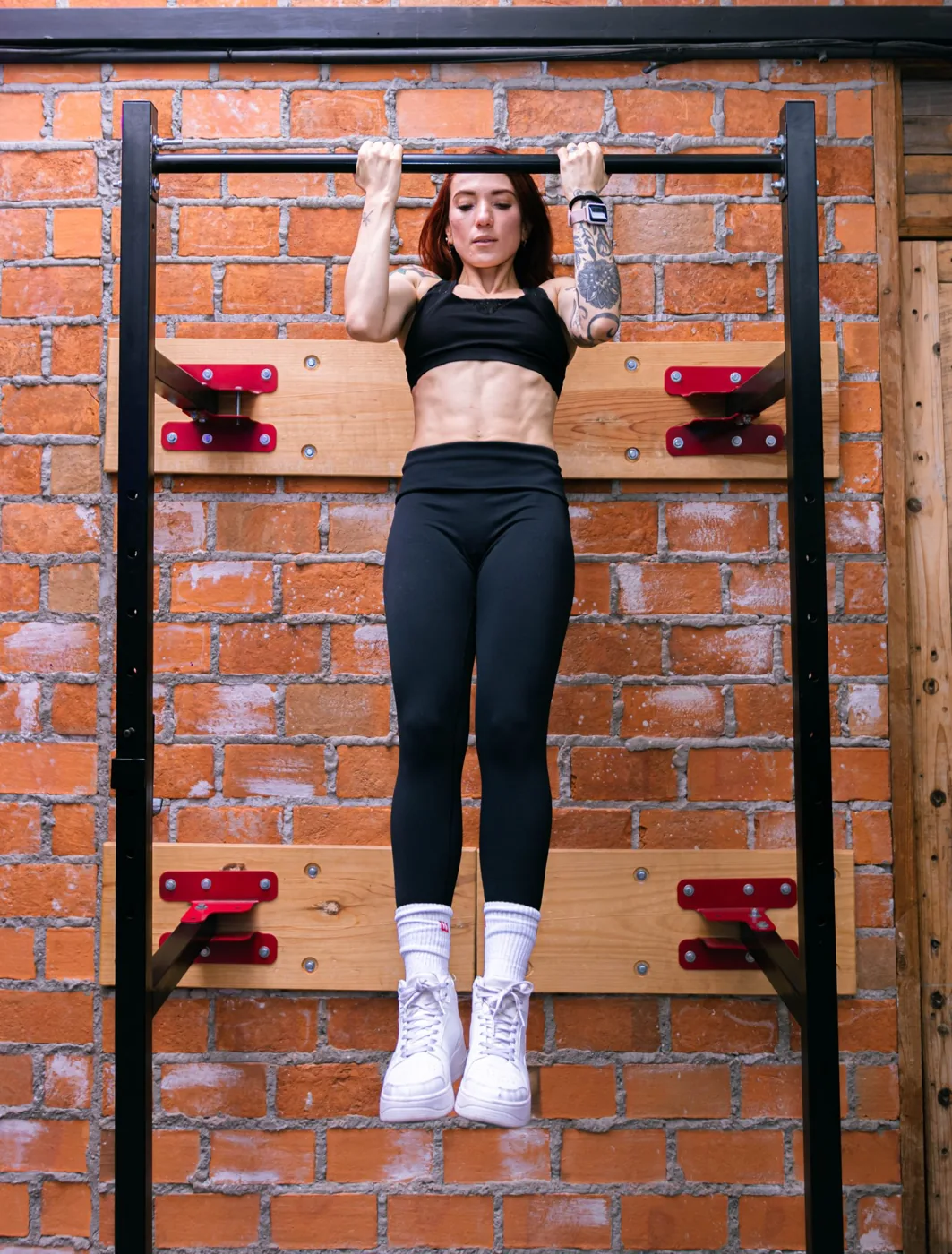
Pull-ups strengthen your back, arms and grip. Your back draws your upper arms down while your biceps bend your elbows. The goal is easy to see: pull yourself up from a hang. Assistance lets you practise that movement before you can do your first unassisted rep.
Different grips change your arm position, but all remain vertical pulls. Choose a comfortable grip and enough assistance to control full repetitions. Slow lowering can help you practise, but it also causes fatigue and belongs in your total training workload.
Pull-Up
An overhand grip provides a versatile foundation for strength and calisthenics. Start around shoulder width rather than chasing maximum width, and place demanding sets early in your session before grip fatigue limits your pulling.
- Hang from a secure bar with palms facing away and hands just wider than shoulders.
- Draw your elbows toward your ribs to lift your chin above the bar, then lower with control without kicking or craning your neck.
Loading connects to YouTube and sends your IP address and technical data to Google. The written guide works without the video.
PrivacyTechnique points to remember
Start without swinging and pull to a controlled top position. Reaching with your chin does not create more pulling range; use assistance when the final part is missing.
Start easier, progress deliberately
Use enough assistance on the machine to move from the bottom hang to your chin above the bar without swinging your legs. Once you can complete all your planned reps this way, try a little less assistance next time. Keep the same grip and range of motion. The first-pull-up plan gives you two complete training days to follow.
Where this exercise fits in your workout
Practise pull-ups before rows and curls when your goal is a first rep or more repetitions. Your back and arms will be fresher. Record whether you used assistance, bodyweight or added weight so you can see what improved.
Warm up with easier sets before these working sets.
| Exercise | Sets | Repetitions, duration or distance | Rest |
|---|---|---|---|
| Assisted Pull-Up | 2 | 5–8 repetitions | 2 to 3 minutes, longer if needed |
Chin-Up
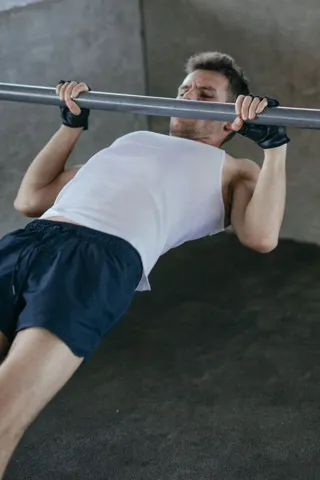
Turning your palms toward you gives the biceps a favourable working position while your back still contributes. Choose chin-ups if they feel more accessible or comfortable, or as combined back and elbow-flexor work.
- Grip a secure bar with palms facing you and hands about shoulder-width apart.
- Pull your elbows down to raise your chin over the bar, keeping your trunk steady, then lower slowly until your arms are extended.
Negative Pull-Up
Use a stable step to reach the top, then practise only the descent. Choose negatives to learn the movement before a full pull-up is available, using a few controlled repetitions rather than chasing extreme lowering times.
- Use a stable box to start with your chin above a secure bar rather than jumping wildly.
- Remove foot support and lower slowly until your arms extend; step back up for each repeat.
Scapular Pull-Up
Your elbows stay straight while you practise a small shoulder-girdle movement from the hang. Choose it to explore the start of a pull or as brief preparation, alongside full-range pulling for back and arm strength.
- Hang from a secure bar with straight elbows and a comfortable grip.
- Draw your shoulders down to lift your body slightly, then release slowly; keep your arms straight throughout and avoid swinging or bending into a full pull-up.
Wide-Grip Pull-Up
A wider grip changes the upper-arm angle and often shortens the movement. It does not automatically build a wider back; choose it as a comfortable variation only if both ends of the movement remain controlled.
- Hold a secure bar with an overhand grip comfortably wider than your shoulders.
- Pull your elbows downward to bring your chin above the bar, then lower slowly; avoid an extreme grip width, swinging or reaching with your neck.
Neutral-Grip Pull-Up
Parallel handles keep your palms facing each other and your forearms between overhand and underhand positions. Some people find this more comfortable for wrists and elbows; choose it as a full main variation when handles are available.
- Grasp secure parallel handles with palms facing each other and start from a controlled hang.
- Pull your elbows down toward your ribs to raise your chest between the handles, then lower without swinging.
Assisted Pull-Up
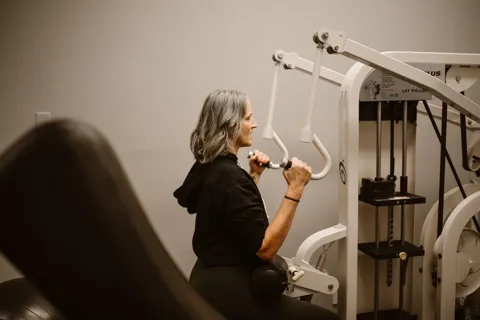
An assisted pull-up machine supports an adjustable share of your body weight. Use it to practise the full movement and complete several controlled repetitions. Select enough assistance for the whole range; a higher weight setting on this machine provides more help.
- On an assisted pull-up machine, select enough assistance and mount the knee or foot platform carefully.
- Pull your chest toward the handles without swinging, then lower slowly; more selected assistance makes the movement easier.
Weighted Pull-Up
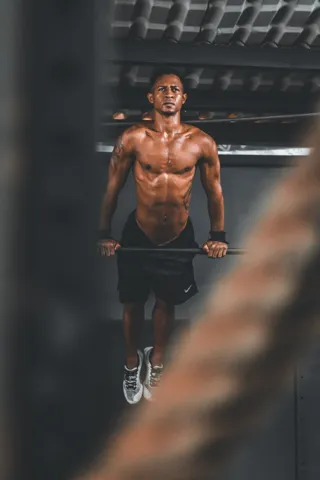
Added weight increases the challenge without requiring ever-longer sets. Choose it for measurable strength progression once bodyweight repetitions are reliable, keeping grip, movement range and rest periods consistent so heavier loads represent real progress.
- Use extra weight only after controlled bodyweight pull-ups, and secure it before hanging.
- Grip with palms away, pull your elbows down until your chin clears the bar, then lower smoothly without swinging the load or reaching with your neck.
Try a tool
Read next
Sources
- NASM: Pull-Up ↗
- ACE: 4 Moves to Help You Master the Pull-up ↗
- ACSM (2026): Resistance Training Prescription for Healthy Adults ↗
- E3 Rehab: Pull-up assistance and progression ↗
- E3 Rehab Exercise Library: Pull Up ↗
Ali Alcántara / Pexels · Pexels License · Resized and converted to WebP for this website.
RDNE Stock project / Pexels · Pexels License · Resized and converted to WebP for this website.
KoolShooters / Pexels · Pexels License · Resized and converted to WebP for this website.
Brian Silva / Pexels · Pexels License · Resized and converted to WebP for this website.
stu_spivack, Wikimedia Commons · CC BY-SA 2.0 · Resized and converted to WebP for this website.