What this exercise trains
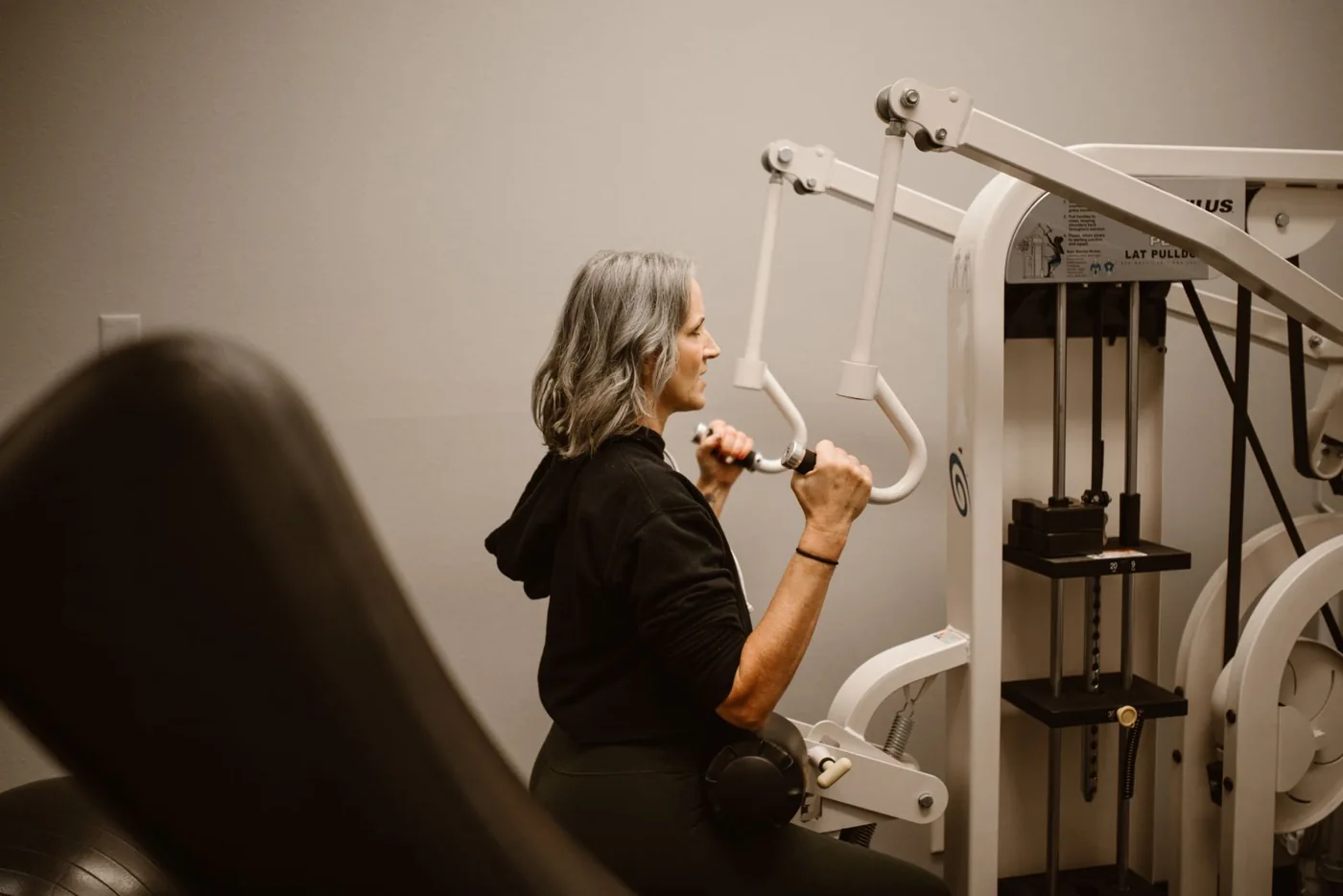
A pulldown brings an adjustable load down toward your body. The lats and elbow flexors work in a pattern similar to a pull-up, while the seat and pads stabilise your position. This makes it useful across a wide range of strength levels.
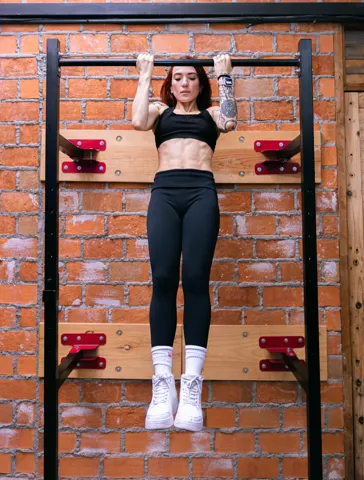
The weight stack allows small increments and full repetitions even when pull-ups are difficult. If your goal is a first pull-up, include practice on the bar too: grip, body movement and stabilisation come together differently there.
Lat Pulldown
An overhand bar provides a straightforward, repeatable vertical pull. Choose a width that lets your elbows travel down without pushing your head forward, using it as a main pull or additional work alongside pull-ups.
- Sit with your thighs secured under the pads and grip the bar wider than your shoulders.
- Pull toward your upper chest with a slight backward lean, then let your arms extend slowly without pulling behind your neck or rocking.
Loading connects to YouTube and sends your IP address and technical data to Google. The written guide works without the video.
PrivacyTechnique points to remember
Set the thigh pad so you stay seated. Bring your elbows down; if you must throw your torso far backward, the load is too high for that range.
Start easier, progress deliberately
Choose a grip width you can control. Single-arm versions use less total weight and need a steady seat position to limit torso rotation.
Where this exercise fits in your workout
Use pulldowns as a back exercise or alongside pull-up practice. Compare weights on the same machine where possible. The number on another machine's stack may feel very different.
Warm up with easier sets before these working sets.
| Exercise | Sets | Repetitions, duration or distance | Rest |
|---|---|---|---|
| Lat Pulldown | 2 | 8–12 repetitions | 2 to 3 minutes, longer if needed |
Neutral-Grip Lat Pulldown
Parallel handles bring the elbows down in front of and beside the torso. The neutral forearm position can feel comfortable and permit a useful range; choose it when an overhand grip feels restrictive.
- Sit with thighs secured under the pad and grasp parallel handles with palms facing each other.
- Keep your chest tall and draw your elbows downward as the handle approaches your upper chest.
- Return slowly overhead without swinging backward or pulling behind your neck.
Reverse-Grip Lat Pulldown
An underhand grip lets the biceps assist from a different arm position. Choose it for combined back and elbow-flexor work with adjustable loading, using a wrist-friendly width and keeping your torso steady during the pull.
- Secure your thighs under the pad and hold the bar about shoulder-width apart with palms toward your face.
- Keep your chest tall and draw your elbows downward as the handle approaches your upper chest.
- Return slowly overhead without swinging backward or pulling behind your neck.
Single-Arm Lat Pulldown
One handle lets each side follow its own path without the other arm sharing the pull. Choose it to compare sides or find a comfortable upper-arm trajectory when a long bar gets in the way.
- Sit or kneel securely beneath a high cable and grasp one handle with your arm extended.
- Pull your elbow down toward the same-side hip without twisting, then let the arm reach up slowly.
Try a tool
Read next

Sources
- NASM: The Biomechanics of the Lat Pulldown ↗
- ACSM (2026): Resistance Training Prescription for Healthy Adults ↗
- E3 Rehab Exercise Library: Lat Pulldown ↗
RDNE Stock project / Pexels · Pexels License · Resized and converted to WebP for this website.
Ali Alcántara / Pexels · Pexels License · Resized and converted to WebP for this website.
@marcuschanmedia | IG / Pexels · Pexels License · Resized and converted to WebP for this website.
Andrea Piacquadio / Pexels · Pexels License · Resized and converted to WebP for this website.