What this exercise trains
Rows move your upper arms behind you while your shoulder blades travel around your ribcage. The lats, rear shoulders and muscles between the shoulder blades work with your elbow flexors. Rows complement vertical pulling and suit almost any training setting.
Chest support reduces the trunk's holding work, while unsupported bent-over rows also demand a steady hip hinge. Consider the rest of your session: after heavy squats or deadlifts, a supported row can keep the additional effort focused on the pulling muscles.
Seated Row
A seated position makes your grip and pulling direction easy to repeat, with small weight increments available. Choose it for consistent gym back work, keeping your torso steady as the load increases.
- Sit facing the cable with feet supported, knees softly bent, and chest lifted.
- Pull the handle toward your lower ribs while guiding elbows back, then reach forward through your arms without rounding or rocking your lower back.
Loading connects to YouTube and sends your IP address and technical data to Google. The written guide works without the video.
PrivacyTechnique points to remember
Drive your elbows back without throwing your torso upward. If rowing turns into a hip swing, reduce weight or support your chest.
Start easier, progress deliberately
Chest support reduces the trunk-holding demand. Change grip and pulling angle deliberately; different paths are not directly comparable sets.
Where this exercise fits in your workout
After deadlifts, unsupported rows ask an already tired back to hold your torso in place. Chest support takes over that job. For a second pulling exercise, pull-ups or pulldowns add a pull from above.
Warm up with easier sets before these working sets.
| Exercise | Sets | Repetitions, duration or distance | Rest |
|---|---|---|---|
| Single-Arm Dumbbell Row | 2 | 8–12 per side | 2 to 3 minutes, longer if needed |
Barbell Row
A barbell loads both arms together while you hold your own bent-over position. Choose it for substantial rowing with simple equipment; if your lower back tires first, a supported version may fit better.
- Hold the bar just outside your legs and hinge forward with softly bent knees and a steady back.
- Pull toward your lower ribs by moving your elbows backward, then lower the bar without raising or twisting your torso.
Loading connects to YouTube and sends your IP address and technical data to Google. The written guide works without the video.
PrivacyT-Bar Row
An anchored bar gives you an arcing pulling path, usually with a close grip. Choose it for progressively heavier two-arm rows, remembering that an unsupported setup still requires you to hold your hip-hinge position.
- Straddle the securely anchored bar and hinge at your hips to grasp the handles.
- Keep your back steady as you pull toward your lower chest, then lower with control; if the machine has a chest pad, maintain contact with it.
Single-Arm Dumbbell Row
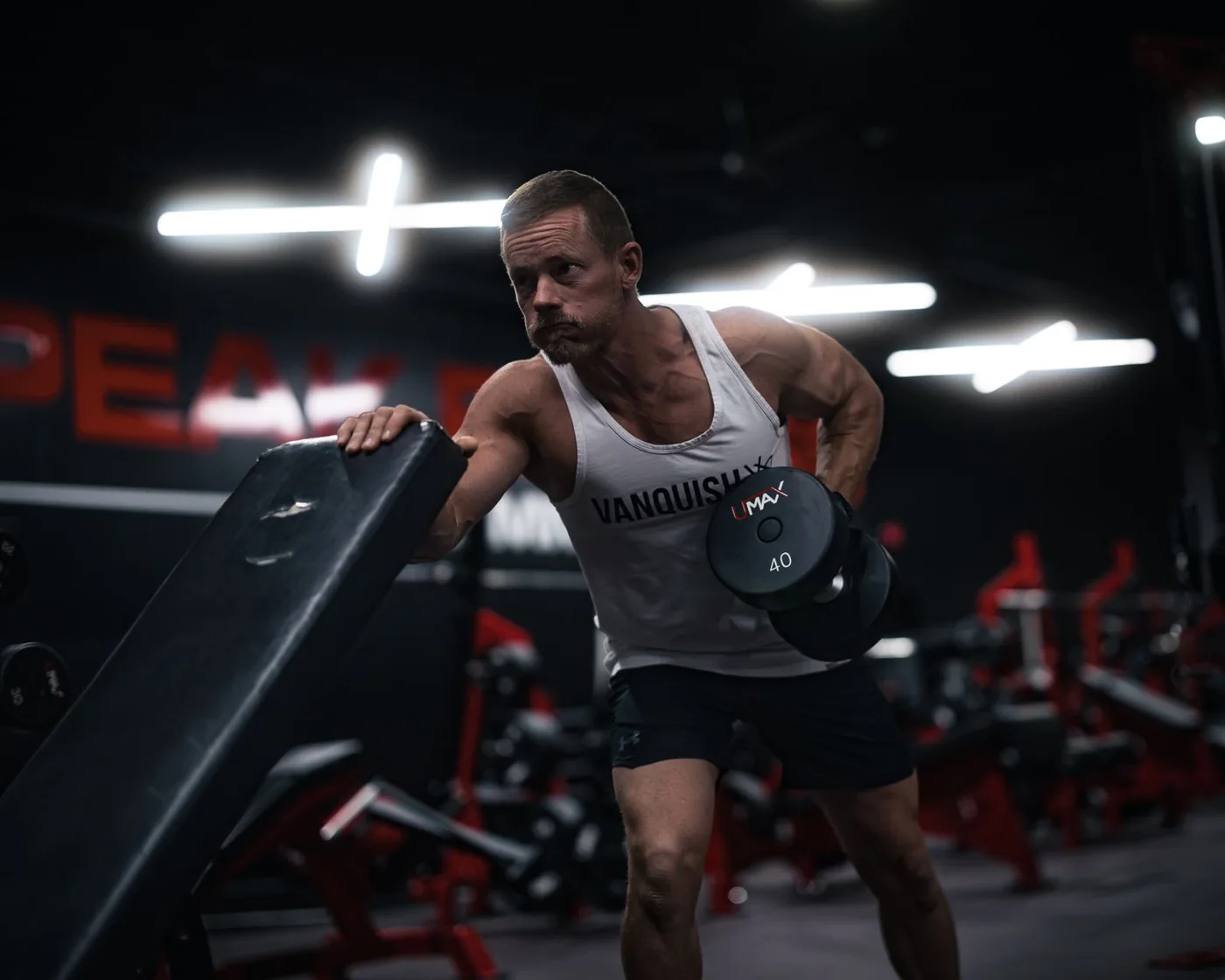
One hand supports you on a bench while the other rows. This lets each side work independently with an adjustable path; choose it for simple equipment or to track each arm's performance separately.
- Support one hand and knee on a stable bench, with the other foot on the floor.
- Pull the dumbbell toward your hip while keeping your shoulders level, then lower until your arm extends without twisting your trunk.
Meadows Row
Standing beside an anchored bar lets you row its thick sleeve with one hand. The sideways arc changes the pulling angle and challenges your grip; choose it when a landmine setup is available and stable.
- Secure one bar end in a landmine and stand side-on to the loaded end.
- Hinge, grasp the sleeve overhand and row toward your hip, bracing your free forearm on your thigh.
Pendlay Row
Each repetition starts from the floor rather than a hanging position. This gives a repeatable start and practises force from a dead stop; choose it if you can maintain the low torso position consistently.
- Hinge until your torso is close to horizontal and the bar rests on the floor.
- Brace, row toward your lower chest without standing up, then return the bar fully to the floor each rep.
Seal Row
Your chest and abdomen rest on a raised flat bench while your arms hang freely. This limits torso momentum and lower-back holding work; choose it for strict rows when sufficient bench height and clearance are available.
- Lie chest-down on a stable raised flat bench, with the weights hanging freely below you.
- Pull your elbows back without jerking the weight or lifting your chest.
- Lower with control until your arms extend again.
Chest-Supported T-Bar Row
A chest pad provides support while the lever guides the pulling path. Choose it for demanding back sets with less trunk fatigue, positioning the pad so you can breathe and move your shoulder blades freely.
- Adjust the chest pad so the T-bar handles are reachable with your arms extended and feet firmly supported.
- Pull your elbows back without jerking the weight or lifting your chest.
- Lower with control until your arms extend again.
Bent-Over Dumbbell Row
Two dumbbells allow independent arm paths while you hold an unsupported hinge. Choose this space-efficient home option when you can maintain your trunk position and prefer more grip freedom than a barbell provides.
- Stand with feet about hip-width apart and hold a dumbbell in each hand.
- Soften your knees and hinge at your hips with a steady back.
- Pull both elbows toward your hips, then lower the weights slowly without standing up or swinging your torso.
- No bench is needed.
Dumbbell Row
This one-arm bench version uses your free hand for support, following the same pattern as a single-arm dumbbell row. Choose it for repeatable unilateral sets and keep your bench height and torso angle consistent.
- Support one hand on a stable bench and hinge at your hips with the dumbbell hanging below.
- Pull your elbow toward your hip, then lower slowly; keep your back steady and avoid rotating your torso upward.
Underhand Barbell Row
An underhand grip changes arm position and often keeps the elbows closer to your torso. Choose it if that path feels comfortable; dumbbells offer more freedom if the fixed bar position bothers your wrists.
- Hold the bar with palms forward and hinge at your hips, keeping your knees soft and back braced.
- Pull your elbows back without jerking the weight or lifting your chest.
- Lower with control until your arms extend again.
Machine Row
A rowing machine makes setup and load changes straightforward, often offering several handles. Choose it for additional back work with little preparation, adjusting the seat and grip so the guided path suits your proportions.
- Adjust the seat to reach the handles comfortably with feet supported and, when provided, your chest against the pad.
- Pull your elbows back without jerking the weight or lifting your chest.
- Lower with control until your arms extend again.
Renegade Row
From a high plank, you row one dumbbell while resisting trunk rotation. Choose it when you want rowing combined with demanding support work; a stable bench row is easier to load for dedicated back sets.
- Use stable, non-rolling dumbbells and take a wide-foot plank with hands gripping them.
- Row one dumbbell toward your hip, replace it gently and alternate; keep your pelvis facing the floor and shorten the pull if your body twists.
Try a tool
Read next
Sources
- ACE: Bent-over Row ↗
- ACE: Seated Row ↗
- ACSM (2026): Resistance Training Prescription for Healthy Adults ↗
- E3 Rehab Exercise Library: Seated Row (Narrow Grip) ↗
- E3 Rehab Exercise Library: Bentover Barbell Row (Pronated Grip) ↗
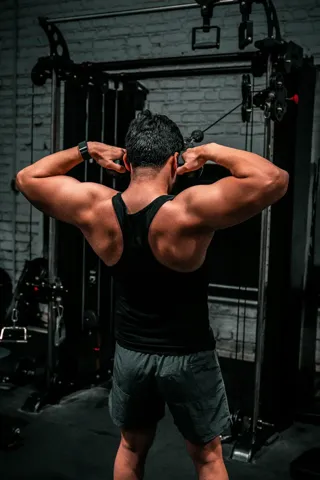
@marcuschanmedia | IG / Pexels · Pexels License · Resized and converted to WebP for this website.
KoolShooters / Pexels · Pexels License · Resized and converted to WebP for this website.
Ali Alcántara / Pexels · Pexels License · Resized and converted to WebP for this website.
Shan A. Rajpoot / Unsplash · Unsplash License · Resized and converted to WebP for this website.
Andrea Piacquadio / Pexels · Pexels License · Resized and converted to WebP for this website.