
What this exercise trains
A pullover moves your upper arms from overhead toward your torso. Keep a slight bend in your elbows and hold that angle throughout the movement. Your chest and lats, the large muscles along the sides of your back, both help move your upper arms. Their contribution varies with the equipment and position. It complements rows and pull-ups without another demanding elbow-flexion exercise.
Equipment changes the movement substantially: a dumbbell above a bench and a high cable pull in different directions. Choose a position and range you can control. Excessive back arching adds compensation rather than useful shoulder movement.
Dumbbell Pullover
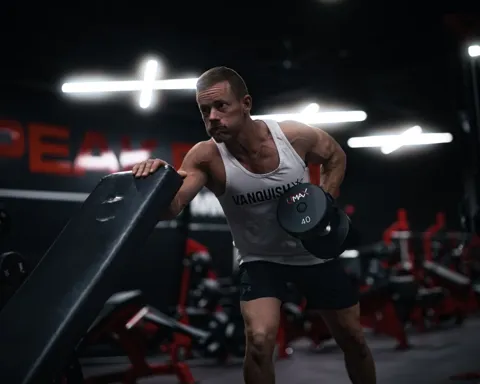
On a bench, you lower a dumbbell behind your head and return it. The chest and lats share the work, especially through the overhead arc; choose a light load if you can keep that range without excessive arching.
- Lie lengthwise on a bench with your feet planted.
- Hold one dumbbell above your chest with both hands, supporting the inside of the upper dumbbell head with your palms.
- Lower it behind your head with slightly bent elbows, stopping before your ribs lift, then return.
Technique points to remember
Keep the elbow bend nearly constant and move through your shoulders. If your rib cage lifts and your lower back arches, shorten the overhead range.
Start easier, progress deliberately
A cable often allows smaller load changes. Start with a controlled shorter range and extend it before making the exercise heavier.
Where this exercise fits in your workout
After rows or pull-ups, pullovers can add more back work. Keep a slight elbow bend. If the last repetitions turn into straightening your elbows, finish the set or reduce the weight.
Warm up with easier sets before these working sets.
| Exercise | Sets | Repetitions, duration or distance | Rest |
|---|---|---|---|
| Straight-Arm Pulldown | 2 | 10–15 repetitions | 1 to 2 minutes, until you can move steadily again |
Machine Pullover
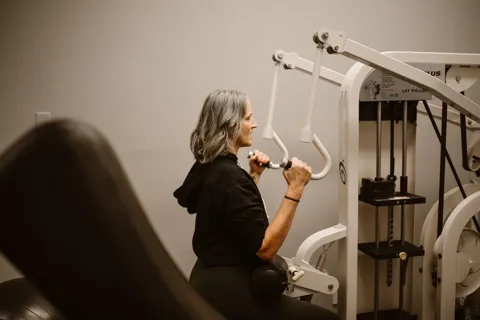
The seat and arm pads guide the arc, reducing the importance of grip strength. Choose it for adjustable lat-focused work after other pulls, setting the seat so the machine's pivot and your shoulder movement fit together.
- Adjust the seat and pads so you can reach the overhead handles comfortably with your back supported.
- Draw your upper arms down toward your ribs, keeping the elbow angle steady; return slowly without arching.
Cable Pullover
Standing at a high cable, you bring the handle toward your thighs with little change at the elbows. This is the straight-arm pulldown pattern; choose it for extra back work without another heavy elbow-flexion exercise.
- Face a high pulley with a bar or rope in your hands and a slight hip hinge.
- Keep your elbows softly bent as you sweep the handle down toward your thighs, then return without rocking.
Straight-Arm Pulldown
Keeping a small, steady elbow bend directs the cable work into upper-arm movement rather than a curl. Choose this for practising that shoulder action or finishing back work; perfectly locked elbows are unnecessary.
- Face a high pulley with a bar or rope in your hands and a slight hip hinge.
- Keep your elbows softly bent as you sweep the handle down toward your thighs, then return without rocking.
Try a tool
Read next
Sources
- NSCA: Resistance Training Progressions for the Older Adult: Pulls and Rows ↗
- ACE: Lying Pullovers ↗
- ACSM (2026): Resistance Training Prescription for Healthy Adults ↗
- Men's Health: The Dumbbell Pullover ↗
RDNE Stock project / Pexels · Pexels License · Resized and converted to WebP for this website.
@marcuschanmedia | IG / Pexels · Pexels License · Resized and converted to WebP for this website.
foad shariyati / Pexels · Pexels License · Resized and converted to WebP for this website.