
What this exercise trains
These exercises train the trunk to hold its position while gravity, a cable or moving limbs pull it in different directions. The abdominal and back muscles work together, much as they do when you carry a bag or keep your torso steady during a squat.
They give you a clear way to practise tension and breathing together. Choose a hold or movement you can repeat with the same body position. Shorter sets with control make it easier to judge when a longer lever or more resistance fits.
Dead Bug
Lying on the back gives floor feedback while an arm and opposite leg move away. It makes trunk control easier to observe than in a hanging exercise. Shorten the reach when you can no longer maintain the chosen position and breathing.
- Lie on your back with arms upward and hips and knees bent to roughly right angles.
- Slowly extend one arm and the opposite leg, then return and switch; keep your trunk still and shorten the reach if your lower back lifts.
Loading connects to YouTube and sends your IP address and technical data to Google. The written guide works without the video.
PrivacyTechnique points to remember
In planks and dead bugs, maintain trunk position while time or limb movement challenges it. If hips sag or your controlled back position changes, shorten the lever or hold.
Start easier, progress deliberately
Use knees down or raised hands for planks. In a dead bug, begin by moving one bent leg; simultaneous arm and leg movement comes later.
Where this exercise fits in your workout
Two short sets at the end of a workout are a simple starting point. Stop before you are just hanging on with a slipping position. When both sets stay steady, try a slightly longer hold or lever next time.
Warm up with easier sets before these working sets.
| Exercise | Sets | Repetitions, duration or distance | Rest |
|---|---|---|---|
| Dead Bug | 2 | 6 per side | 1 to 2 minutes, until you can move steadily again |
Plank
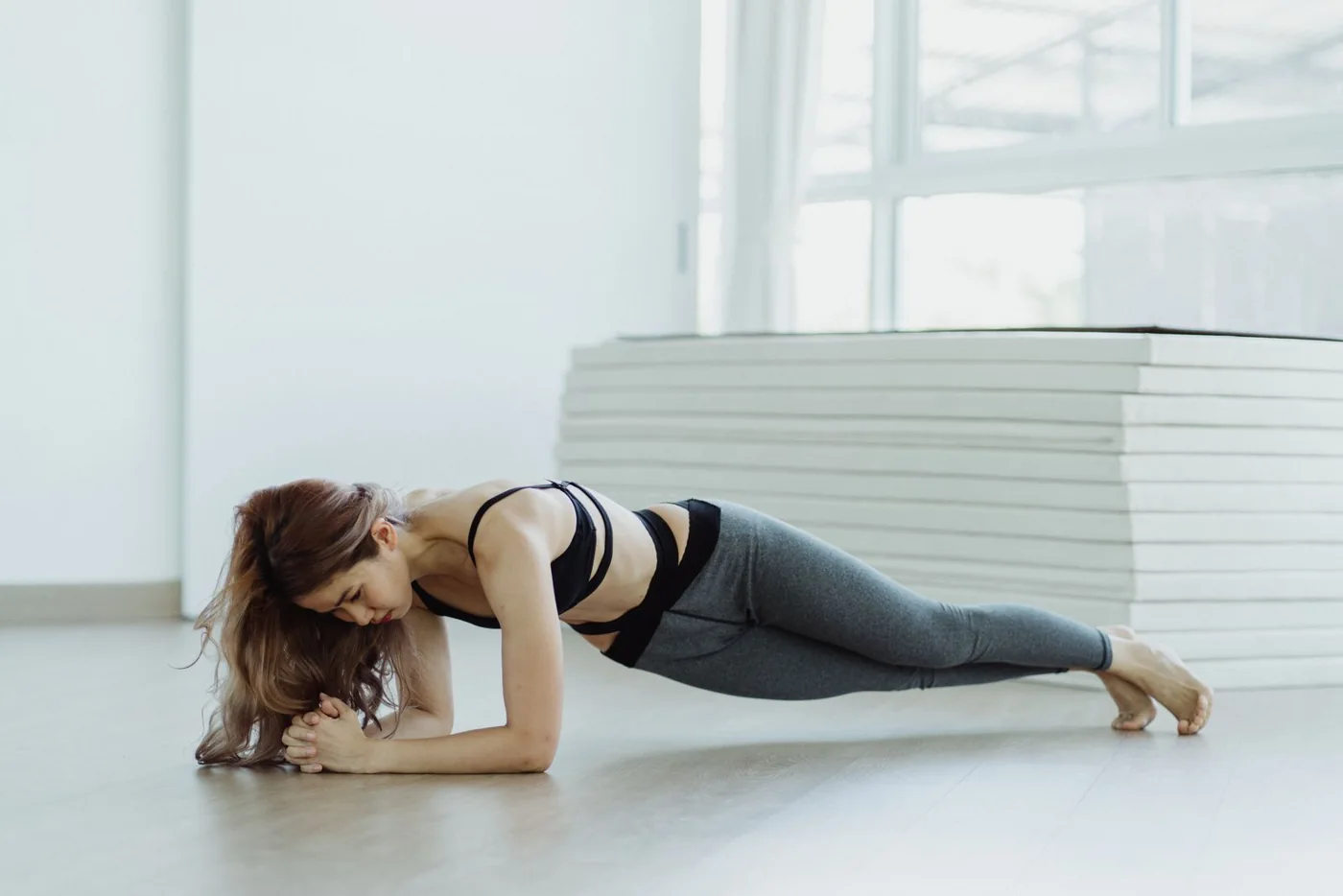
Forearms and toes support the body while the trunk resists sagging. It is a straightforward timed exercise with little equipment. A shorter hold with normal breathing is more informative than a long attempt that gradually changes into another position.
- Place your forearms on the floor with elbows under shoulders and extend your legs behind you.
- Brace your abdomen and glutes to keep head, hips, and heels aligned, breathing steadily without letting your lower back sag.
Weighted Plank
An added load makes a familiar plank harder without requiring a much longer hold. It suits someone whose unweighted position is already consistent. Arrange the weight securely with help when needed, rather than balancing an unstable plate on yourself.
- Master a steady bodyweight plank before adding a securely fitted, light weighted vest.
- Place elbows under shoulders and hold your body straight while breathing normally; end the hold before your hips sag or your lower back arches.
Side Plank
Supporting the body sideways challenges the trunk against side-bending and asks the supporting shoulder to hold steady. It complements a front plank's different direction of loading. Bent knees shorten the lever when the full foot-supported version is too demanding.
- Lie on your side with your elbow under your shoulder and legs stacked or staggered.
- Lift your hips into a straight line and breathe steadily; keep the shoulder supported and place your lower knee down to simplify.
Hollow Body Hold
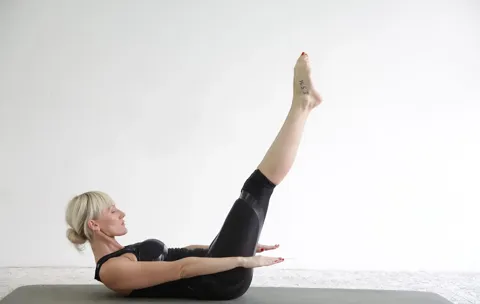
Lifting the limbs while controlling the trunk creates a lever used in several gymnastics skills. Arm and leg length strongly change the difficulty. Bent knees and arms nearer the body help you learn the shape before extending everything at once.
- Lie on your back and gently press your lower back into the floor.
- Lift shoulders and legs only as far as that contact stays steady; start with bent knees and keep breathing.
Bird Dog
Moving an opposite arm and leg from all fours adds a coordination task while the trunk stays quiet. It is useful when learning to separate limb movement from trunk movement. Reaching higher is unnecessary if it makes the pelvis twist.
- Start on hands and knees, with hands under shoulders and knees under hips.
- Reach one arm forward and the opposite leg back without rotating your pelvis; return slowly and alternate sides.
Superman
Lifting the arms and legs from a prone position asks the back and hip extensors to work against gravity. It offers simple extension practice without equipment. A small controlled lift is enough; chasing maximum height can shift the task toward an uncomfortable back arch.
- Lie face down with arms reaching forward and your gaze toward the mat.
- Gently lift arms and legs a small distance, then lower slowly; lengthen through fingertips and toes rather than forcing a high back arch.
Pallof Press
A side-on cable or band tries to rotate you as the hands move away from the chest. Resisting that turn trains a different task from repeated twisting. Distance, band tension and arm reach all change the difficulty, so record a consistent setup.
- Stand side-on to a chest-height cable and hold the handle at your sternum.
- Press your hands straight forward, resist the cable’s pull to rotate you, then return; repeat facing the other way.
Try a tool
Read next
Sources
- ACE: Spinal Stability ↗
- NASM Exercise Library: Side Plank ↗
- ACSM (2026): Resistance Training Prescription for Healthy Adults ↗
- E3 Rehab Exercise Library: Dead Bug ↗
Ketut Subiyanto / Pexels · Pexels License · Resized and converted to WebP for this website.
Gustavo Fring / Pexels · Pexels License · Resized and converted to WebP for this website.
Web Daytona / Pexels · Pexels License · Resized and converted to WebP for this website.
jelenajdj / Pixabay · Pixabay Content License · Resized and converted to WebP for this website.
Andrea Piacquadio / Pexels · Pexels License · Resized and converted to WebP for this website.