What this exercise trains
The abdominal muscles can move the ribcage and pelvis as well as hold them still. These exercises combine trunk movement, hip movement or resistance to extension, with grip and shoulder support becoming relevant in hanging versions.
Pick the task you want to practise: a reverse crunch curls the pelvis toward the ribs, a cable crunch adds resistance to trunk bending, and a rollout asks you to hold your trunk as the lever grows. That distinction helps you choose a useful addition to your workout.
Hanging Leg Raise
Hanging adds grip and shoulder-support demands while the legs lift and the pelvis can curl upward. It suits lifters comfortable with a controlled hang. Bent knees shorten the lever; swinging to reach higher changes the movement and makes repetitions harder to compare.
- Hang from a secure bar with your shoulders engaged and legs together.
- Lift your legs forward while curling your pelvis slightly upward, then lower slowly without swinging; bend your knees if straight legs prevent control.
Loading connects to YouTube and sends your IP address and technical data to Google. The written guide works without the video.
PrivacyTechnique points to remember
For crunches, curl the rib cage toward the pelvis instead of just pulling your head up. For hanging leg raises, limit swinging; reset when each repetition turns into momentum.
Start easier, progress deliberately
A bent-knee reverse crunch is easier to scale than straight-leg hanging raises. Lengthen the lever after you control the pelvis and descent.
Where this exercise fits in your workout
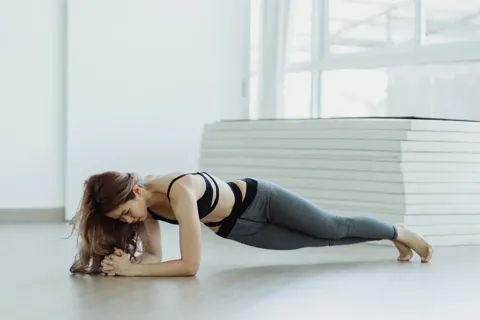
Pair a moving ab exercise with a hold such as a plank for different tasks. If your hands tire first during hanging leg raises, try a lying variation so grip strength doesn't end the set early.
Warm up with easier sets before these working sets.
| Exercise | Sets | Repetitions, duration or distance | Rest |
|---|---|---|---|
| Reverse Crunch | 2 | 6–10 repetitions | 1 to 2 minutes, until you can move steadily again |
Toes to Bar
Bringing the toes to the bar requires substantial hanging control and range. Strict and swinging versions are different skills, so record which one you practise. A knee raise is a useful alternative when grip, shoulder position or momentum dominates the attempt.
- Build a controlled hanging knee raise first.
- From an active hang, brace and lift your feet toward the bar by curling your pelvis upward; lower slowly without using a large swing.
Reverse Crunch
Curling the pelvis toward the ribs shifts the moving end of the exercise compared with a usual crunch. It is a practical floor option for deliberate abdominal movement. Lifting the hips slightly under control is enough; throwing the legs overhead adds momentum.
- Lie on your back with knees bent above your hips and arms beside you.
- Curl your pelvis gently toward your ribs to lift your tailbone, then lower slowly without swinging your legs.
V-Up
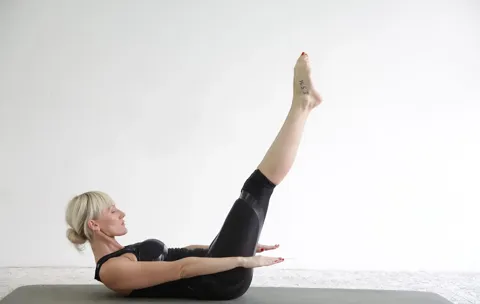
The trunk and legs rise together, combining abdominal movement with hip-flexor effort and timing. It provides a compact bodyweight challenge. Bent-knee versions reduce the lever, while separate reverse crunches may make it easier to practise the pelvic movement first.
- Lie on your back with arms overhead and legs long.
- Raise your trunk and legs together, reaching toward your feet, then lower with control; bend your knees for an easier version and avoid throwing your arms.
Cable Crunch
The cable adds adjustable resistance to bringing the ribcage toward the pelvis. It is useful when you want measurable progression in a trunk-curling exercise. Keep the movement consistent instead of pulling with the arms or sitting the hips back to move the stack.
- Kneel facing a high pulley and hold the rope beside your temples.
- Curl your ribcage toward your pelvis, letting your spine round through the crunch, then return slowly while keeping your hips and arms mostly still.
Decline Sit-Up
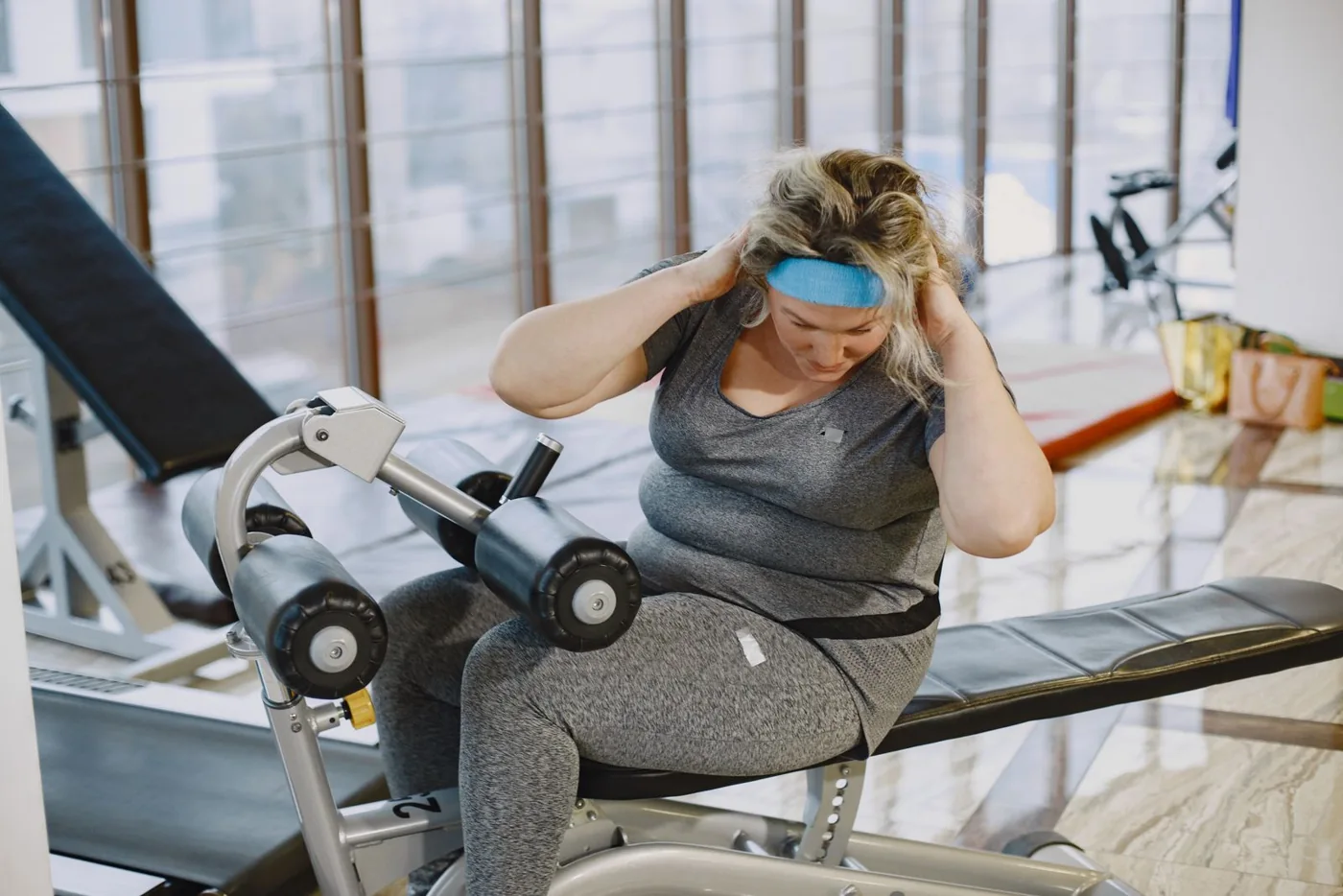
The inclined bench changes the resistance and adds a secure leg position for repeated sit-ups. The hip flexors contribute alongside the abdominals. Choose the angle before adding weight, and use a floor version if the bench encourages uncontrolled lowering.
- Secure your feet in the decline bench supports and begin with a mild incline and hands across your chest.
- Curl your trunk toward sitting, then lower slowly; avoid pulling your head, swinging your arms or dropping backward onto the bench.
Bicycle Crunch
Alternating the legs while turning the trunk adds coordination to a floor abdominal exercise. It can fit a short session without equipment. A slow reach with space at the neck is more useful than rushing to touch the elbow to the knee.
- Lie on your back with hands lightly behind your head and knees raised.
- Rotate your ribs toward the opposite bent knee while extending the other leg, then alternate slowly; avoid pulling your neck or rushing the motion.
Ab Wheel Rollout
Rolling the hands forward lengthens the body's lever while the trunk resists dropping into extension. It is demanding even from the knees. A wall can limit the range, helping you stop where you can still control both the outward roll and return.
- Kneel with the wheel beneath your shoulders and brace your abdomen with ribs down.
- Roll forward only as far as you can prevent your lower back from sagging, then draw the wheel back without abruptly folding at your hips.
Dragon Flag
The shoulders and upper back form the support while a long body lever lowers toward the floor. It is an advanced trunk exercise requiring a secure grip and controlled exit. Practise shorter levers first and avoid placing the load through the neck.
- First build control with bent knees or a shorter lowering range.
- Lie on a stable bench gripping behind your head, raise hips and legs together, then lower your rigid body while supporting yourself on your upper back, never your neck.
Try a tool
Read next
Sources
- ACE Exercise Library: Reverse Ab Crunch ↗
- Catalyst Athletics: Reverse Crunch ↗
- ACSM (2026): Resistance Training Prescription for Healthy Adults ↗
- FitnessFAQs: The WORST Ab Training MISTAKES | Leg Raises ↗
Gustavo Fring / Pexels · Pexels License · Resized and converted to WebP for this website.
Ketut Subiyanto / Pexels · Pexels License · Resized and converted to WebP for this website.
jelenajdj / Pixabay · Pixabay Content License · Resized and converted to WebP for this website.
Ed Rogers / Pexels · Pexels License · Resized and converted to WebP for this website.
Andrea Piacquadio / Pexels · Pexels License · Resized and converted to WebP for this website.