What this exercise trains
Pike and handstand pressing direct more of the push overhead, increasing the role of the shoulders and triceps. Wall walks practise getting into an inverted support, while the L-sit adds a different straight-arm support and hip-flexion task.
These exercises combine strength with positioning and, in inverted versions, a planned way out. A wall changes balance demands without removing the load on the arms. Learn the support and exit before adding depth, speed or long holds.
Pike Push-Up
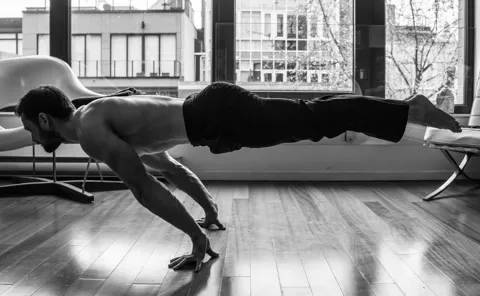
Raising the hips directs the press more toward an overhead action while the feet stay supported. It is useful for building toward inverted pressing. Hand-foot distance and foot height change difficulty, so keep one setup until the repetitions become consistent.
- Start with hands on the floor and hips raised into an inverted V.
- Bend your elbows to bring your head toward the floor just ahead of your hands, then press up without resting weight on your head.
Loading connects to YouTube and sends your IP address and technical data to Google. The written guide works without the video.
PrivacyTechnique points to remember
In pike push-ups, guide your head between and slightly ahead of your hands without dropping onto it. Before wall-supported work, practice how to come down.
Start easier, progress deliberately
Start with hands elevated and feet on the floor. Lower the hand support or raise the feet gradually. A freestanding handstand adds balance rather than simply heavier wall pressing.
Where this exercise fits in your workout
Start with balance and returning safely to your feet while you are fresh. Then use a suitable pike or handstand push-up variation. End the set when you can no longer control the way back.
Warm up with easier sets before these working sets.
| Exercise | Sets | Repetitions, duration or distance | Rest |
|---|---|---|---|
| Pike Push-Up | 2 | 4–6 repetitions | 2 to 3 minutes, longer if needed |
Handstand Push-Up
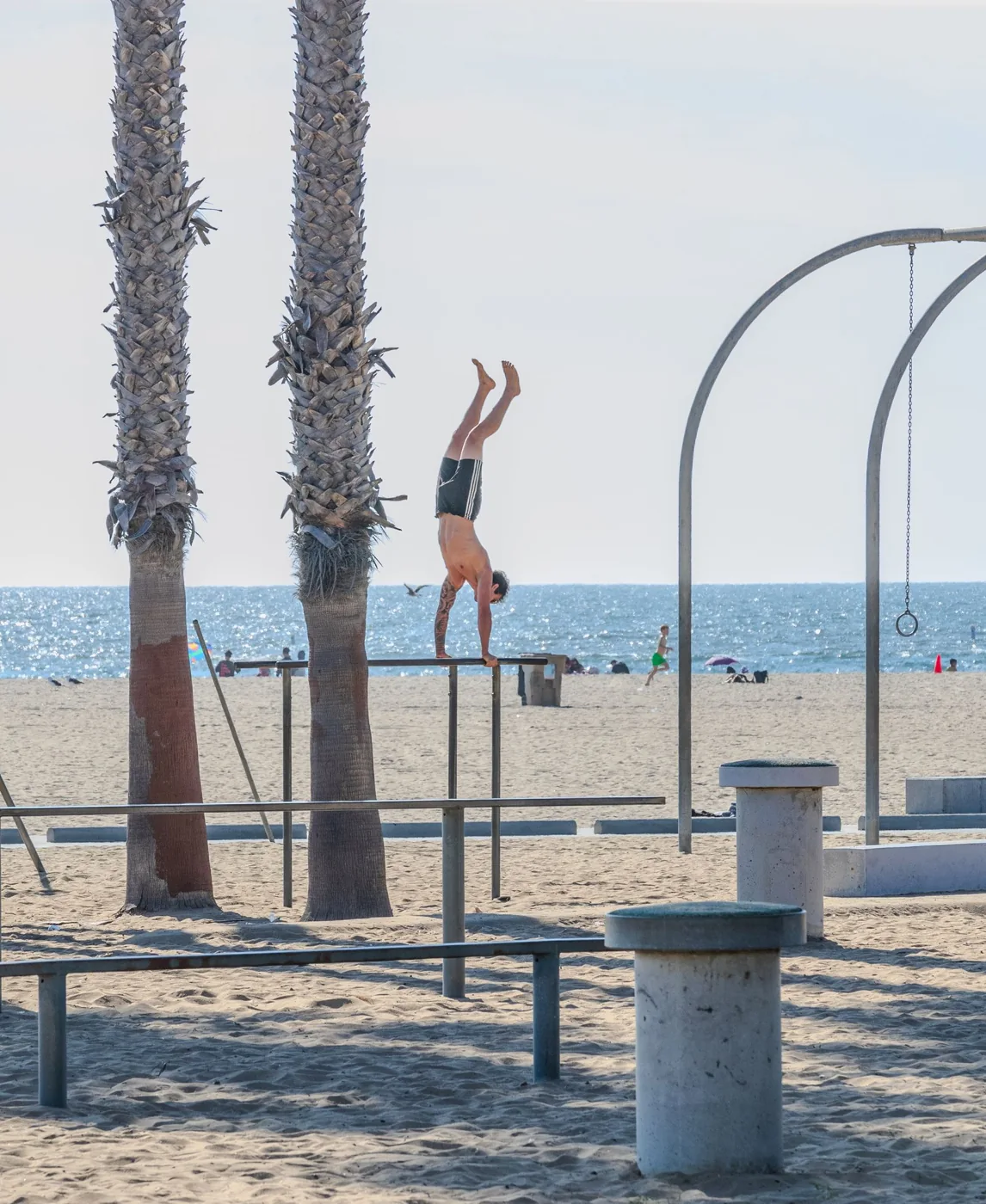
Pressing while inverted places much of the bodyweight through the arms and shoulders. It requires established handstand support and a safe exit. Wall assistance reduces balancing demands but not strength demands; shorten the range rather than relying on the head to carry the load.
- First master a controlled wall handstand and a safe exit.
- From that support, bend your elbows backward and lower your head gently toward the floor slightly ahead of your hands, then press up without resting or bouncing on your head.
Loading connects to YouTube and sends your IP address and technical data to Google. The written guide works without the video.
PrivacyWall Walk
Walking the feet up a wall and the hands inward gradually changes the body angle. It is useful for practising supported inversion. Only approach as close as you can reverse calmly; fatigue or fear can make the return more difficult than the climb.
- First develop a comfortable plank and supported inversion with coaching.
- From a plank with feet against a wall, walk feet upward and hands inward, stopping before control fades; reverse the steps slowly without arching your back.
L-Sit
Straight arms support the body while the legs stay lifted in front, combining shoulder support with abdominal and hip-flexor effort. Parallel bars provide more clearance than the floor. Bent knees or one leg extended shorten the lever while you learn the support position.
- Sit between stable parallettes and press down with straight arms to lift your hips.
- Extend your legs forward and keep your shoulders away from your ears; practise with bent knees first if you cannot keep your feet lifted.
Loading connects to YouTube and sends your IP address and technical data to Google. The written guide works without the video.
PrivacyTry a tool
Read next
Sources
- NASM Exercise Library: Pike Push-Up ↗
- GMB Fitness: Handstand Push-Up Tutorial ↗
- GMB Fitness: L-Sit Progression ↗
- ACSM (2026): Resistance Training Prescription for Healthy Adults ↗
- FitnessFAQs: The Forgotten Exercise For Bigger Shoulders ↗
- FitnessFAQs: Best Exercises To Increase L-SIT HOLD ↗
- FitnessFAQs: The Ultimate Handstand Push-Up Tutorial (INCREASE REPS) ↗
Ed Rogers / Pexels · Pexels License · Resized and converted to WebP for this website.
Alesia Kozik / Pexels · Pexels License · Resized and converted to WebP for this website.
Jonathanfv, Wikimedia Commons · CC BY 3.0 · Resized and converted to WebP for this website.
Ketut Subiyanto / Pexels · Pexels License · Resized and converted to WebP for this website.
Ketut Subiyanto / Pexels · Pexels License · Resized and converted to WebP for this website.