What this exercise trains
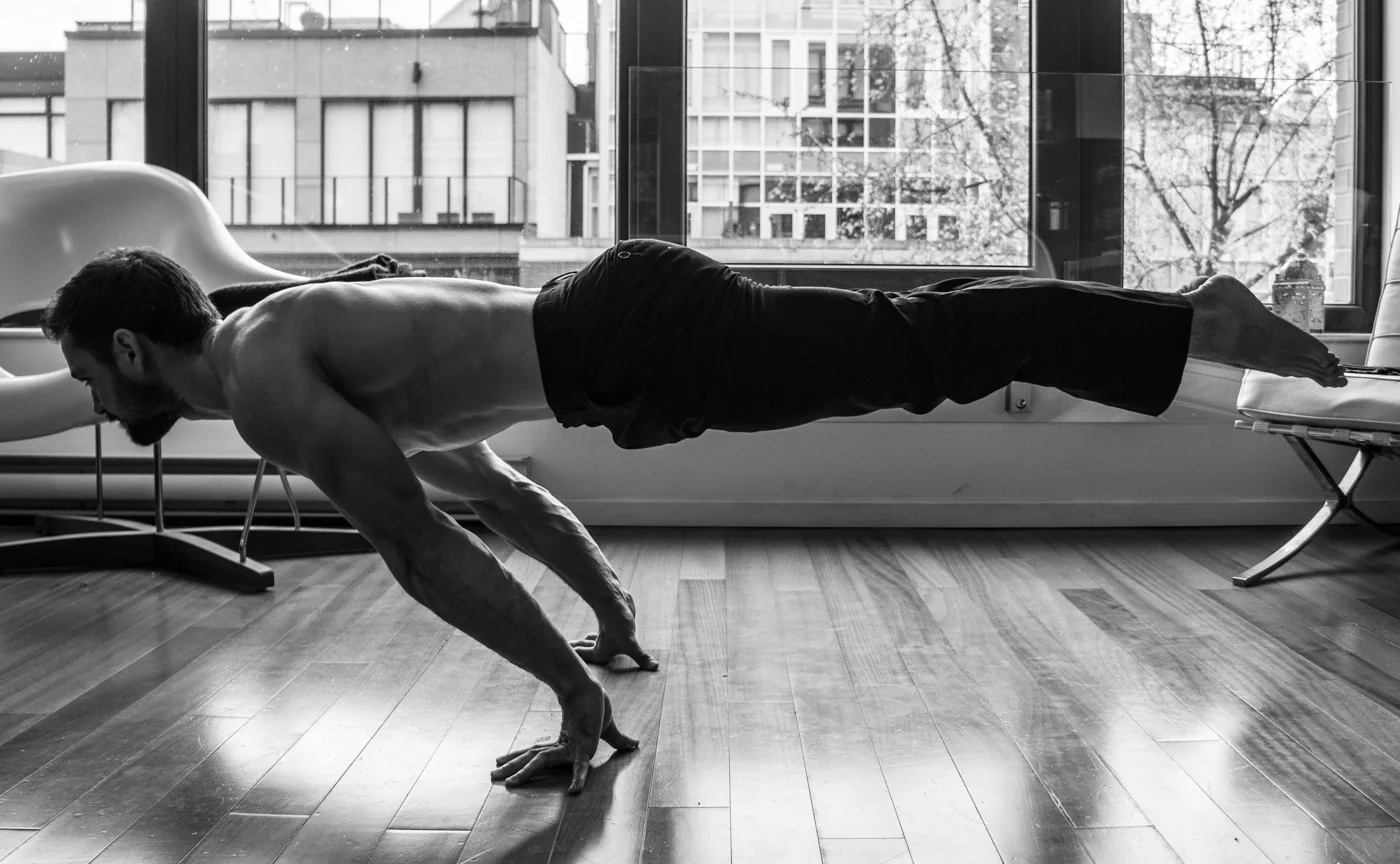
A planche asks the shoulders and straight arms to support the body with the feet off the floor. The chest, shoulder muscles and muscles controlling the shoulder blades work with a braced trunk; the wrists also receive substantial load.
This family develops a specific support skill. Leg position and forward lean change difficulty sharply, so small changes matter. Practise manageable shapes early in a session, with a stable surface and enough room to put the feet down without rushing.
Planche Lean
The feet remain on the ground while the shoulders move ahead of the hands, making forward lean the adjustable challenge. It is useful for preparing support strength. Increase distance gradually and use comfortable hand positioning rather than forcing a deep wrist angle.
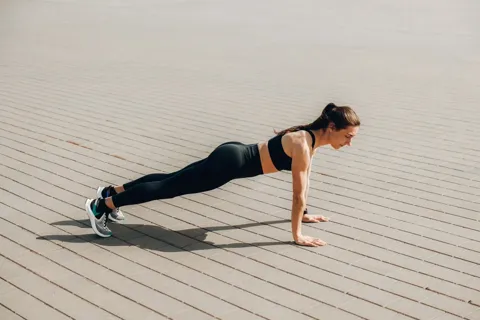
- Begin in a strong plank with hands flat and fingers spread, using a wrist-comfortable position.
- Keeping elbows straight, shift shoulders slightly beyond your wrists and push the floor away; keep feet down and return before alignment breaks.
Loading connects to YouTube and sends your IP address and technical data to Google. The written guide works without the video.
PrivacyTechnique points to remember
Shift over your hands with straight elbows and actively spread shoulder blades. If arms bend or hips sink, unload your hands.
Start easier, progress deliberately
A feet-supported planche lean lets you dose the forward shift. Start with a small lean; tuck attempts come after you can reverse the loading under control.
Where this exercise fits in your workout
Give planche practice a short slot early, before your shoulders tire. End each attempt while you can still return with control. Handstands and dips add more work for the same hands and shoulders that day.
Warm up with easier sets before these working sets.
| Exercise | Sets | Repetitions, duration or distance | Rest |
|---|---|---|---|
| Planche Lean | 3 | 5 seconds | 2 to 3 minutes, longer if needed |
Planche Push-Up
Bending and straightening the arms while the feet remain suspended adds movement to an already demanding support skill. It belongs after reliable planche control, not at the start of learning. A simpler feet-supported press can supply pressing work while the skill develops.
- Attempt this only after a stable planche progression and prepared wrists.
- With shoulders ahead of your hands and feet clear of the floor, bend your elbows to lower your body together, then press back up without dropping your hips.
Frog Stand
Resting the knees on bent arms reduces the demand and turns the task toward balance on the hands. It builds familiarity with lifting the feet. Preparing for a tuck planche then adds separate practice with straight arms and less assistance from the legs.
- Squat low with palms planted and elbows bent, resting your knees on your upper arms.
- Lean forward gradually until your feet become light, then lift briefly; keep a cushion ahead and return your feet before balance is lost.
Tuck Planche
The knees draw toward the chest and the feet lift while the arms stay straight. This shortens the lever compared with an extended body. It is still a substantial strength step from a frog stand, so retain foot assistance when the shoulders cannot yet support the shape.
- Use prepared wrists and mastered easier straight-arm supports before this advanced balance.
- Lean shoulders ahead of your hands and lift both feet with knees tucked between your arms.
- Push the floor away with straight elbows and lower your feet before control fades.
Advanced Tuck Planche
Opening the hips moves the knees farther behind while keeping them bent. This increases the lever without jumping directly to straight legs. Use a small change in body shape and keep the same shoulder support rather than gaining distance through collapsing posture.
- Use prepared wrists and mastered easier straight-arm supports before this advanced balance.
- From a stable tuck planche, move your bent knees backward slightly and flatten your back.
- Push the floor away with straight elbows and lower your feet before control fades.
Straddle Planche
Straightening and spreading the legs lengthens the shape while reducing the forward lever compared with closed legs. It can serve as an intermediate skill. Comfortable hip opening matters, and the wrists and shoulders still carry a very demanding load.
- Use prepared wrists and mastered easier straight-arm supports before this advanced balance.
- From controlled shorter-lever holds, extend both legs wide behind you with hips at shoulder height.
- Push the floor away with straight elbows and lower your feet before control fades.
Full Planche
The straight body and closed legs create the longest standard lever in this progression. It is a highly advanced support skill. Training should preserve a controlled entry and exit; brief uncontrolled attempts add little information about whether the underlying position is ready.
- Use prepared wrists and mastered easier straight-arm supports before this advanced balance.
- After a controlled straddle planche, bring straight legs together behind you while keeping your body horizontal.
- Push the floor away with straight elbows and lower your feet before control fades.
Try a tool
Read next
Sources
- GMB Fitness: Tuck to straddle planche progression ↗
- ACSM (2026): Resistance Training Prescription for Healthy Adults ↗
- FitnessFAQs: Planche For Beginners Made Easy ↗
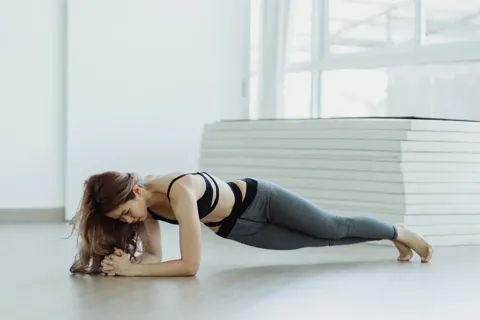
Jonathanfv, Wikimedia Commons · CC BY 3.0 · Resized and converted to WebP for this website.
Maksim Goncharenok / Pexels · Pexels License · Resized and converted to WebP for this website.
Ed Rogers / Pexels · Pexels License · Resized and converted to WebP for this website.
Ketut Subiyanto / Pexels · Pexels License · Resized and converted to WebP for this website.
Ketut Subiyanto / Pexels · Pexels License · Resized and converted to WebP for this website.