Start with your breaks
Look at your next two shifts. When are you likely to eat, and what is available at work? A fridge, microwave and ten minutes at a table allow different choices from a brief stop on the road. Begin with those practical details, then choose the food.
If breaks are unpredictable, pack a meal and a smaller snack separately. You can eat something when a chance appears and save the larger portion for later, keeping it chilled until then. Bread and whole fruit can be useful backup supplies when their storage instructions allow room-temperature storage.
Match the meal to the workplace
| Available | A useful choice | Preparation |
|---|---|---|
| Fridge and microwave | A familiar hot meal | Pack in a microwave-safe container and reheat thoroughly |
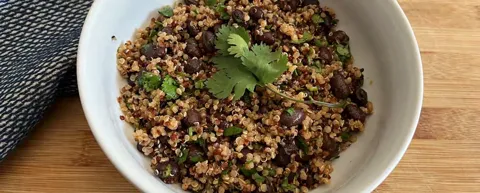
| Fridge, no microwave | Lime quinoa with black beans | Follow the recipe, cool promptly and serve cold |
| Reliable cooling while travelling | A cold meal in an insulated bag | Pack it fully chilled with frozen cold sources |
| No reliable cooling | Shelf-stable food according to its label | For example, bread, whole fruit and a small serving of nuts |
Choose the amount for your appetite, work and training. A physically demanding shift may call for more food than a mainly seated one. Add a suitable side if needed, so the box contains enough for an enjoyable meal.
One small cooking session for two shifts
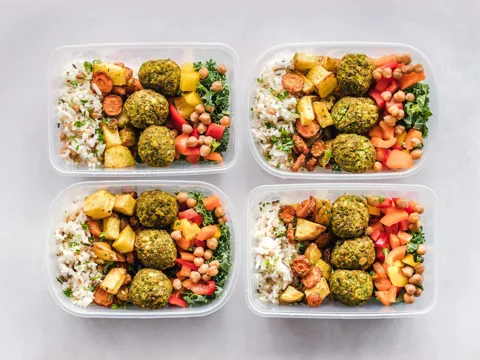
The lime quinoa and black bean recipe makes four portions. Eat one fresh, chill two for the next shifts and freeze the fourth promptly on the day of cooking once cooled. Use the refrigerated portions within 48 hours. If a shift falls later, freeze its portion early too.
Pack crunchy vegetables separately if you prefer them that way. For a very early start, the peanut overnight oats are another option: follow the recipe the evening before, refrigerate for at least six hours and take them for the following morning. Both recipes provide quantities and the preparation steps.
Spread food through a night shift
Having an ordinary meal before starting work makes smaller portions overnight easier to manage. A very large meal in the middle of the night can feel uncomfortable. You could divide your packed meal between two breaks, keeping the second portion refrigerated until you need it.
Appetite and physical workload matter as well as the clock. Working hard while hungry is not a useful target. A light meal before sleep may help if you are hungry after the shift. Keep coffee earlier in the shift when sleep will follow. With diabetes or medication affecting blood glucose, arrange meal timing with your care team.
Keep the food cold all the way
Divide cooked food into shallow containers and refrigerate within one to two hours. Keep the fridge at 5°C or below and eat these chilled portions within 48 hours; follow any stricter package instructions. Thaw frozen portions in the fridge and eat within 24 hours of fully thawing.
For the journey, put thoroughly chilled food in an insulated bag with at least two frozen cold sources, such as gel packs. Refrigerate it on arrival. An insulated bag alone will not keep food cold throughout a long shift. Discard perishables left without cooling for more than two hours, or one hour above 32°C.
Put training and meals in the same week
If you lift before a late shift, you might have your larger meal afterwards at home. If you train after an early shift, a familiar snack with some time to digest can stop you arriving at the gym extremely hungry. Our early-training and late-dinner guides help you choose that arrangement.
After an overnight shift, sleep may come first. Cook before the run of shifts while you are more awake. Two well-packed shifts are a useful starting point. Add extra portions or a second dish once that small routine feels easy.
Make leaving for work easier
Put the empty insulated bag beside your work things while the food stays in the fridge. The reminder is visible and the meal remains cold. Cutlery and a napkin can already be in the bag.
After those first two shifts, the next change is usually obvious: a bigger portion, something crunchy or a meal that tastes good cold. Change that one detail. Meal prep should make your break more pleasant and leave you more time after work.
Try a tool
Read next

Sources
- HSE: Hints and tips for shift-workers ↗
- NIOSH: Diet suggestions for night-shift nurses ↗
- Food Standards Agency: How to chill, freeze and defrost food safely ↗
- FoodSafety.gov: Food safety for packed lunches ↗
Dziana Hasanbekava / Pexels · Pexels License · Resized and converted to WebP for this website.
VA Healthy Teaching Kitchen · Public domain · U.S. Department of Veterans Affairs
Ella Olsson / Pexels · Pexels License · Resized and converted to WebP for this website.
ready made / Pexels · Pexels License · Resized and converted to WebP for this website.