
What is available where you work?
A fridge at your destination makes things easier: put your chilled lunch straight into it when you arrive. If you work on the move, you need a properly packed insulated bag. An ordinary bag will not keep cooked food or dairy safely cold until lunchtime.
| Your day | What works |
|---|---|
| A fridge at work | Transport the food chilled and refrigerate it on arrival. |
| No fridge, but an insulated bag | Pack thoroughly chilled food with at least two frozen cold sources. Keep the bag closed and out of the sun. |
| No reliable way to keep food cold | Buy a freshly prepared meal or choose foods labelled safe to store without refrigeration. The quinoa and overnight oats need chilling. |
Food that works cold
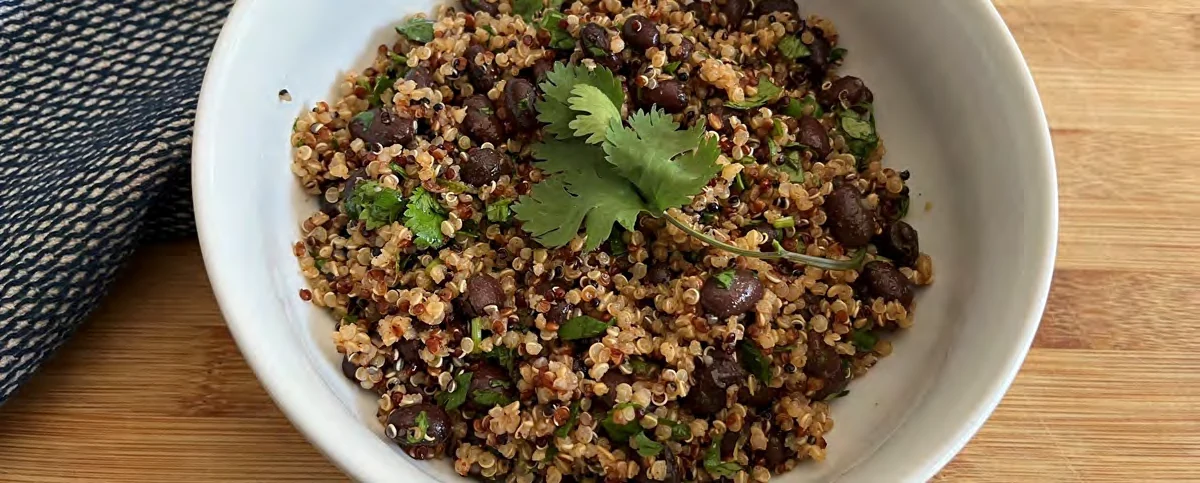
Lime quinoa with black beans is savoury, fresh and easy to eat with a spoon. Cook the quinoa at home, then open the chilled lunchbox when your break comes. A green salad goes well alongside it.
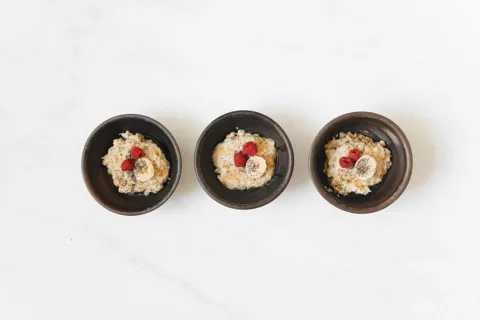
Want to pack breakfast too? Mix the peanut butter overnight oats the evening before and refrigerate for at least six hours.
Cook once for two lunches
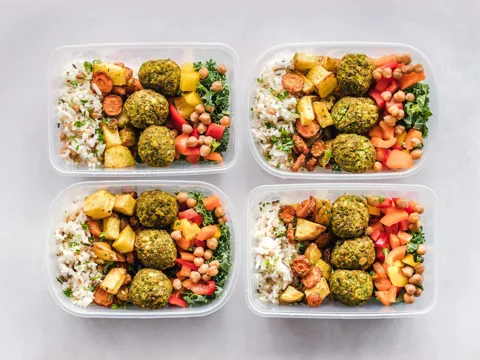
Cook the full recipe and divide it between two lunchboxes. Each box contains two of the servings listed in the recipe. Adjust how much you eat to your appetite. Cool and freeze any portions for later days on cooking day.
| When | What to prepare |
|---|---|
| Sunday evening | Cook the quinoa following the recipe. Divide between two shallow boxes, cool promptly and refrigerate within 1–2 hours. |
| Monday lunch | Take the first box chilled. Pack a green salad separately if you want one. |
| Tuesday lunch | Eat the second box before 48 hours have passed since cooking. |
Keep it cold until lunch
Pack the food already thoroughly chilled. Use two frozen ice packs, or an ice pack and a frozen bottle of water, in an insulated bag. Refrigerate the box when you arrive if a fridge is available. A thermometer helps on longer journeys: aim to keep the food at 4°C / 40°F or below.
An insulated bag does not make food last indefinitely. Discard perishable food left without adequate chilling for more than two hours, or one hour above 32°C / 90°F. Smell and taste cannot reliably tell you whether it is safe.
How far ahead can you prepare?
This plan allows no more than 48 hours in a fridge at 0–4°C / 32–40°F. Cool cooked food promptly in small, shallow containers and refrigerate within 1–2 hours. Freeze portions for later days on cooking day. Thaw in the fridge and eat within 24 hours of fully thawing. Follow any stricter instructions on the packaging.
Make the overnight oats for the following morning and keep them chilled throughout. Prepare the amount you expect to take and eat, so there is less left in the jar.
When the first two lunches work for you
For days when you can reheat lunch, find more dishes here for your next cooking session.
Try a tool
Read next

Sources
- VA Healthy Teaching Kitchen: Cilantro-Lime Black Bean Quinoa Salad (Cost-Friendly Cooking, 2026, PDF p. 44) ↗
- VA Healthy Teaching Kitchen: Creamy Peanut Butter Overnight Oats (Cost-Friendly Cooking, 2026, PDF p. 24) ↗
- Food Standards Agency: How to chill, freeze and defrost food safely ↗
- FoodSafety.gov: Bag lunches for school and work (reviewed November 2025) ↗
- FDA: Handling food safely while eating outdoors ↗
VA Healthy Teaching Kitchen · Public domain · U.S. Department of Veterans Affairs
Ella Olsson / Pexels · Pexels License · Resized and converted to WebP for this website.