
Start with the training week
On training days, the journey between work and the gym often determines what you eat. A prepared lunch or a sandwich in your bag can make a big difference. Start with the day when you usually arrive hungry or rushed. That makes your meals fit your schedule.
Muscle growth needs an appropriate resistance-training stimulus. Food supports that work, while sleep and recovery help you return ready for the next session. Keep a few main exercises consistent so you can see whether repetitions, load or control improve over time.
Get enough energy before fine-tuning
If you often skip meals and arrive exhausted, first make your existing meals more reliable. A modest energy surplus can support muscle gain, but the ideal amount varies and some people gain muscle around maintenance. A calculator cannot identify a guaranteed personal surplus.
Use your current eating pattern as the starting point. If your weight is stable, recovery is good and training progresses, you may not need an immediate increase. If you deliberately want to gain weight, add a manageable portion and review the pattern over several weeks. The lean-bulk guide explains that adjustment process.
Build meals from four components
For most healthy adults who exercise, the ISSN gives a daily protein range of about 1.4–2.0 g per kilogram of body weight. At 70 kg, that is 98–140 g across the day. Use this as an overall starting range; kidney disease requires an individual amount agreed with your clinician.
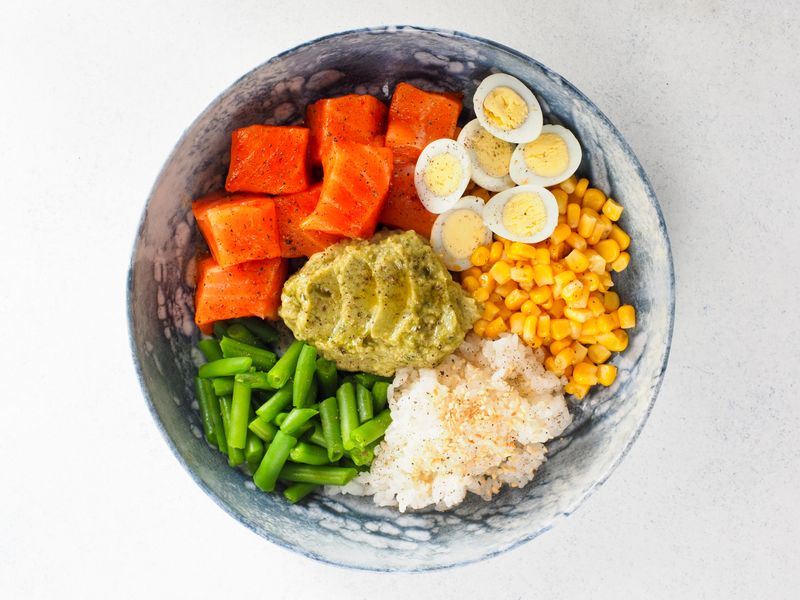
Combine a protein source, a carbohydrate food, vegetables or fruit, and some dietary fat across your day. Beans, tofu, eggs, fish, dairy or suitable alternatives can all have a place. Rice, potatoes, oats, bread and pasta make it easier to build meals that supply training energy.
Choose portions you can comfortably finish and afford to repeat. Protein deserves attention, but adding more protein powder while leaving lunch too small may not solve low energy. The protein guide covers amounts and food examples in detail.
A flexible day of meals
The sample day shows how meals can fit across a day. Swap ingredients for foods you enjoy and digest comfortably. Portion sizes depend on appetite, body size and training demands. A snack can bridge a long gap between lunch and training.
| Meal | One option | Useful adjustment |
|---|---|---|
| Breakfast | Oats, yogurt or a protein-rich soy alternative, fruit | Add more oats when breakfast is too small |
| Lunch | Rice, beans or chicken, vegetables, olive oil | Increase the rice portion if more energy is needed |
| Before training | Bread and a familiar topping, or fruit and yogurt | Choose a comfortable amount for the time available |
| Dinner | Potatoes, tofu or fish, vegetables | Prepare an extra portion for tomorrow |
Fit food around the session
A normal meal a few hours before training works well for many people. When you have less time, try a smaller, familiar snack and notice how your stomach feels. Very large portions or a sudden fibre increase can feel awkward during exercise.
Afterwards, arrange your next normal meal with protein and carbohydrate. If dinner is much later, pack something convenient. There is no need to make the whole day revolve around a narrow eating deadline. Keep drinking opportunities available, especially in warm conditions.
Make it work with a small appetite or budget
Use foods that solve your actual obstacle. Frozen vegetables reduce chopping; canned beans shorten cooking; oats, potatoes and lentils often stretch a budget. Compare prices per usable portion rather than assuming a sports-branded product is better value.
With a small appetite, try a slightly larger breakfast, an extra sandwich or a drink made from milk or a suitable soy alternative and fruit. Additions should leave room for varied meals. Increase portions gradually if a sudden change causes discomfort.
Judge progress with more than the scale
When the same weight moves for more controlled repetitions, it is worth recording: your performance is improving. Several weeks of training give that progress context. Body weight also changes with water, carbohydrate stores and digestive contents, while early strength gains partly come from learning the movement.
If you weigh yourself, use comparable conditions and look at the trend. Persistent exhaustion, unexplained weight loss or menstrual changes deserve professional assessment. If food rules or weighing create anxiety, use support rather than making the monitoring more intensive.
Have food waiting for your next training day
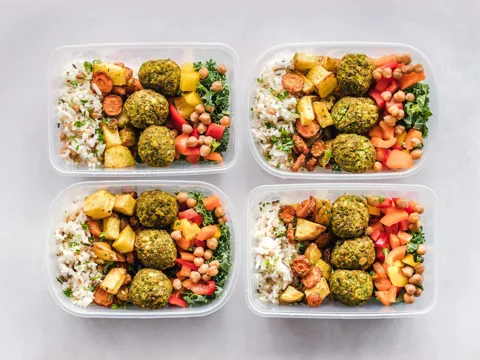
If you often get home late from the gym, a portion of a favourite meal in the freezer is especially welcome. If lunchtime is the problem, prepare a lunchbox instead. Start with that one meal. Once it makes the day easier, borrow more ideas from the sample day.
Save your sets in LiftPal so your weights and repetitions are ready for the next session. A Daily Goal can remind you about tomorrow's lunch. The protein guide and meal-prep ideas help you find meals that fit.
Try a tool
Read next



Sources
- ISSN (2017): Position stand on protein and exercise ↗
- Slater et al. (2019): Energy surplus and skeletal muscle hypertrophy ↗
- Helms et al. (2023): Small and large energy surpluses during resistance training ↗
- WHO: Healthy diet ↗
Andrea Piacquadio / Pexels · Pexels License · Resized and converted to WebP for this website.
Ella Olsson / Pexels · Pexels License · Resized and converted to WebP for this website.