
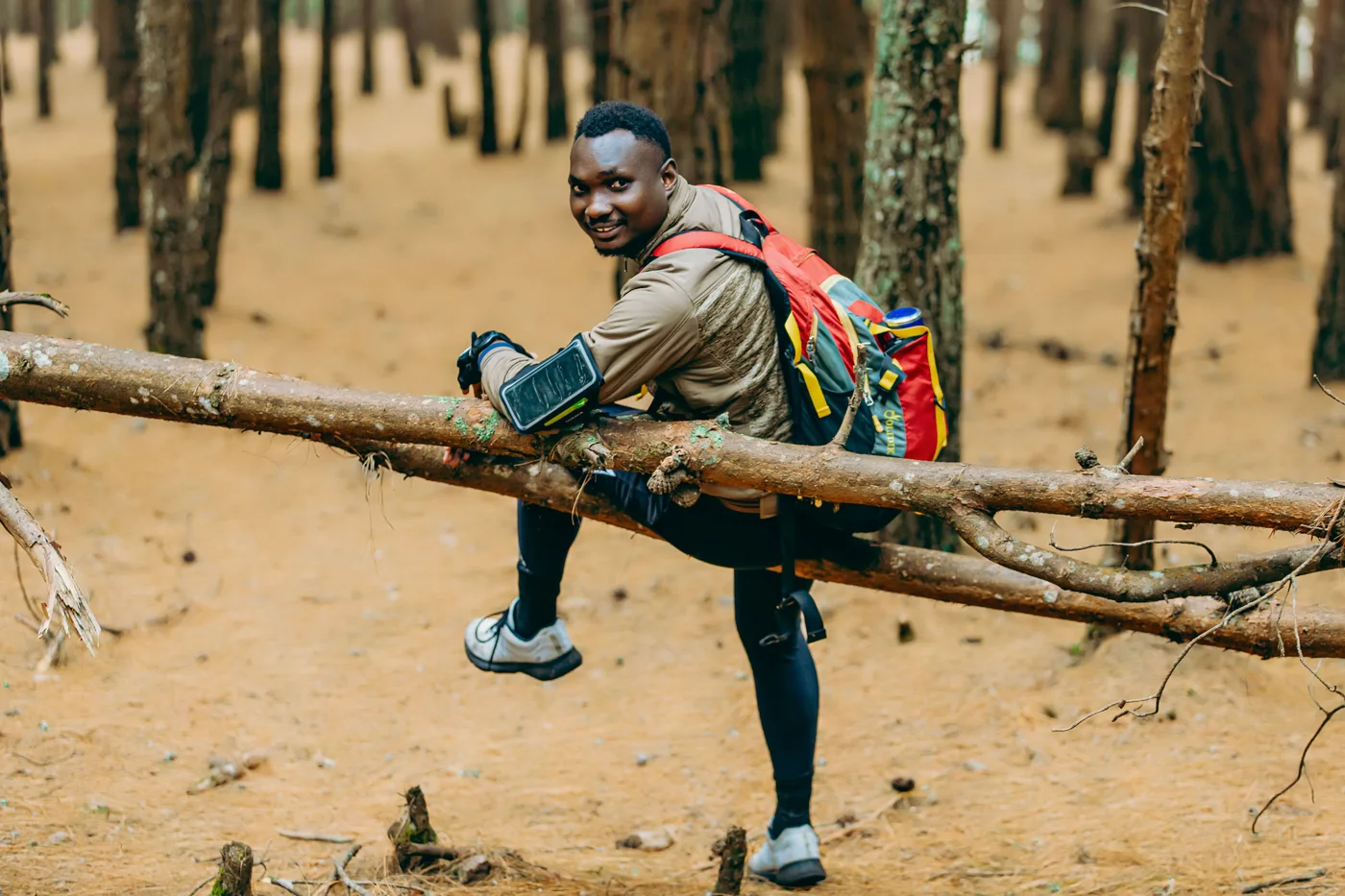
How rucking differs from ordinary walking
You carry an additional load, so the same route will usually feel harder. Pace, hills, distance and backpack weight all contribute to the challenge. Starting slowly on level ground is a different task from hiking downhill with a heavy pack.
The term comes from military training. Its long marches and heavy loads are unsuitable as a beginner leisure programme. A weighted vest also distributes weight differently from a backpack. Findings about one kind of equipment do not automatically apply to every other setup.
Get to know the route without added weight
Choose a walk you already enjoy comfortably without a load. A short, flat loop with a shortcut is more convenient for a first attempt than a long out-and-back route. If you are only just returning to activity, ordinary walks are a useful starting point.
There is no bodyweight percentage you must reach before the walk counts. The load should let you stay upright and keep your usual walking pattern. Someone who already walks regularly might try a backpack weighing about three kilograms in total for 15 minutes. That is an example trial, not a minimum requirement.
Pack so the weight stays put
Use a backpack with straps you can adjust to fit. Keep the load close to your back and secure it against shifting. Towels can cushion water bottles; hard edges should not press into your spine. A suitable hip belt can transfer some load, provided it is part of an appropriate pack design.
Adjust the shoulder straps so the pack does not swing with each step. If you must lean heavily forwards or the straps dig in, the load and pack combination needs changing. Walk near home for a few minutes before committing to a longer route.
A first month without a rush
Leave time between early walks to notice how your shoulders, back and feet respond. Avoid placing them next to your hardest leg session. This example is for someone already comfortable with regular unweighted walks.
| Week | One rucking walk | Keep the same |
|---|---|---|
| 1 | 15 minutes with a light load | Familiar level route |
| 2 | Repeat that walk | Weight and pace |
| 3 | Extend to 20 minutes if it felt comfortable | Weight and pace |
| 4 | Repeat the longer walk | No further increase |
Stay with an earlier version if the walk leaves you unusually uncomfortable afterwards. Change one factor next time: walk a little longer or, later, carry a little more. Hills and speed also increase the workload.
Notice what happens along the way
Shoes and socks that fit well on ordinary walks are a sensible starting point. Take rubbing seriously and cut the route short before a small hotspot becomes a blister. In hot weather, a shorter shaded route can be much more comfortable.
Numbness, sharp pain or a change in your gait are reasons to remove the pack and stop. If you have an existing back or joint problem, discuss added load with your treating professional first. Walking can be worthwhile without carrying anything extra.
Can you combine it with strength training?
Yes, when you account for the extra work in your week. Tired legs after heavy squats are a poor moment to try a large load for the first time. A free day or a day with easy upper-body training may fit a short walk better.
Keep to walking while you get used to carrying the pack. Loaded running creates a different challenge and is unnecessary here. If gym performance keeps falling or your feet remain tender until the next walk, reduce the rucking first.
What a good start feels like
You finish with your normal walking pattern, the pack feels comfortable and you look forward to another outing. Repeat that combination before adding weight. Route, duration and total pack weight are enough to compare your sessions. More steps alone do not tell you that a walk was better.
Try a tool
Read next
Sources
- ACE (2025) · The truth behind the trends: rucking and weighted vests ↗
- U.S. Army H2F · Ruck marching optimization (occupational training context) ↗
- U.S. Army Public Health · Load carriage and training progression ↗
Chris wade NTEZICIMPA / Pexels · Pexels License · Resized and converted to WebP for this website.
stu_spivack, Wikimedia Commons · CC BY-SA 2.0 · Resized and converted to WebP for this website.
Uriel Mont / Pexels · Pexels License · Resized and converted to WebP for this website.
MART PRODUCTION / Pexels · Pexels License · Resized and converted to WebP for this website.
ready made / Pexels · Pexels License · Resized and converted to WebP for this website.