What would you enjoy starting with?
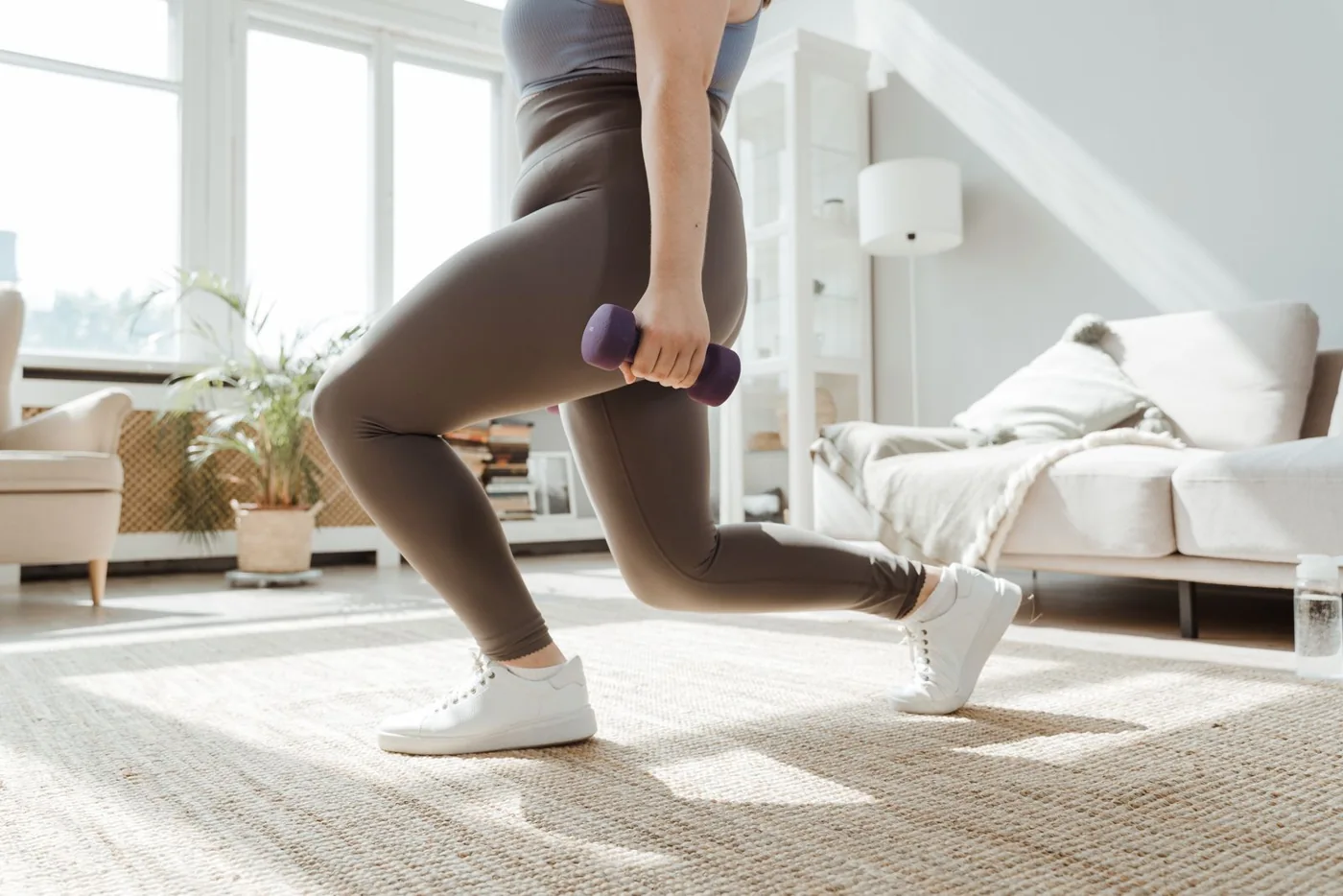
Think of an activity you used to enjoy or can try with little preparation: a walk in the park, music on a stroll or a few exercises by the sofa. Choose something easy to get to. Leaving your shoes or mat ready makes starting simpler.
A first week with room to breathe
You could walk for ten minutes after work on Tuesday, try five minutes of gentle exercises on Thursday and go for a walk with someone on Saturday. Swap the days to fit your week. If even one activity feels like a big commitment, start with that one and shorten it.
Three simple exercises to try at home
Standing up from a chair, pushing against a wall and lifting your heels are movements you can explore at your own pace. Start with a few repetitions and a firm support if needed. If you are returning after illness or injury, follow the advice you received for that recovery.
| Movement | An accessible option | How to adjust |
|---|---|---|
| Stand up and sit down | Use a stable chair | Choose a suitable seat height and hand support. |
| Push with the arms | A wall push-up | Stand closer to the wall for an easier version. |
| Raise the heels | Hold a stable support | Keep the movement small and controlled at first. |
How hard should the first sessions feel?
Your first sessions can feel easy. On a walk, you should still be able to talk comfortably. During the strength exercises, stop while a few controlled repetitions still feel possible. That gives you room to learn the movements and see how you feel the next day.
A busy day does not undo your start
Sometimes the day changes and the walk does not happen. Pick it up at the next opportunity. If that keeps happening, try a smaller start or another time. A walk you look forward to repeating is easier to keep than a crowded plan you dread.
Keep the parts you enjoyed
The walks felt good, but Thursday was too busy for exercises? Keep the walks next week and look for a quieter moment for the exercises. You can also shorten the session. Add more later when you are recovering well and feel like doing more.
For example, keep the two walks and try the chair and wall exercises at the weekend. There is no need to catch up on activities you missed. Get advice about suitable movement if symptoms persist.
When you feel ready for regular training
After a few weeks, walking may already feel like part of your day, and you might want to do more strength work. A simple two-day plan takes care of choosing the exercises for each session. You get to know a small selection and can notice what becomes easier from week to week. The linked home workout plan offers that next step at home.
Try a tool
Read next
 Everyday habitsHow to walk more each day and choose a step goal you can reach
 Training stylesStrength training at home: exercises with and without equipment
 RecoveryHow to return to training after a break
 Everyday habitsWalking for weight loss: how to make it part of your day
 NutritionHow to lose weight healthily: a practical starting plan
Sources
MART PRODUCTION / Pexels · Pexels License · Resized and converted to WebP for this website.
stu_spivack, Wikimedia Commons · CC BY-SA 2.0 · Resized and converted to WebP for this website.
Uriel Mont / Pexels · Pexels License · Resized and converted to WebP for this website.
Dziana Hasanbekava / Pexels · Pexels License · Resized and converted to WebP for this website.
Kaboompics / Pexels · Pexels License · Resized and converted to WebP for this website.
Ketut Subiyanto / Pexels · Pexels License · Resized and converted to WebP for this website.
RDNE Stock project / Pexels · Pexels License · Resized and converted to WebP for this website.