What counts as an exercise snack?
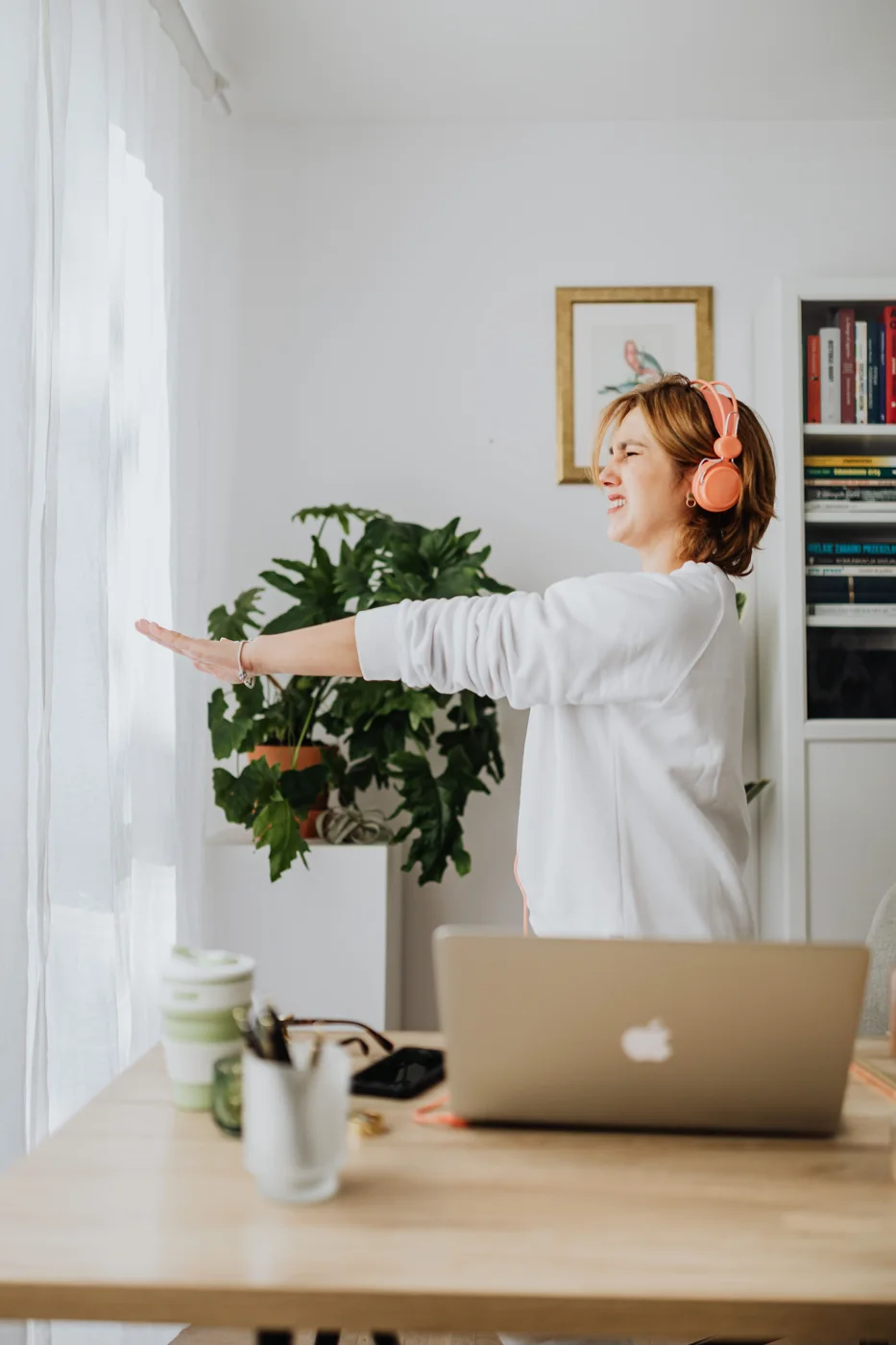
The term describes brief periods of activity spread through the day. They might involve brisk walking, stairs or a few repetitions of a strength exercise. Research often uses planned, fairly demanding bouts lasting a few minutes. An easy walk to the kitchen is a movement break; it does not automatically deliver the same training effect as a studied stair-climbing programme.
A useful first question is where you could interrupt a long spell of sitting without adding another major commitment. Start there. Once the habit feels familiar, you can change the effort or duration to suit what you want from it.
Three breaks that need no outfit change
Choose whatever fits your space and mood. Put a sturdy chair against a wall, keep stairs clear and use the handrail. Standing exercises need a surface where your feet will not slip.
| Opportunity | Movement | A starting example |
|---|---|---|
| After a meeting | Walk around your home or along the corridor | 2 minutes |
| Before lunch | Stand up from a firm chair, then sit back down | 5–8 steady repetitions |
| In the afternoon | Walk up a flight of stairs comfortably and return slowly | 1–2 rounds |
These amounts are practical starting points. There is no need to chase breathlessness or force a repetition target. Use your hands to help with the chair if needed. A few repetitions are enough to discover which option feels comfortable.
Give the break a recognisable beginning
“Move more” is easy to lose between emails. “Walk for two minutes after the first video call” tells you when to begin. For your first week, choose just one cue: finishing a phone call, heating lunch or getting up to make coffee.
If a meeting runs late, the break can happen when it ends. A precise timetable is unnecessary. A note near your screen or shoes by the door may be all the reminder you need. At the end of the day, you are simply noticing whether you found the opportunity. An unbroken streak is optional.
Harder efforts need the right setting
If you want to improve fitness through short workouts, a later version could include brisker walking or repeated stair climbs. Take the first round gently and increase the pace only once you feel steady. All-out sprints between office meetings are rarely a convenient starting point.
A recent review found fitness benefits from brief exercise bouts in previously inactive people. That does not give every two-minute break a precise, predictable effect. The examples here are designed to help you establish a repeatable place for movement first.
Try this first week
From Monday to Friday, walk for two minutes after your first long block of work. On Wednesday and Friday, add a few chair stands before lunch. Leave the weekend free of catching up. At the end of the week, keep the breaks that fitted comfortably into your day.
If mornings were chaotic, lunchtime might work better. If everything felt easy, extend one walk or add another opportunity. Increasing the number of breaks, their speed and their difficulty together makes a simple start harder to maintain.
What if you already work out?
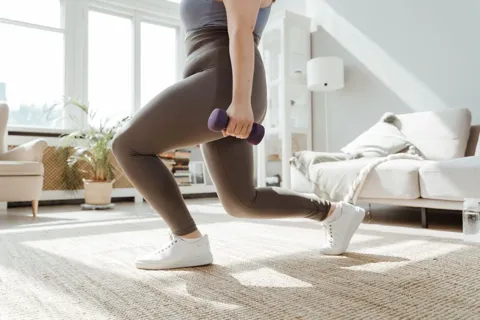
On strength-training days, these breaks can stay easy. Your legs do not need another demanding squat set between meetings. A short walk adds a different kind of movement to a day otherwise divided between training and sitting.
You can still have a broader weekly plan for strength and endurance. WHO guidance counts short periods of activity too; regular strength work and enough aerobic activity remain useful goals in their own right. Look at your whole week and the kind of movement it currently lacks.
Pick your next break now
Choose one opportunity and one movement from the table. That is enough preparation for a first attempt. After a few days, it may become a familiar part of your routine. If you enjoy having something small to tick off, add it as a Daily Goal in LiftPal.
Try a tool
Read next

Sources
- Rodríguez et al. (2026) · Exercise snacks: systematic review and meta-analysis ↗
- WHO (2020) · Guidelines on physical activity and sedentary behaviour ↗
- Jenkins et al. (2019) · Do stair climbing exercise snacks improve cardiorespiratory fitness? ↗
Kaboompics / Pexels · Pexels License · Resized and converted to WebP for this website.
MART PRODUCTION / Pexels · Pexels License · Resized and converted to WebP for this website.
stu_spivack, Wikimedia Commons · CC BY-SA 2.0 · Resized and converted to WebP for this website.
ready made / Pexels · Pexels License · Resized and converted to WebP for this website.