Understand training
How to return to training after a break
Ready to get back to the gym but unsure what weight to start with? Missing one workout is different from taking several weeks off or recovering from an illness. Learn how to approach the first session, when a lighter week can help and when symptoms mean it is time to rest.
How long was the break, and why?
A rest day is part of a training week. A deload is a deliberately lighter period, using fewer sets or less weight. After a longer interruption, you first need to find out what workload feels manageable again.
If you have been ill, recovery also guides your return. Fever or pronounced acute symptoms mean pausing training, even if you had already picked a date to restart.
What weight should you start with?
Your last entry gives you a reference: which weights you lifted, how many reps you managed and how hard it felt. Those numbers help you choose a starting point. The first session shows you what you can do today.
After one missed workout, you can usually continue with the planned session if you feel well and your warm-up sets move as normal. After weeks or months away, start lighter with fewer sets. If you used to do four working sets, two could be a starting example. Notice your control and recovery afterwards. There is no need to catch up on missed workouts. The next section covers additional considerations after illness.
Illness adds another decision
For respiratory illness, the CDC advises returning to normal activities only once symptoms are improving overall and you have been fever-free without medication for at least 24 hours. That public-health rule is not clearance for hard lifting. An IOC consensus describes a graded return to full training. Around other people, including at the gym, the CDC advises added precautions for the following five days.
Do not train with a fever or during acute illness. Chest pain, unexplained breathlessness, fainting, marked dizziness, or symptoms returning with exertion call for medical assessment. Professional advice matters especially after moderate or severe illness, before resuming hard training.
Keep the break visible in LiftPal
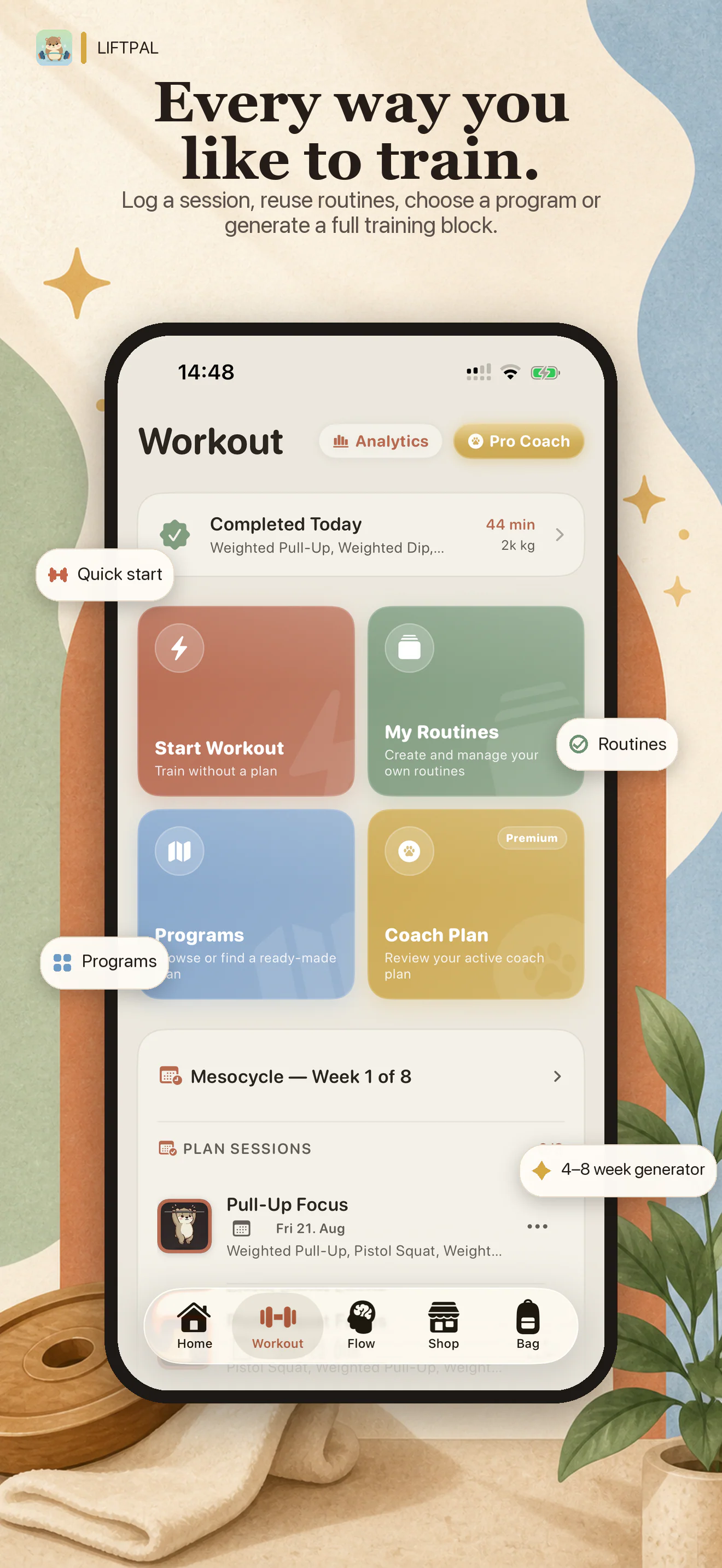
When ill, use recovery mode to pause selected everyday goals. Their existing progress is retained and Goal and Flow streaks are protected. Plan deloads separately through your workout workload or training blocks. On returning, record weight, repetitions and RPE in the workout log.
The Premium Readiness check-in adds your own feedback as context for training decisions; it does not assess an illness. Use the log for the sets you actually complete. At the next comparable session, you can see the load and effort you managed on your return.
Read next


Sources
Sources and context
The IOC consensus covers graded return after respiratory infections in athletes. CDC and NHS guidance covers infection precautions and warning signs. Bell et al. provide context for deload practice; the reduced-set example is an illustration, not medical guidance.
International Olympic Committee consensus statement on acute respiratory illnesses in athletes, part 1
Schwellnus et al. · British Journal of Sports Medicine
Open original sourceExercise and your health: A guide to getting started
Newcastle Hospitals NHS Foundation Trust · NHS
Open original sourcePreventing spread of respiratory viruses when you're sick
Centers for Disease Control and Prevention · CDC
Open original sourceIntegrating Deloading into Strength and Physique Sports Training Programmes: An International Delphi Consensus Approach
Bell et al. · Sports Medicine - Open
Open original sourceLiftPal Features: Training, Flow, and Wombat
LiftPal · LiftPal product documentation
Open original source
Kaboompics / Pexels · Pexels License
ready made / Pexels · Pexels License · Resized and converted to WebP for this website.
MART PRODUCTION / Pexels · Pexels License · Resized and converted to WebP for this website.