
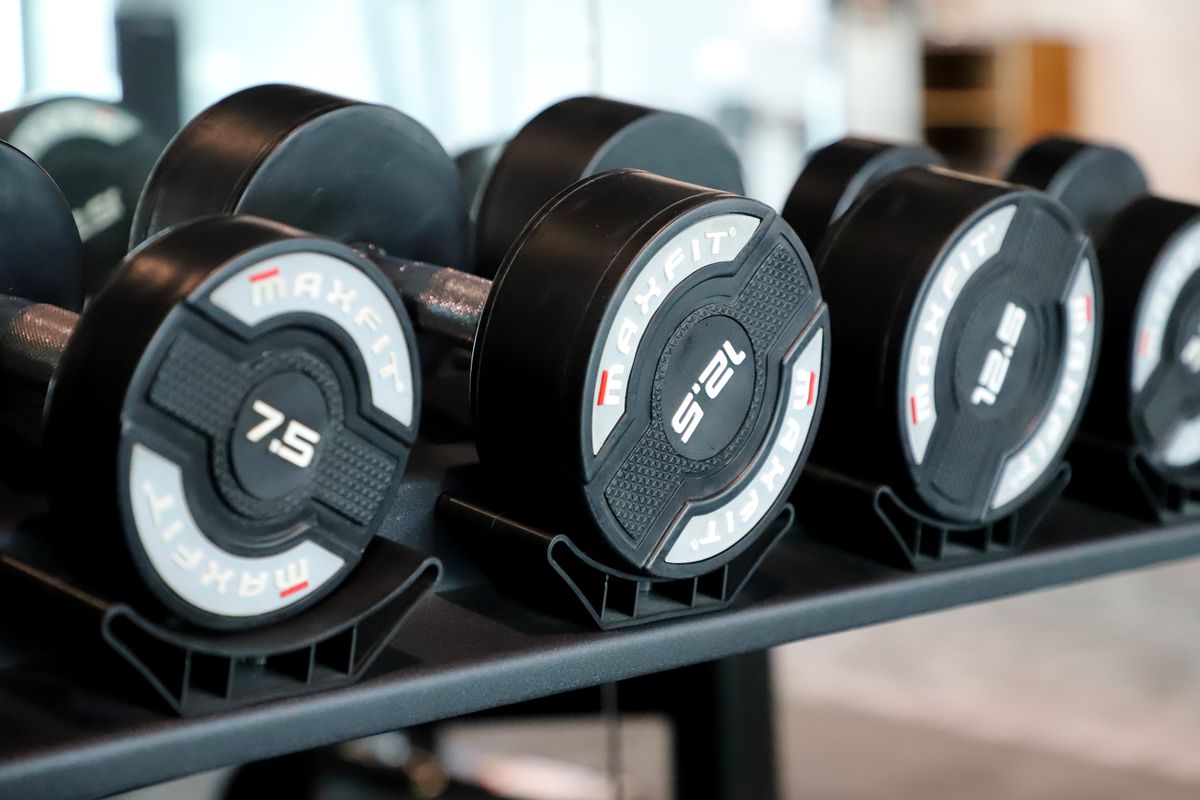
Where to begin
You can organise strength training for your legs, back, chest and trunk at home. Each exercise needs a way to become more challenging over time. Keeping a regular selection makes that easier: you learn the setup, spend less time preparing and can compare results. The sample session uses a pair of dumbbells and some clear floor space.
Decide what you want the session to accomplish. Strength and muscle-building work benefit from repeatable working sets with rest. Short movement breaks and walks can add activity throughout the day. Both fit in the same week. A strength session does not have to be a breathless circuit to serve its purpose.
Your sessions
A set is a group of repetitions performed in a row. For 2 × 8–12, do eight to twelve repetitions, rest, then repeat. The table lists working sets; lighter warm-up sets come first.
A session to get started
- Sets
- 2
- Reps / duration
- 8–12
- Rest
- 2 min
- Sets
- 2
- Reps / duration
- 8–12
- Rest
- 2 min
- Sets
- 2
- Reps / duration
- 8–12 per side
- Rest
- 2 min
- Sets
- 2
- Reps / duration
- 8–10
- Rest
- 2 min
- Sets
- 2
- Reps / duration
- 6–10 per side
- Rest
- 1 min
Equipment worth having
Adjustable dumbbells cover many movements and allow gradual loading changes. Check that collars are secure and the floor is stable and non-slip. Keep enough space around you. Floor presses are performed lying on the floor, so a bench is unnecessary. For a one-arm row, you can use your own thigh as a stable support.
Without dumbbells, begin with squats, elevated push-ups, lunges and glute bridges. To load a pulling movement well, add a secure bar, rings, a suitable band anchor or weights. A routine consisting only of push-ups and abdominal exercises easily misses the back. Deliberately include a way to pull.
How to read the sample session
Start with a difficulty that leaves roughly two or three good repetitions available at the end of a set. This is called repetitions in reserve, or RIR. Your estimate will improve with practice. For now, the last repetition should follow the same movement as the first. End the set if you need momentum or a much shorter range to continue.
Begin with some easy movement, then practise the first loaded exercise at a lighter difficulty. For a heavier lift, use a few short warm-up sets to approach the working weight. The listed rest periods are starting points. Take longer when your breathing or concentration has not recovered enough for the next set.
Your first few weeks
Reserve two specific sessions per week. Set out your dumbbells, mat and last training entry before starting. Complete both sets of one exercise before moving on, keeping the setup and comparison simple. Row and dead-bug repetitions are per side; train both sides before beginning the next set.
If you have only twenty minutes, reduce that session to one set per exercise. Return to your usual volume at the next normal session. You do not need to squeeze every missed session into the weekend. Set a realistic new session and continue your week from there.
When to make an exercise harder
Record weights and repetitions for each set at home too. Once two sets of twelve controlled repetitions leave some reserve, increase the weight by a small step. With two dumbbells, moving from 8 to 9 kg each changes the combined load from 16 to 18 kg. Keep the same recording convention each time.
When the dumbbells become too light, choose an appropriate harder variation, such as lunges instead of more very easy squats. Lowering your hand support can progress push-ups. Slower lowering changes the task too; record that change instead of directly comparing its repetitions with earlier faster sets. Eventually, extra weights can make further progression easier.
When progress slows down
If every home session looks different, start by making the setup consistent. Keep four or five exercises for several weeks, then review your history. If time is the problem, temporarily reduce volume. Stop an exercise that causes pain and find a comfortable alternative; persistent symptoms need assessment. Remove unstable furniture and improvised attachments before your first set.
Choosing your next step
Your space creates useful boundaries. Controlled exercises without jumping may suit an apartment better. An occasional gym session can add heavier leg work or pulling equipment. You can keep your home sessions alongside it. Give each session a clear role and make sure the equipment it needs is available.
Keep a record you can use
Choose the weights or variations for your next workout before it starts. The home workout plan turns them into two complete training days. If you usually have half an hour, try the shorter plan. Keeping a familiar set of exercises saves you from searching for a new video and makes improvements easier to notice.
Try a tool
Read next
 Plans and progressHome workout plan: two days with dumbbells
 Plans and progress30-minute strength workout: prioritise your main sets
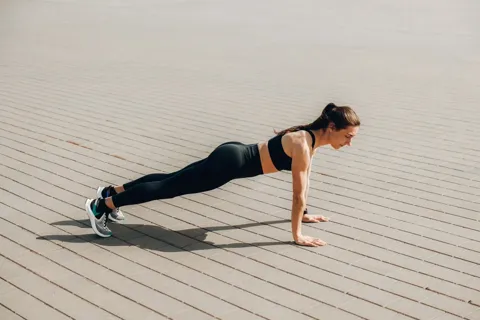 Learn exercisesHow to do push-ups: your first rep and what comes next
 Learn exercisesBack rows: barbell, dumbbell or cable?
 Plans and progressRPE in strength training: how hard was that set?
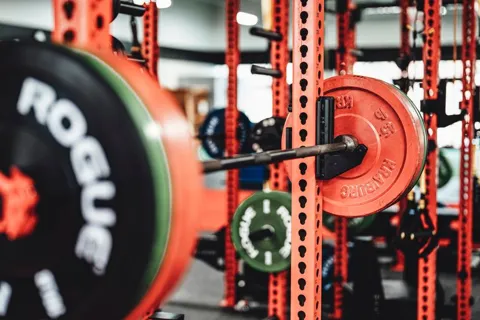 Plans and progressProgressive overload: when to add weight or repetitionsPlans and progressA three-day home workout without equipment
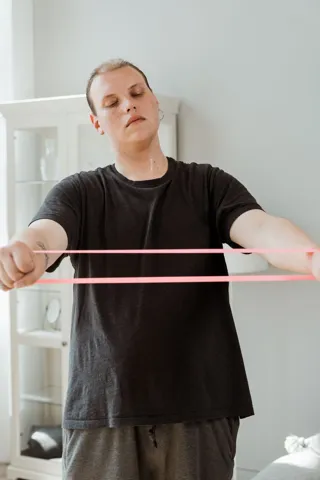 Plans and progressA resistance-band plan without a door anchorPlans and progress30-minute dumbbell workouts: three full-body days
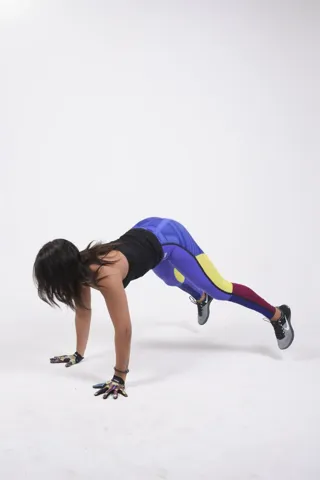 Training stylesCardio or weights for weight loss? How to combine both
Sources
- ACSM (2026): Resistance Training Prescription for Muscle Function, Hypertrophy, and Physical Performance in Healthy Adults ↗
- Zourdos et al. (2016): Repetitions-in-reserve RPE scale ↗
Maksim Goncharenok / Pexels · Pexels License · Resized and converted to WebP for this website.
@marcuschanmedia | IG / Pexels · Pexels License · Resized and converted to WebP for this website.
MART PRODUCTION / Pexels · Pexels License · Resized and converted to WebP for this website.
Andrea Musto / Pexels · Pexels License · Resized and converted to WebP for this website.