What zone 2 means
In the common five-zone model, zone 2 describes relatively low-intensity endurance work. You move steadily at an effort you could maintain for a while. An expert panel in 2025 proposed placing it just below the first ventilatory or lactate threshold, a point where breathing or blood lactate begins to change more noticeably as effort rises.
Watches and training systems calculate zones in different ways. A number labelled zone 2 on your screen is therefore not a universal boundary. To get started, find a manageable aerobic effort. If you later want more precise pacing for an endurance event, an exercise assessment can help.
You should still be able to talk comfortably
Cycle, walk briskly or jog easily enough to speak in full sentences. If conversation becomes a few words followed by a breath, slow down. The talk test helps you judge effort; it does not measure an exact metabolic threshold.
If even slow jogging feels hard, choose brisk walking or cycling. That can be useful training for your current fitness. Heat, hills and tiredness can make the same speed feel harder. Adjust to your breathing and how you feel instead of forcing last week's pace.
Try this first bike session
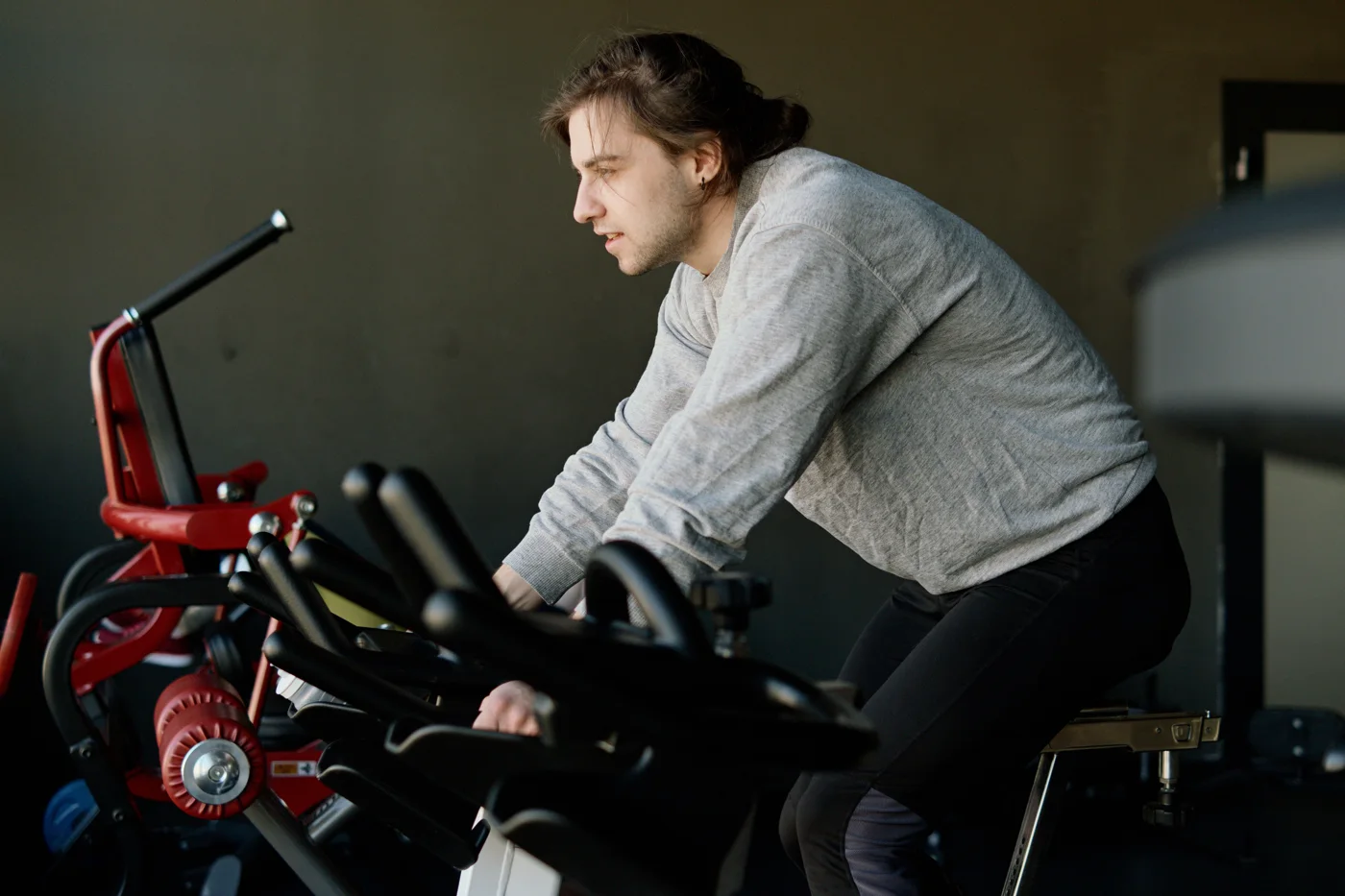
Pedal very gently for five minutes. Spend the next 15 minutes at a steady pace where you can still chat, then ease off for the final five. Those 25 minutes are a practical starting session, not a minimum duration before exercise begins to count.
On a stationary bike, choose resistance that lets you pedal smoothly. Your thighs should not be grinding against a heavy setting on every turn. Outdoors, a flat, straightforward route is easier for your first attempts than a ride full of steep climbs.
Two strength days and two easy cardio days
If you already lift twice a week, place the aerobic sessions between those workouts.
| Day | Session |
|---|---|
| Monday | Full-body strength |
| Tuesday | 25 minutes of easy cycling |
| Thursday | Full-body strength |
| Saturday | 25–30 minutes of brisk walking or cycling |
Leave the other days for everyday life and recovery. These short sessions are a starting point. General health guidance recommends at least 150 minutes of moderate activity each week for adults; brisk everyday journeys can contribute. Build up gradually once the first week feels manageable.
Can you do both on the same day?
Yes. If your lifting is the priority, do it first and finish with a short, easy aerobic session. That lets you approach squats or deadlifts with fresher legs. If the combination leaves you too tired, use separate days or leave several hours between sessions.
A meta-analysis found no smaller average gains in muscle size or maximal strength from combining aerobic and strength training. Explosive strength was more likely to be affected, particularly when both happened in the same session. Your total workload and the goal you care about most still matter.
Add time before chasing speed
After a week or two, if both rides feel comfortable and your strength sessions are going normally, extend one ride by five minutes. Keep the effort easy. You do not need to add duration, resistance and another training day at the same time.
Progress might mean chatting more easily on the same route or riding slightly faster without breathing harder. Compare similar conditions. A higher heart rate on a hot day does not automatically mean you have lost fitness.
How to tell whether the balance works
Enjoying your rides while your usual lifting sets keep progressing? The aerobic work has found a useful place. If your legs feel unusually heavy across several workouts, shorten the new session first or move it further away from your demanding leg day.
Use LiftPal to compare your weights and reps over several weeks. A short workout note such as “longer ride yesterday” helps explain a weaker lifting day when you look back. Add the regular cardio session as a Daily Goal so that a good idea has a place in next week's routine too.
Try a tool
Read next



Sources
- Sitko et al. (2025): What Is Zone 2 Training? Experts’ Viewpoint ↗
- Meixner et al. (2025): Zone 2 Intensity and Individual Variability ↗
- Schumann et al. (2022): Compatibility of Concurrent Aerobic and Strength Training ↗
- CDC: What Counts as Physical Activity for Adults ↗
Ivan S / Pexels · Pexels License · Resized and converted to WebP for this website.
Uriel Mont / Pexels · Pexels License · Resized and converted to WebP for this website.
ready made / Pexels · Pexels License · Resized and converted to WebP for this website.
Andrea Piacquadio / Pexels · Pexels License · Resized and converted to WebP for this website.