Who this plan is for
This plan suits you if you want to build strength and endurance together. You do not need a fast 5K or experience with heavy barbells. A comfortable 30-minute brisk walk is a useful starting point. The gym sessions use dumbbells and common machines; ask a member of staff to show you unfamiliar movements and settings.
If you have barely exercised recently, start with two or three sessions: strength A and one run-walk session first, then add strength B and the second run. This gives you time to learn the movements and see how training fits your week. Build towards the full schedule as the routine becomes familiar.
Your sessions
Two working sets per exercise. Warm up with light weights first and finish each set with roughly two or three reps left.
Strength A
- Sets
- 2
- Reps / duration
- 8–12
- Rest
- 2 min
- Sets
- 2
- Reps / duration
- 8–12
- Rest
- 2 min
- Sets
- 2
- Reps / duration
- 8–12
- Rest
- 2 min
- Sets
- 2
- Reps / duration
- 8–10
- Rest
- 2 min
- Sets
- 2
- Reps / duration
- 6–10 each side
- Rest
- 1 min
Strength B
- Sets
- 2
- Reps / duration
- 8–12
- Rest
- 2 min
- Sets
- 2
- Reps / duration
- 8–12
- Rest
- 2 min
- Sets
- 2
- Reps / duration
- 8–12
- Rest
- 2 min
- Sets
- 2
- Reps / duration
- 10–15
- Rest
- 2 min
- Sets
- 2
- Reps / duration
- 10–15
- Rest
- 2 min
Your training week
Lift on Monday and Thursday, then run on Tuesday and Saturday. There are several days between runs and a free day before Saturday. Walks fit well on days off. Extra hard leg sessions can wait while you get used to the combined workload.
| Day | Session | Time |
|---|---|---|
| Monday | Strength A | 40–50 min including warm-up |
| Tuesday | Easy run or run-walk | About 28–35 min including walks |
| Wednesday | Day off | Walk if you feel like it |
| Thursday | Strength B | 40–50 min including warm-up |
| Friday | Day off | Recovery |
| Saturday | Easy run or run-walk | About 28–40 min including walks |
| Sunday | Day off | Recovery |
How hard should the strength sets feel?
Start with five minutes of easy movement. Before the first leg exercise and your first push or pull, do one or two light warm-up sets. The two sets listed in the plan are your working sets. A set means completing the listed repetitions before taking a break.
Choose a weight that leaves roughly two or three good repetitions available at the end. For a range of 8–12, begin with eight. The last rep can feel challenging, but it should still look much like the first. On your first visit, one working set of each exercise can be enough before you build up to the full session.
Rest about two minutes between sets and around one minute for dead bugs. Take longer if you are still breathing hard. Keep the same exercises for the first few weeks so that a movement that initially feels unfamiliar has time to become comfortable.
Choose your running starting point
New to running: walk briskly for five minutes. Then repeat one minute of easy jogging and two minutes of walking six times. Finish with another five-minute walk. That is 28 minutes, and you can use the same session on both running days. Shorten the jogging intervals if one minute is too much.
Already able to run easily for 20 minutes: run for 20–25 minutes on Tuesday and 25–30 minutes on Saturday. Add five minutes of walking before and after each run. Keep a pace at which you can speak in full sentences. These sessions build comfortable running time; faster intervals can come later.
A familiar, flat route makes the start easier. You do not need to hit a distance or a heart-rate number. If conversation becomes difficult, slow down or walk for a while. This is particularly useful when your legs still feel heavy from lifting.
How to progress over the first few weeks
Repeat the opening week first. When your legs feel ready for the next session and the last jogging intervals feel as relaxed as the first, make one small change. For run-walk sessions, you might increase Saturday’s jogging intervals from one minute to 90 seconds while keeping the two-minute walks. Six rounds plus the walks before and after now total 31 minutes.
If you already run continuously, add around five minutes to just one of the runs. Keep the pace unchanged. Repeating that duration for another week is fine. You want the longer run to fit comfortably alongside next week’s training too.
In the gym, build repetitions before increasing weight: 8 and 8 might become 9 and 8, then eventually 12 and 12. Once both sets reach the top of the range with a little strength left, use the next suitable weight and return to the lower end. Longer runs and heavier lifts do not have to happen in the same week.
When the week gets busy or your legs feel tired
Move the days to suit your schedule. Aim to leave a day without strength training between lifting sessions and at least one non-running day between runs. If you miss a session, continue at your next available training time. Squeezing all four sessions into three days usually just makes the week harder.
If lifting and running have to share a day, begin with whichever matters most to you at the moment. A few hours between sessions can help you start the second one fresher. With only one available time slot, keep the run afterwards short and easy.
If tired legs change your stride, shorten the run or walk instead. Stop for pain that changes how you move, and get professional advice if it keeps returning. Take a break from training if you have a fever.
Can strength and endurance improve together?
Yes. Across 43 studies, combining endurance and strength training did not reduce average muscle growth or maximal-strength gains compared with strength training alone. Explosive-strength gains were more affected, particularly when both types shared a session. This starter plan therefore keeps runs easy and gives each type its own days.
Pick up where you left off in the gym
Save strength A and strength B as routines in LiftPal. Record your weight, repetitions and, if useful, RPE: how hard a set felt. Next Monday, you can see whether your previous squats were two sets of eight or whether you had already reached nine. Keep your running times and distances in your running log.
Try a tool
Read next


Sources
- ACSM (2026): Resistance Training Prescription for Muscle Function, Hypertrophy, and Physical Performance in Healthy Adults ↗
- Schumann et al. (2022): Compatibility of Concurrent Aerobic and Strength Training for Skeletal Muscle Size and Function ↗
- NHS: Couch to 5K running plan ↗
Andrea Piacquadio / Pexels · Pexels License · Resized and converted to WebP for this website.
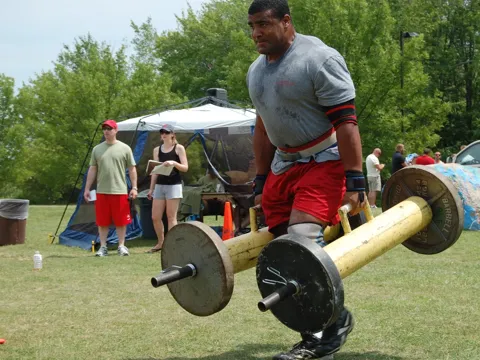
stu_spivack, Wikimedia Commons · CC BY-SA 2.0 · Resized and converted to WebP for this website.
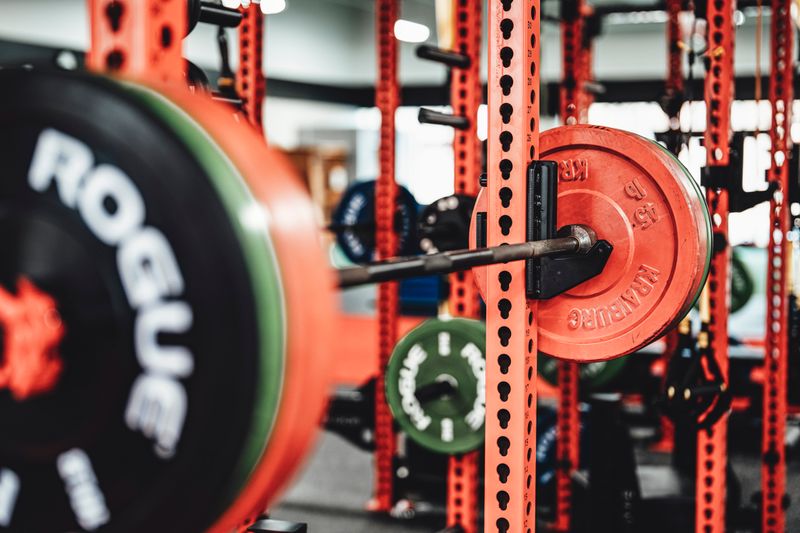
Ivan S / Pexels · Pexels License · Resized and converted to WebP for this website.
MART PRODUCTION / Pexels · Pexels License · Resized and converted to WebP for this website.