What this exercise trains
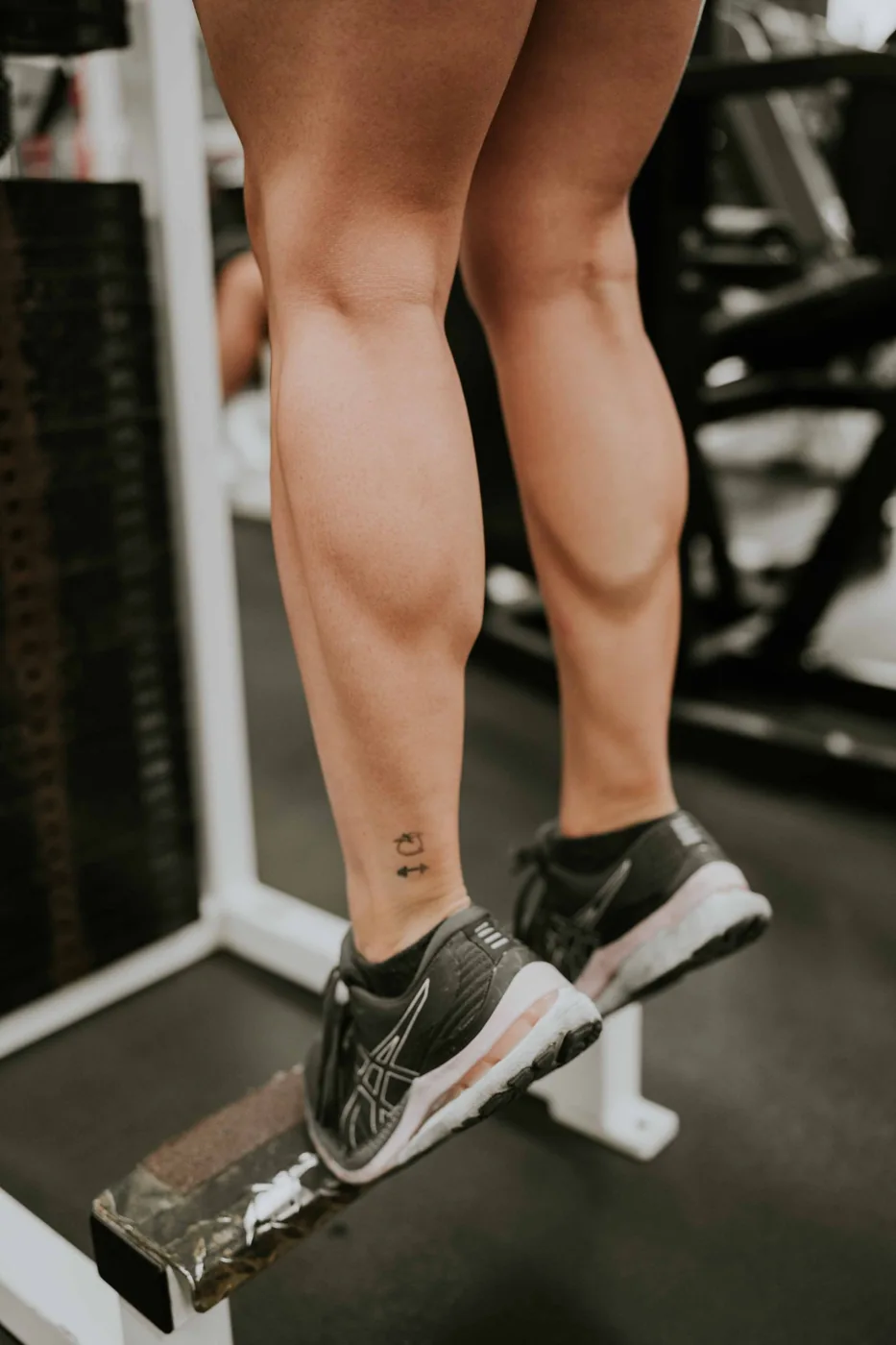
Calf raises train the muscles that lift the heel. The gastrocnemius crosses both knee and ankle, while the soleus works across the ankle; changing the knee position alters their contribution without completely isolating either muscle.
They add direct ankle work to a programme dominated by the hips and knees. A full, controlled movement and a consistent setup make progress easier to judge than bouncing through rapid repetitions with a heavier weight.
Calf Raise
This general version can begin with both feet on the floor and a hand resting on support. It is a simple way to learn the heel-lifting action. Progress through control, comfortable range and resistance before making balance the main challenge.
- Stand tall with the balls of your feet firmly supported and hold a stable support if needed.
- Raise your heels by pressing through your forefeet, then lower slowly, keeping your ankles from rolling inward or outward.
Loading connects to YouTube and sends your IP address and technical data to Google. The written guide works without the video.
PrivacyTechnique points to remember
Raise and lower the heel without bouncing out of the bottom. If range shrinks each repetition, reduce load and make the turnaround deliberate.
Start easier, progress deliberately
Start on two legs with hand support. Progress to one leg or more weight; bent- and straight-knee versions are distinct variations.
Where this exercise fits in your workout
Calf raises fit at the end of leg day or in a short separate session. Compare the same variation with the same heel depth. More weight with half the movement tells you little about progress.
Warm up with easier sets before these working sets.
| Exercise | Sets | Repetitions, duration or distance | Rest |
|---|---|---|---|
| Standing Calf Raise | 2 | 10–15 repetitions | 1 to 2 minutes, until you can move steadily again |
Standing Calf Raise
Keeping the knees relatively straight loads the calf with the gastrocnemius in a different position from seated work. A machine or dumbbell can add resistance. Support yourself enough to train the calf rather than ending every set because you lose balance.
- Stand tall with the balls of your feet firmly supported and hold a stable support if needed.
- Raise your heels by pressing through your forefeet, then lower slowly, keeping your ankles from rolling inward or outward.
Seated Calf Raise
Bending the knees changes the calf's leverage and gives useful emphasis to the soleus. The seated setup also reduces the need to balance. Keep pressure comfortable above the knees, and compare loads only within the same seated setup.
- Sit with the pads above your knees and the balls of your feet on the platform edge.
- Raise your heels, pause, then lower them slowly through a comfortable range without bouncing.
Try a tool
Read next
Sources
- ACE Exercise Library: Standing Calf Raises ↗
- OpenStax: Muscles of the pelvic girdle and lower limbs ↗
- ACSM (2026): Resistance Training Prescription for Healthy Adults ↗
- E3 Rehab Exercise Library: Heel Raise ↗
Amar Preciado / Pexels · Pexels License · Resized and converted to WebP for this website.
Giovanni Caprio / Pexels · Pexels License · Resized and converted to WebP for this website.
Li Sun / Pexels · Pexels License · Resized and converted to WebP for this website.
Andres Ayrton / Pexels · Pexels License · Resized and converted to WebP for this website.
foad shariyati / Pexels · Pexels License · Resized and converted to WebP for this website.