
What this exercise trains
Weightlifting combines rapid force production with precise bar paths and receiving positions. The legs and hips accelerate the load; the shoulders, arms and trunk organise where it finishes and how you stabilise it.
Practise the technique before fatigue builds. Catching a bar is a separate task from pulling it upward, so a lighter bar and coaching are valuable. These variations fit particularly well when weightlifting skill or rapid force production is one of your training goals.
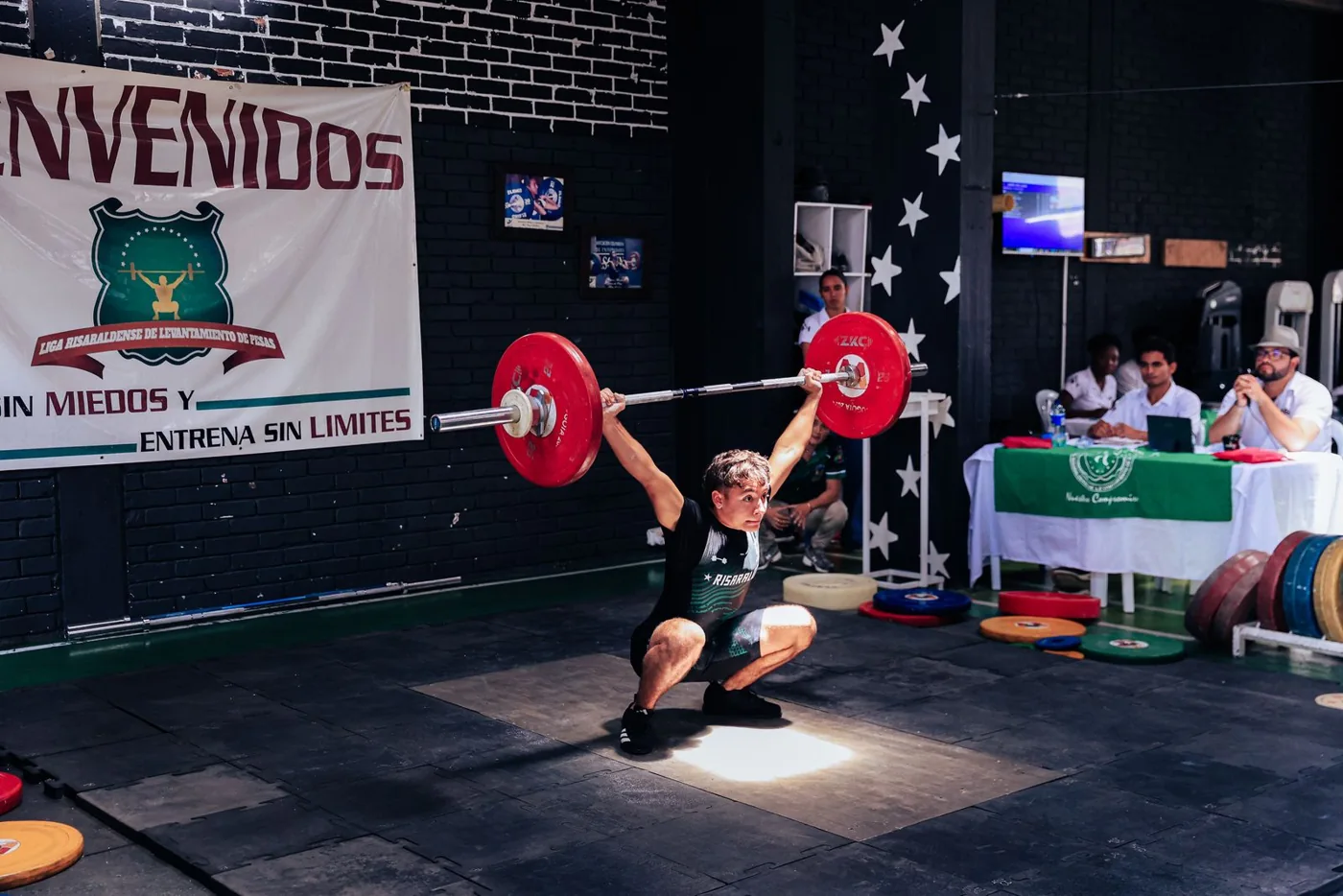
Snatch
The bar moves from the floor to overhead in one coordinated lift with a wide grip. It is the competitive snatch and a demanding skill to learn. Practise the pull and receiving position separately with light equipment before combining them under load.
- Learn the receiving position with a coach and an empty bar first.
- Pull with a wide grip, extend powerfully, then move underneath into a stable overhead squat before standing.
Loading connects to YouTube and sends your IP address and technical data to Google. The written guide works without the video.
PrivacyTechnique points to remember
Snatches and cleans need an accelerating pull and a stable catch. If the bar jumps far forward or you repeatedly chase it, rehearse the pull path and receiving position separately with light weight.
Start easier, progress deliberately
Start with a technique bar or light load and hang variations. Qualified in-person coaching helps with receiving positions and timing. Add weight after repeatable successful attempts.
Where this exercise fits in your workout
For technique practice, use short sets early in the workout. Rest enough to give the next attempt your attention. End the block when catches become increasingly unstable or your movements noticeably slow down.
Warm up with easier sets before these working sets.
| Exercise | Sets | Repetitions, duration or distance | Rest |
|---|---|---|---|
| Hang Clean | 3 | 2 repetitions | 2 to 3 minutes, longer if needed |
Clean and Jerk
The clean brings the bar to the shoulders; the jerk then drives and receives it overhead. Two distinct receiving positions make this a substantial technical task. Build each component with coaching rather than assuming a strong deadlift and press cover the transitions.
- Practise the front rack and split recovery with coaching before adding load.
- Clean the bar to your shoulders, stand, then dip and drive into a stable split jerk; recover your feet under control.
Loading connects to YouTube and sends your IP address and technical data to Google. The written guide works without the video.
PrivacyPower Clean
The bar is received above a full-depth squat, emphasising a quick pull and a comparatively high catch. It can fit power-oriented training once the front rack is comfortable. Catch height defines the variation; pulling harder does not excuse an uncontrolled landing under the bar.
- Start with a coached light-bar technique drill.
- Pull from the floor with the bar close, extend your legs and hips, then catch on the shoulders with elbows forward and thighs above parallel.
Hang Clean
Starting from a held position above the floor removes the first part of the pull and focuses practice on a selected segment. It is useful for learning timing from that height. Record where the hang begins because above-knee and lower starts are different tasks.
- First learn the shoulder catch with a coach and light bar.
- Start standing, hinge until the bar is above your knees, then extend and pull underneath to receive it on your shoulders.
Push Press
A brief leg drive helps accelerate the bar before the arms finish overhead. It links lower-body force with pressing and usually permits more load than a strict press. Keep it distinct from a jerk, where you move under the bar again to receive it.
- Hold the bar across the front of your shoulders and brace your trunk.
- Bend your knees briefly, drive upward with your legs and finish pressing overhead without leaning backward.
Overhead Squat
Holding the bar overhead while squatting tests control of the receiving position used in a snatch. It requires suitable shoulder, trunk and lower-body positioning. Begin with very light equipment; the amount you can back squat does not establish readiness for this version.
- Practise with a stick or empty bar until the overhead position is steady.
- With a wide grip, squat between your feet while keeping the bar above your midfoot, then stand.
Try a tool
Read next
Sources
- NSCA / Anna Swisher: Snatch progressions, regressions and coaching cues ↗
- Catalyst Athletics: Power Clean ↗
- ACSM (2026): Resistance Training Prescription for Healthy Adults ↗
- Catalyst Athletics: Snatch | Olympic Weightlifting Exercise Library ↗
- Catalyst Athletics: Clean & Jerk | Olympic Weightlifting Exercise Library ↗
CRISTIAN CAMILO ESTRADA / Pexels · Pexels License · Resized and converted to WebP for this website.
Giovanni Caprio / Pexels · Pexels License · Resized and converted to WebP for this website.
sumsum / Pexels · Pexels License · Resized and converted to WebP for this website.
Alesia Kozik / Pexels · Pexels License · Resized and converted to WebP for this website.
Andrea Piacquadio / Pexels · Pexels License · Resized and converted to WebP for this website.