
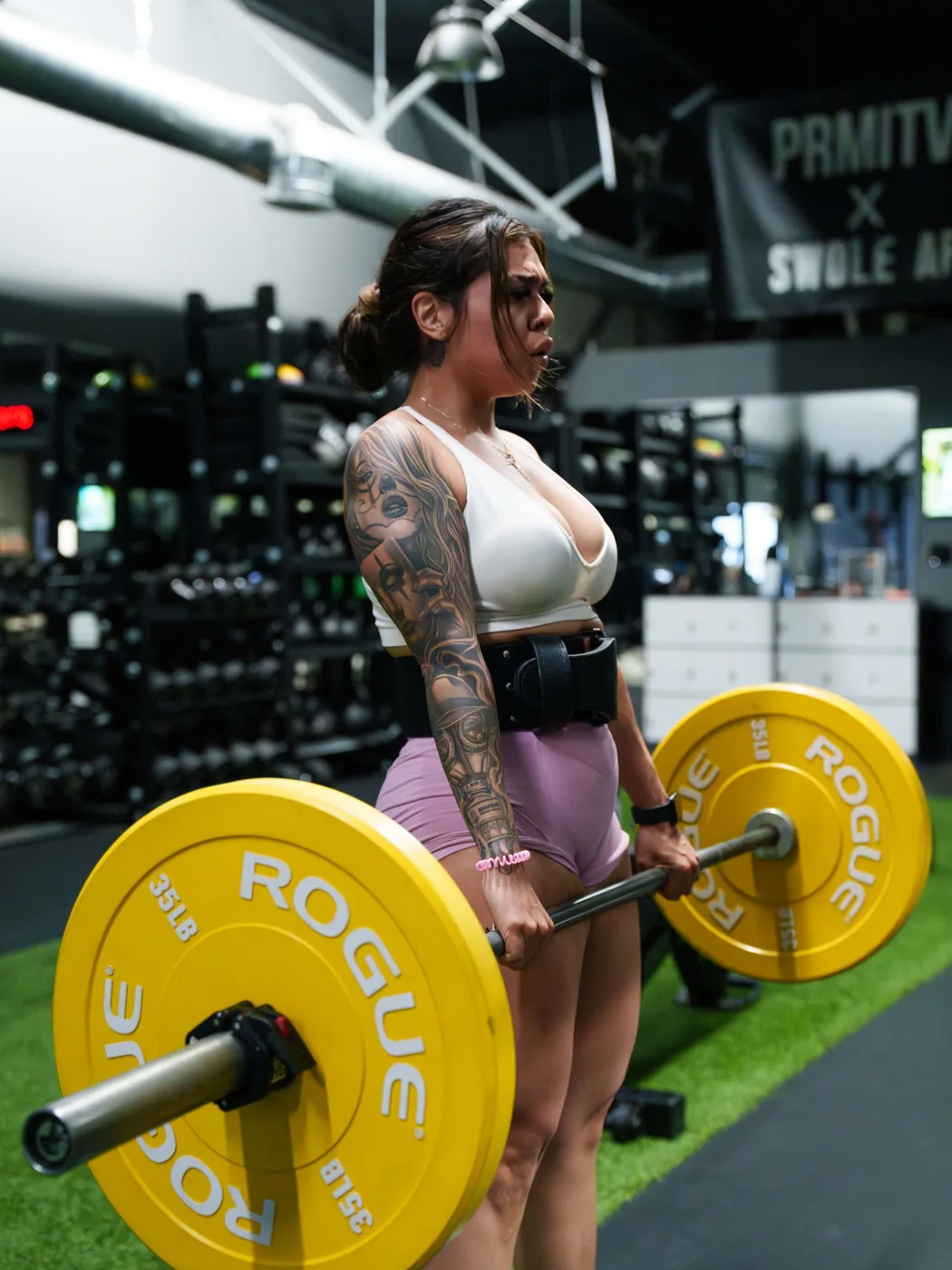
What this exercise trains
Deadlifts train you to produce force from the floor through the knees and hips. The thighs and glutes move the load while the back and abdominal muscles hold the trunk; the hands must keep their grip.
This is useful when lifting a heavy object is the movement you want to practise, or when the deadlift itself is your sport. For additional hamstring work, a Romanian deadlift or leg curl offers a different task with less emphasis on starting from the floor.
Deadlift
The conventional stance keeps the feet inside the hands and starts each repetition from the floor. Choose it when practising the standard barbell lift matters to you. Your limb proportions influence the setup; find a position from which you can lift consistently with control.
- Stand with the bar over your midfoot, bend your hips and knees, and grip outside your legs.
- Brace your trunk and push the floor away, keeping the bar close; stand tall without leaning back, then lower through hips and knees.
Loading connects to YouTube and sends your IP address and technical data to Google. The written guide works without the video.
PrivacyTechnique points to remember
Start with the bar over midfoot and brace before lifting. If your hips shoot up before your shoulders, reduce the load and reset each repetition.
Start easier, progress deliberately
An elevated bar shortens the pull. When learning to lift from the floor, gradually lower the starting height while keeping your setup controlled. For a deliberate rack pull, keep the chosen support height and progress repetitions or weight. Sumo and conventional deadlifts each need their own stance.
Where this exercise fits in your workout
Put heavy deadlifts early while you are fresh. Your hips and back have already worked by the time you finish. Chest-supported rows can make later back work easier to set up; Romanian deadlifts add more hamstring work.
Warm up with easier sets before these working sets.
| Exercise | Sets | Repetitions, duration or distance | Rest |
|---|---|---|---|
| Deadlift | 2 | 5 repetitions | 2 to 3 minutes, longer if needed |
Sumo Deadlift
A wider stance places the hands between the legs and changes the demands on the hips and knees. It can suit lifters who feel comfortable in this starting position. Practise the stance and pull with a manageable load, keeping a separate record from conventional deadlifts.
- Take a wide stance with toes turned out and grip the bar inside your legs.
- Brace, push the floor away and stand tall, keeping knees aligned with toes and the bar close.
Deficit Deadlift
Standing on a small platform increases the distance between you and the bar. This gives experienced lifters more practice near the beginning of the pull. The extra range requires a new load choice; only use a height that preserves a controlled setup.
- Use only a small, stable platform that still lets you reach the bar with a braced back.
- Push through your feet and stand with the bar close; lower by moving your hips back.
Rack Pull
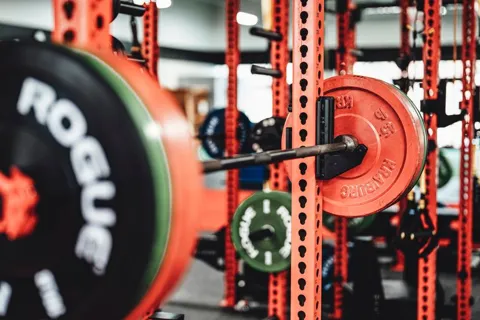
Starting from rack supports shortens the pull and lets you practise a chosen upper portion. It can be useful when that range is the training task. Record the support height: a heavier rack pull does not demonstrate an equivalent floor deadlift.
- Set a bar securely on rack supports just below knee height and stand close to it.
- Brace, extend your hips and knees to stand, then return to the supports without leaning backward at the top.
Try a tool
Read next
Sources
- ACE Exercise Library: Deadlift ↗
- ACSM (2026): Resistance Training Prescription for Healthy Adults ↗
- National Academy of Sports Medicine (NASM): How to do a Barbell Deadlift ↗
sumsum / Pexels · Pexels License · Resized and converted to WebP for this website.
Giovanni Caprio / Pexels · Pexels License · Resized and converted to WebP for this website.
stu_spivack, Wikimedia Commons · CC BY-SA 2.0 · Resized and converted to WebP for this website.