
What this exercise trains
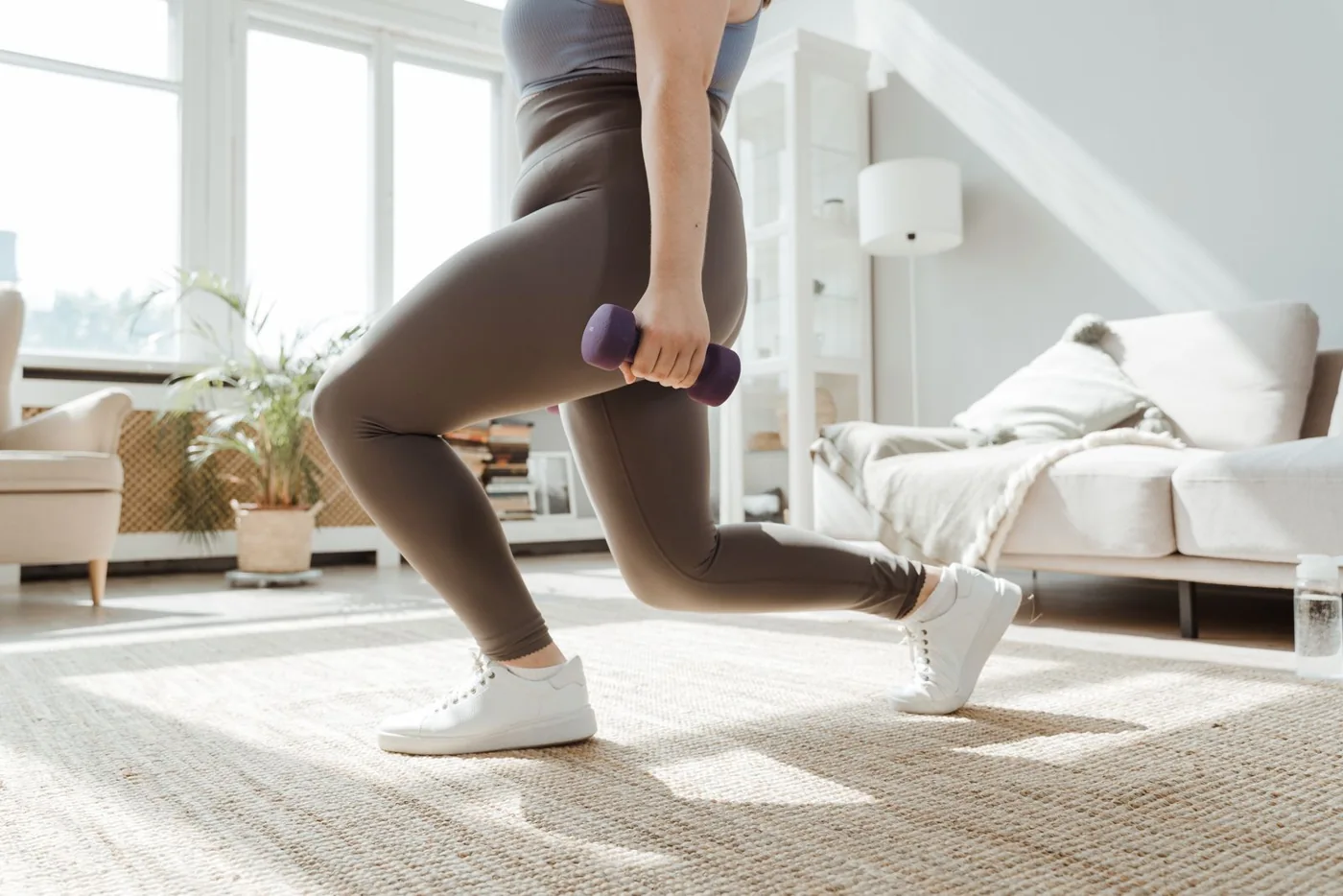
Split squats, lunges and step-ups let one leg do more of the work at a time. The thighs and glutes extend the knee and hip, while the muscles around the pelvis help manage side-to-side movement.
This makes them useful when equipment is limited or you want to compare how each side handles the same task. They also demand more balance than many two-leg movements. Support is a legitimate way to keep the intended leg work from becoming only a balance test.
Bulgarian Split Squat
Raising the rear foot changes the stance while the front leg supplies much of the effort. It can make modest weights challenging. A very high rear support may be awkward; choose its height for comfortable positioning rather than making the exercise look harder.
- Place your rear foot on a stable bench and your front foot far enough forward for balance.
- Lower your hips by bending both knees, keeping the front knee aligned with your toes, then push through the front foot.
Loading connects to YouTube and sends your IP address and technical data to Google. The written guide works without the video.
PrivacyTechnique points to remember
Use two imaginary rails for lunges rather than placing your feet on one line. If your pelvis tips or the rear leg takes over, use hand support and reduce load.
Start easier, progress deliberately
A stationary split squat is easier to organize than walking lunges. For pistols, use a higher seat target or hand support; depth and added weight are separate progressions.
Where this exercise fits in your workout
Start with the side you find harder and match its controlled reps on the other side. Allow time to switch legs: two sets per leg mean four separate sets in your workout.
Warm up with easier sets before these working sets.
| Exercise | Sets | Repetitions, duration or distance | Rest |
|---|---|---|---|
| Reverse Lunge | 2 | 6–8 per side | 2 to 3 minutes, longer if needed |
Walking Lunge
Each repetition becomes the setup for the next step, adding travel and repeated balance changes. It works well when you have a clear walking lane. If space or consistent stride length is a problem, a stationary split squat is easier to repeat.
- Step forward onto a stable full foot and lower your back knee toward the floor.
- Push through the front leg to step into the next lunge, keeping your pelvis level rather than rushing.
Deficit Lunge
An elevated starting surface allows the rear knee to move lower than the front foot. This adds range and can make a familiar lunge more demanding. Use a small, stable platform and a lighter load while learning that extra movement.
- Stand on a low, stable platform and keep one foot firmly supported as you step the other backward to the floor.
- Bend both knees, then push through the front foot to return; maintain balance before adding depth or load.
Airborne Lunge
The rear foot stays off the floor while you squat on the supporting leg, so balance and leg strength both matter. It is a bodyweight challenge without extending the free leg forward. Hand support and a shallower range make useful stepping stones.
- After mastering supported single-leg squats, stand on one leg and bend the other behind you.
- Lower the rear knee toward a pad without planting that foot, then stand; use hand support and keep the working knee tracking over its toes.
Dumbbell Lunge
Holding dumbbells beside the body adds load without placing a bar across the shoulders. It is convenient when you can already lunge consistently. Grip fatigue and the effort of picking up the weights can limit the set before your legs do.
- Stand holding dumbbells beside your hips and take a comfortable step forward.
- Bend both knees, then push through the front foot to return; keep your trunk steady and your front knee aligned with your toes.
Curtsy Lunge
The rear leg crosses diagonally behind, changing the balance and hip position compared with a straight lunge. It adds variety when that path feels comfortable. Keep the crossing distance moderate; a reverse lunge offers an alternative with a simpler stance.
- Stand tall and step one foot diagonally behind the other, using a modest crossover.
- Bend both knees and return through the front foot; keep hips facing forward and reduce the crossing angle if your knee twists inward.
Reverse Lunge
Stepping back leaves the front foot planted while you lower and rise. Many people find this easier to organise than stepping forward into every repetition. It remains a balance task; a nearby support can help when learning the stride.
- Stand tall and step one foot backward, keeping your feet on separate tracks.
- Bend both knees, then press through the front foot to return; keep the front heel down and use support for balance if needed.
Step-Up
A step creates a clear height to climb, with the leading leg doing most of the work. It can connect gym strength practice with stair-like movement. A taller box is a different challenge, so choose a height that limits pushing off the trailing foot.
- Place your whole foot on a low, stable step.
- Push through that leg to stand on the step, then lower slowly; keep the knee aligned with the toes and avoid launching yourself with the trailing foot.
Pistol Squat
One leg squats while the other stays extended in front, combining leg strength, balance and substantial ankle and hip range. It is a specific bodyweight skill. A supported version or a raised seat lets you practise without assuming ordinary squats guarantee readiness.
- Use a stable hand support or a high box while learning.
- Balance on one foot with the other leg forward, lower slowly with your heel planted, then stand without letting the knee collapse inward.
Try a tool
Read next
Sources
- ACE Exercise Library: Forward Lunge ↗
- ACE: Strength Training the Glutes ↗
- ACSM (2026): Resistance Training Prescription for Healthy Adults ↗
- National Academy of Sports Medicine (NASM): How to do a Bulgarian Split Squat | Proper Form & Technique | NASM ↗
MART PRODUCTION / Pexels · Pexels License · Resized and converted to WebP for this website.
Giovanni Caprio / Pexels · Pexels License · Resized and converted to WebP for this website.
Scott Webb / Pexels · Pexels License · Resized and converted to WebP for this website.
Polina Tankilevitch / Pexels · Pexels License · Resized and converted to WebP for this website.
Andrea Piacquadio / Pexels · Pexels License · Resized and converted to WebP for this website.