Start with the job you want this routine to do
A small routine can make getting started easier. You learn a few movements and make room for two regular training days. During a busy period, a lower-volume version of your usual workout can also help you keep showing up.
If you want the greatest possible muscle gains, more productive sets give you additional room to train. A single set is a deliberately small dose. Whether it maintains your current performance is something to watch over time. A 2025 single-set trial found improvements in trained adults, including those who left some repetitions in reserve.
Make the working set appropriately challenging
A working set is the demanding set you use to develop the exercise. Lighter preparation sets come first and are additional. Begin with a weight that leaves about two more clean repetitions available when you stop. This is called two repetitions in reserve, or two RIR.
The last repetitions may slow down. Stop before you have to change your position or swing the weight to finish. If the movement is new, learning the setup comes first. Ask for an equipment demonstration and use light attempts to find a load you can control.
A small routine for Monday and Thursday
Repeat this session on both days. All listed sets are working sets. Add light preparation sets before the first leg and pressing exercise, and rehearse a different movement pattern when needed.
| Exercise | Working sets | Repetitions |
|---|---|---|
| Leg press | 1 | 8–12 |
| Leg curl machine | 1 | 10–15 |
| Chest press machine | 1 | 8–12 |
| Seated row | 1 | 8–12 |
| Calf raise with support | 1 | 10–15 |
Allow roughly two minutes between exercises and longer when you need it. This covers several major areas in a compact session. You can add shoulder, arm or trunk work later to match a particular goal.
How much time does one set save?
Five exercises mean five working sets per session. Three sets of each would mean 15. Suppose a set takes 40 seconds and each additional set requires a two-minute rest: ten extra sets add 6 minutes 40 seconds of lifting and 20 minutes of resting.
That is almost 27 extra minutes in this example. Warm-ups, equipment changes and queues still take time in the short version. Initially allow around 20–30 minutes and see how the session works in your gym. The workout-duration calculator lets you use your own rest periods rather than relying on that estimate.
Give the set somewhere to go
Use the same equipment and settings. On a chest press, 30 kg might give you eight repetitions at first, then ten and eventually twelve with similar effort. That is progress. Move up by the smallest available increment and work back up from the lower end of the range.
If the machine jumps by five kilograms, you do not have to force the jump immediately. A few more controlled repetitions or a suitable smaller add-on load may bridge the gap. One disappointing session does not mean the routine has stopped working.
When adding a second set makes sense
After four to six consistent weeks, look at how the routine is going. If performance is improving and the sessions fit your life, you can keep them small. If you want more work for one area, add a second set there while leaving the other exercises unchanged.
For example, if the row has stalled across several sessions, first look at the load, rest and execution. If those are comparable and you feel recovered, another rowing set is a reasonable experiment. Changing five things at once makes it harder to understand the result.
Keep a simple record
Record the weight, repetitions and approximate effort. LiftPal lets you log RPE, a set-effort scale up to ten. Around two clean repetitions left corresponds roughly to RPE 8. You can use that alongside the repetition count to compare sessions.
Look across several weeks rather than demanding a record every Monday. Is the same load becoming easier? Can you complete another controlled repetition? A short workout still deserves a useful history. It gives you a reason to change the plan when something specific needs attention.
Try a tool
Read next
Sources
- Hermann et al. (2025): Without Fail. Single-Set Resistance Training ↗
- ACSM (2026): Updated Resistance Training Guidelines ↗
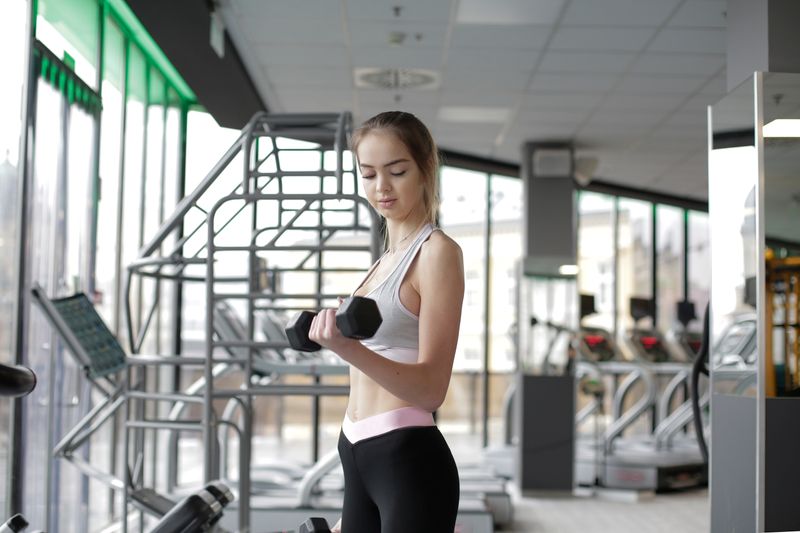
Andrea Piacquadio / Pexels · Pexels License · Resized and converted to WebP for this website.