

What you train
The WOD, or workout of the day, is the session’s workout task. A skill or strength section may come first. “Scaled” means adjusting factors such as load, repetitions or exercise variation.
How to get started
Book an introductory class and explain your experience. Ask about the session’s aim and a suitable version. With unfamiliar barbell movements, learning the technique should take priority over the fastest time.
One way to arrange your week
Place the sessions on days you can train regularly. Start with this schedule and check how well you recover before the next session. If you miss a day, continue with the next session in the sequence.
| Day | Focus |
|---|---|
| Monday | Introduction: technique and a suitably scaled WOD |
| Thursday | Second coached session with adjusted work |
How to recognise progress
When a familiar workout comes around again, your earlier notes become useful. Using the same weights and variations shows whether you move more smoothly or finish faster. An easier variation is a different task. Record the adjustments alongside the result, and log the strength sets in LiftPal.
What a useful introduction looks like
The coach asks about your experience, demonstrates the movement and explains a suitable modification before starting the clock. Ask what pace you should aim for and what to change if technique deteriorates. Even in a group, you should know when to pause or reduce the load. A difficult skill you leave out today can be practised calmly in a later lesson.
Does it fit your life?
Compare class times with the hours you genuinely have free. A group can be motivating, but usually requires a fixed start time. Attend an introduction before making a longer commitment and check that you receive useful feedback when you ask questions.
Try a tool
Read next

Sources
Andrea Musto / Pexels · Pexels License · Resized and converted to WebP for this website.
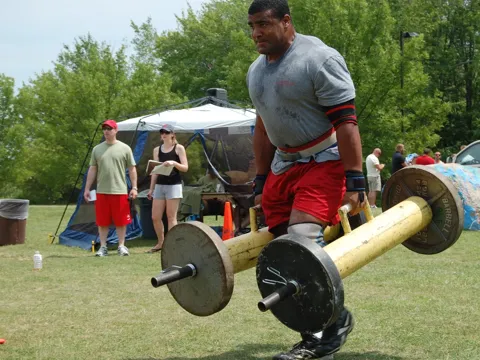
stu_spivack, Wikimedia Commons · CC BY-SA 2.0 · Resized and converted to WebP for this website.