
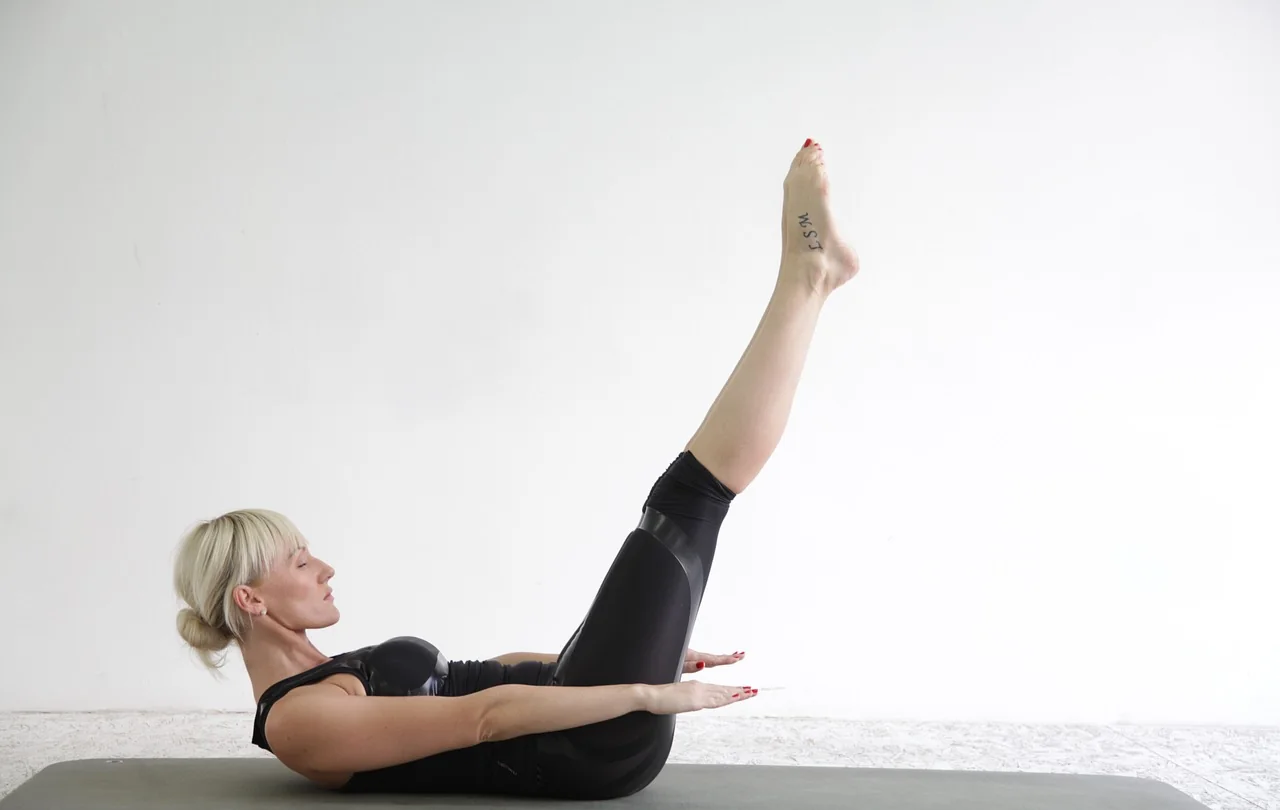
What you train
Your arms and legs move while you practise controlling your trunk. Mat Pilates and reformer sessions are different formats. A reformer uses springs and requires an introduction to the equipment.
How to get started
Try an instructed beginner session with breathing, pelvic tilts, bridges and simple leg movements. Move slowly enough to notice unwanted shifts. Start with 15 to 20 minutes.
One way to arrange your week
Place the sessions on days you can train regularly. Start with this schedule and check how well you recover before the next session. If you miss a day, continue with the next session in the sequence.
| Day | Focus |
|---|---|
| Monday | 15 minutes of instructed mat Pilates |
| Thursday | 20 minutes repeating the same basics |
How to recognise progress
At first, moving a leg may make your whole upper body shift. With practice, you can move the leg while keeping your trunk steadier. That is a change you can notice even with the same repetition count. Stick with a familiar sequence at first. When you can keep breathing comfortably, gradually explore a little more movement.
Mat or reformer?
On a mat, body position, leverage and gravity provide resistance. Reformer springs can assist or resist a movement, depending on the exercise. Equipment does not automatically mean a harder session. Mat work can provide an easy-to-repeat home routine. With a reformer, first learn its setup and adjustments. If you also want to improve your squat or pull-up strength, practise those movements specifically alongside Pilates.
Does it fit your life?
For mat Pilates, find enough clear space to extend your arms and legs. Set two short sessions and repeat the same introduction at first. Choose a small coached class if you prefer movement feedback or want to try equipment.
Try a tool
Read next
Sources
jelenajdj / Pixabay · Pixabay Content License · Resized and converted to WebP for this website.
stu_spivack, Wikimedia Commons · CC BY-SA 2.0 · Resized and converted to WebP for this website.