
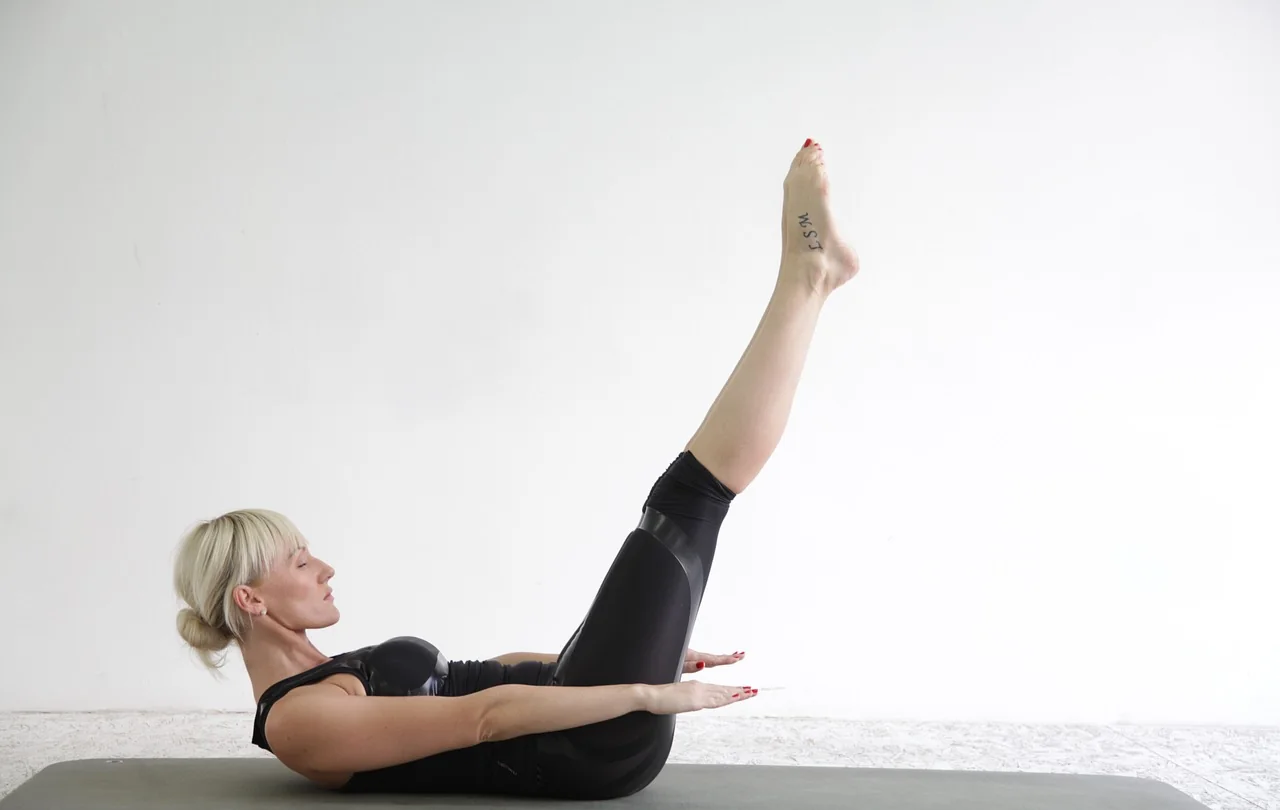
What each type of training contributes
Pilates practises controlled movement, body positions and coordination between breathing and movement. Depending on the exercises and class, it challenges strength, mobility and balance. Resistance training makes it particularly straightforward to increase demands gradually through weights and repetitions.
The boundaries overlap: a reformer class can be demanding, and lifting requires control too. What matters is the class you actually attend. This combination suits someone who enjoys Pilates and also wants to develop strength through squatting, pushing and pulling.
Your sessions
Start with lighter preparation sets. Leave two or three reps available. For new exercises, one working set is enough during the first two weeks.
Strength A · Monday
- Sets
- 2
- Reps / duration
- 8–10
- Rest
- 2 min
- Sets
- 2
- Reps / duration
- 8–12
- Rest
- 2 min
- Sets
- 2
- Reps / duration
- 8–12
- Rest
- 2 min
- Sets
- 2
- Reps / duration
- 10–15
- Rest
- 2 min
Strength B · Thursday
- Sets
- 2
- Reps / duration
- 8–10
- Rest
- 2 min
- Supported split squat
- Sets
- 2
- Reps / duration
- 8 each leg
- Rest
- 2 min
- Sets
- 2
- Reps / duration
- 8–12
- Rest
- 2 min
- Sets
- 2
- Reps / duration
- 8–12
- Rest
- 2 min
Spread three sessions across the week
There is space between the strength days, and Pilates does not immediately follow the second one. You do not have to fill the free days with more workouts. Walking and everyday movement fit well. This schedule is a practical starting option rather than a tested formula for the perfect combination.
| Day | Session | Time |
|---|---|---|
| Monday | Strength A | About 35–45 minutes |
| Tuesday | Everyday movement or a walk | As you prefer |
| Wednesday | Rest | As needed |
| Thursday | Strength B | About 35–45 minutes |
| Friday | Rest or an easy walk | As needed |
| Saturday | Guided beginner Pilates | About 30–45 minutes |
| Sunday | Rest | As needed |
Your two strength sessions
Start with a little general movement and lighter preparation sets. Finish working sets with roughly two or three good repetitions available. Rest for one to two minutes, or longer if needed. If all these exercises are new, use one working set instead of two during the first two weeks.
For dumbbell exercises, you can record the combined weight of both dumbbells and keep that convention consistent. A split-squat set includes both legs. Ask someone qualified to teach unfamiliar movements; simple, controlled versions matter more than heavy weights in your first sessions.
A hard Pilates class counts too
Are your legs or trunk still noticeably tired after class? Treat it as a demanding session. Make the class easier, remove a set from your next strength day or add another rest day. Aim to reach the next session ready to move well again.
Pilates is not automatically recovery. Long holds, challenging lever positions and substantial spring resistance can be hard work. Equally, every class need not be a maximum effort. Tell the instructor that you also lift and choose variations you can control calmly.
Choosing a class to start with
An instructed beginner mat class is a straightforward starting point. You do not need a reformer immediately. Reformer work adds springs, moving parts and equipment settings; learn these with qualified guidance first. A more expensive or harder class is not automatically a better match.
Look for an instructor who explains starting positions, offers variations and allows questions. Change or stop a movement that hurts. Following surgery, during pregnancy or with conditions requiring treatment, the exercises should suit your individual situation. A general weekly schedule does not provide rehabilitation.
Let the routine grow gradually
Keep the simple schedule for four to six weeks while it feels manageable. In the strength sessions, add repetitions first: eight and eight become nine and eight, eventually twelve and twelve. Then add a small amount of weight and work up from the lower end again.
In Pilates, progress may mean smoother movement or better control of a position. Ask for the next variation once the current one feels secure. Add a second Pilates session only after three weekly sessions fit your life and leave you recovered. If you already train, replace a session initially rather than adding every new activity on top.
Keep strength and consistency visible
Record strength sets in LiftPal with weight, repetitions and perceived set effort (RPE). A Daily Goal for your Pilates class can support the regular appointment. After several weeks, you can see which weights are rising and whether those three sessions genuinely fit your week.
Try a tool
Read next
Sources
- NHS: Pilates video for beginners ↗
- ACSM (2026): Resistance Training Prescription for Muscle Function, Hypertrophy, and Physical Performance in Healthy Adults ↗
jelenajdj / Pixabay · Pixabay Content License · Resized and converted to WebP for this website.
Andrea Piacquadio / Pexels · Pexels License · Resized and converted to WebP for this website.