
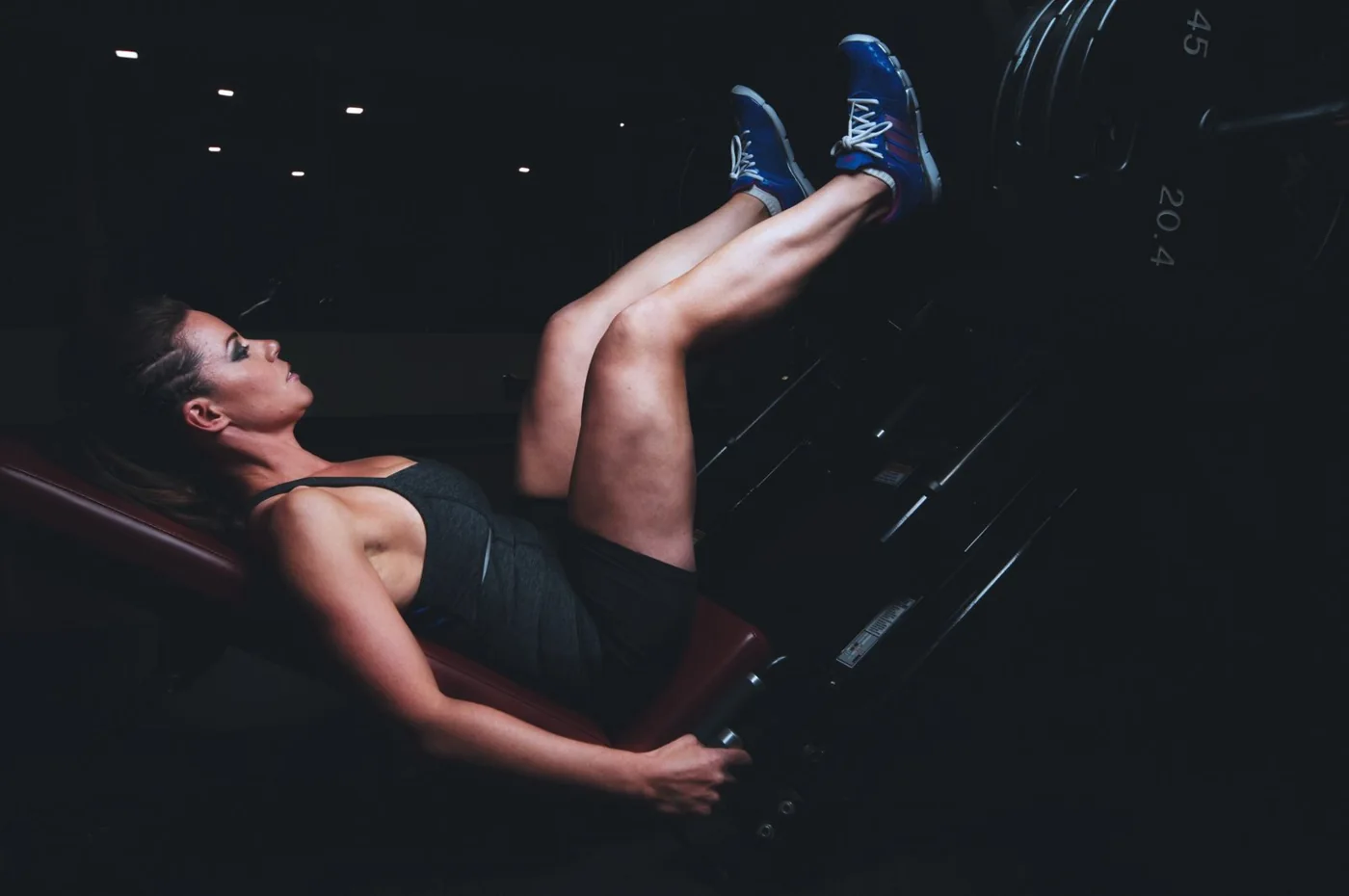
Give strength training a clear job
During weight loss, you want to lose fat while keeping your muscles. Strength training helps with that by making muscles work against resistance, whether from machines, weights or your own body. Two regular sessions can be a useful start. Keeping your usual weights moving with good technique is an achievement even in a week when the scale does not fall.
Choose two reliable training days
For a first routine, reserve two days with a day between them, such as Tuesday and Friday. A full-body session includes work for your legs, hips, back and pushing muscles. Pick a time that survives an ordinary busy week, including travel and changing clothes. If you already train regularly, keep the structure that works and review how much you can recover from. Adding extra training days at the same time as changing meals makes it harder to identify the cause of unusual tiredness.
Build a session you can repeat
Choose one exercise for each row and keep those choices consistent while you learn the movements.
| Movement | Starting option |
|---|---|
| Knee bend | Leg press or squat |
| Hip extension | Hip bridge |
| Pull | Seated row |
| Push | Chest press or raised push-up |
| Trunk control | A dead bug: lying on your back, extend an opposite arm and leg with control |
After warming up and practising the movements, try two working sets per exercise, with roughly eight to twelve controlled repetitions for the lifts. A set is one group of repetitions before a rest. Rest until you can perform the next set well, often around two minutes. Ask for technique help where needed and select movements that fit your equipment and ability.
Use effort without exhausting every set
Finish your early working sets feeling that you could complete about two or three more good repetitions. This reserve helps you practise and judge the load. RPE is a rating of perceived exertion: in lifting, higher numbers describe a set closer to your limit. Record the rating consistently rather than chasing a perfect number. If the final repetitions require swinging, shortening the movement or losing control, stop the set. A smaller load with repeatable technique gives you a clearer baseline for the next workout.
Progress through a simple example
Suppose your row is two sets of eight repetitions with a load you control well. Over later sessions you reach nine, then ten, then twelve repetitions while keeping a similar effort. Once both sets reach the top of your range comfortably, try the smallest available weight increase and return towards eight repetitions. During weight loss, maintaining a previously established load and technique can itself be worthwhile. Compare the same exercise, range of motion and equipment. A machine change or a shorter movement can otherwise make the numbers look misleadingly better.
Make meals support the session
Include a protein source in your usual meals, such as beans, tofu, eggs, fish, dairy or an appropriate alternative. Keep carbohydrate foods available too: potatoes, bread, rice or fruit can fit around training. For an evening session, lunch followed by a familiar snack may work better than arriving hungry after a long gap. Plan dinner before leaving so that the workout does not turn an already difficult evening into a food problem. Use the protein guide for amounts and examples relevant to exercising adults.
Respond to a pattern of fatigue
One difficult workout can follow poor sleep or a stressful day. If several similar sessions deteriorate, review sleep, meal changes, soreness and the amount of cardio together. For example, after adding long runs, your leg exercises may feel persistently harder: shorten a run or remove an optional set, then reassess. Avoid changing every variable at once. Persistent dizziness, injury pain or marked exhaustion needs assessment; an existing condition or prescribed weight-loss treatment may require a personalised training and nutrition plan.
Take a familiar routine into your next workout
Use the two-day full-body plan as a starting point and choose days you can usually keep free. Save the exercises once in LiftPal, then add your weights, repetitions and RPE after each set. Next visit, you have a clear place to continue. Get help with technique where a movement still feels uncertain before adding weight. The linked RPE guide explains how to judge set effort.
Try a tool
Read next
 NutritionHow to lose weight healthily: a practical starting plan
 NutritionHow much protein do you need to build muscle?
 Plans and progressTwo-day full-body workout plan for beginners
 Plans and progressRPE in strength training: how hard was that set?
 Training stylesLosing fat and building muscle: a guide to body recomposition
Sources
- NIDDK: Health tips for adults ↗
- Villareal et al.: Aerobic or resistance exercise, or both, in dieting obese older adults (2017) ↗
- WHO: Guidelines on physical activity and sedentary behaviour (2020) ↗
Scott Webb / Pexels · Pexels License · Resized and converted to WebP for this website.
Dziana Hasanbekava / Pexels · Pexels License · Resized and converted to WebP for this website.
Andrea Piacquadio / Pexels · Pexels License · Resized and converted to WebP for this website.