
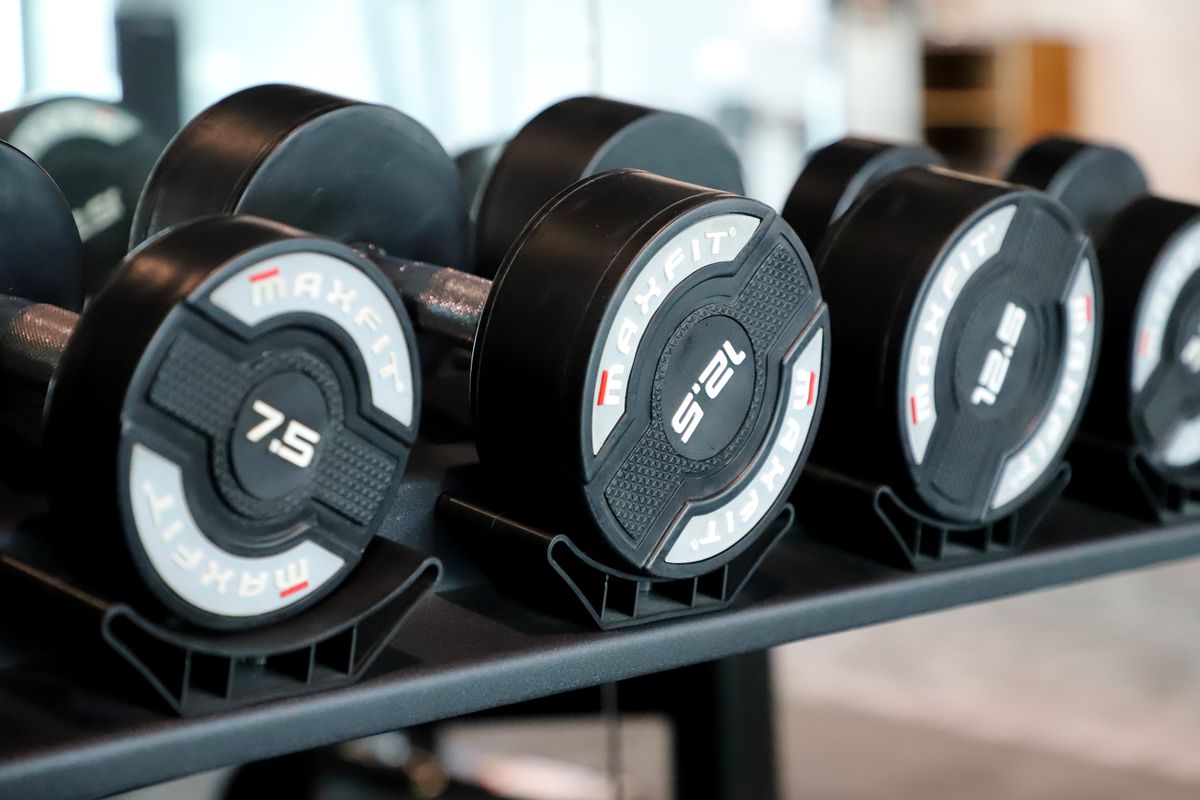
Two exercises, then a rest
A superset pairs two exercises back to back. You might do dumbbell bench presses, move to a row and take a longer rest after both. Walking to the equipment and setting up safely still count as necessary time. There is no need to race between weights.
Two rounds give you two sets of bench presses and two sets of rows. Together, they are not two chest sets. That distinction matters when you compare your weekly training volume. Add appropriate warm-up sets before the first demanding set of each exercise.
Choose exercises that leave each other room
Start with pairs that challenge different muscles: a push and a pull, or a lower-body and an upper-body exercise. Biceps and triceps can work too. One area gets some time while the other does the work.
Two exercises for the same muscle, such as bench presses followed immediately by push-ups, tire that muscle quickly. That can be a deliberate choice, but it is usually a harder starting point for saving time while maintaining performance. Two heavy movements that both tax your back and grip are not a restful pairing either.
A complete session with three pairs
Use this example once you know the movements. After a brief general warm-up, add lighter preparation sets. Complete two rounds of each pair before moving on. Choose weights that leave roughly two clean repetitions available at the end. For one-arm rows, both sides make one set.
| Pair | First exercise | Second exercise | Rest after both |
|---|---|---|---|
| A · 2 rounds | Goblet squat · 8–10 reps | Dumbbell bench press · 8–10 reps | 90–120 seconds |
| B · 2 rounds | Dumbbell Romanian deadlift · 8–10 reps | Lateral raise · 10–15 reps | 90–120 seconds |
| C · 2 rounds | Supported one-arm row · 8–12 each side | Supported calf raise · 10–15 reps | 60–120 seconds |
Take more rest when you need it
Still struggling to catch your breath after the first pair? Extend the rest. If breathlessness or a frantic equipment change limits your repetitions, the superset is no longer helping. Start the next set with enough control to perform it well.
RPE describes the effort of a set on a scale from 1 to 10. Breathing hard and muscle effort are different signals. A high pulse does not automatically make a row RPE 9. Ask how many more good repetitions of that exercise you could have completed. With two demanding compound movements, you can also take a short break between exercises.
Make the plan work in a busy gym
Avoid claiming two popular machines on opposite sides of the room. A bench, suitable dumbbells and some open space can be much easier to manage. Different exercises may need different weights; using one pair for everything is not the goal.
If the second station is busy, finish the first exercise with normal rest periods. Or pair it with an appropriate movement you already know. Your session still works when a particular superset does not. Keep your main heavy lift separate if hitting a best performance is the priority.
Progress the exercise, not just the stopwatch
Keep your pairings and rests consistent at first. Once you reach the top of the repetition range in both rounds with similar reserve, add a small amount of weight. Moving from eight to ten controlled repetitions is already progress.
Superset studies show time savings, often with higher perceived effort. There are far fewer long-term comparisons than single-workout experiments. Watch your own performance: if loads and good repetitions repeatedly collapse, change the pairing or return to separate sets.
Record each exercise separately
Log the sets of both exercises in LiftPal with their weight, repetitions and RPE. Compare similar exercise orders: bench pressing after squats may feel different from bench pressing first. Your history can show whether shorter sessions continue to support progress over several weeks, rather than simply making you feel more rushed.
Try a tool
Read next
Sources
- Zhang et al. (2025): Superset Versus Traditional Resistance Training Prescriptions ↗
- Andersen et al. (2022): A Comparison of Affective Responses Between Time Efficient and Traditional Resistance Training ↗
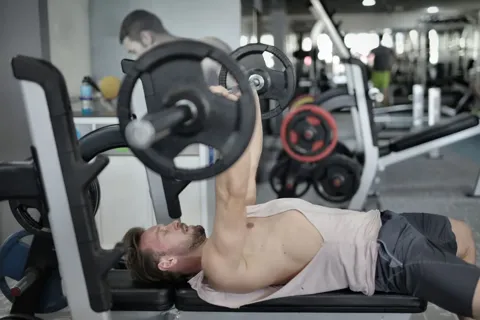
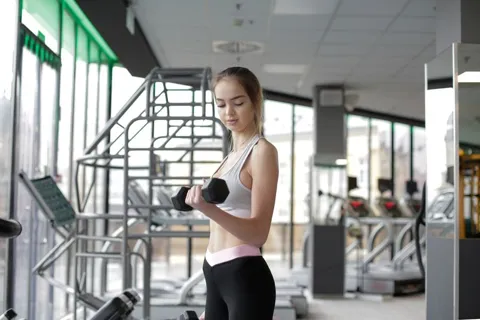
Andrea Piacquadio / Pexels · Pexels License · Resized and converted to WebP for this website.
@marcuschanmedia | IG / Pexels · Pexels License · Resized and converted to WebP for this website.