
Calisthenics · Block planning
Calisthenics mesocycle: organize skills and weighted basics across 4–8 weeks
A calisthenics block becomes easier to review when it has one main goal, stable variations, and a progression rule set in advance. LiftPal’s Premium builder can suggest four to eight weeks based on style, goal, experience, and equipment. You review and edit the suggestion before using it.
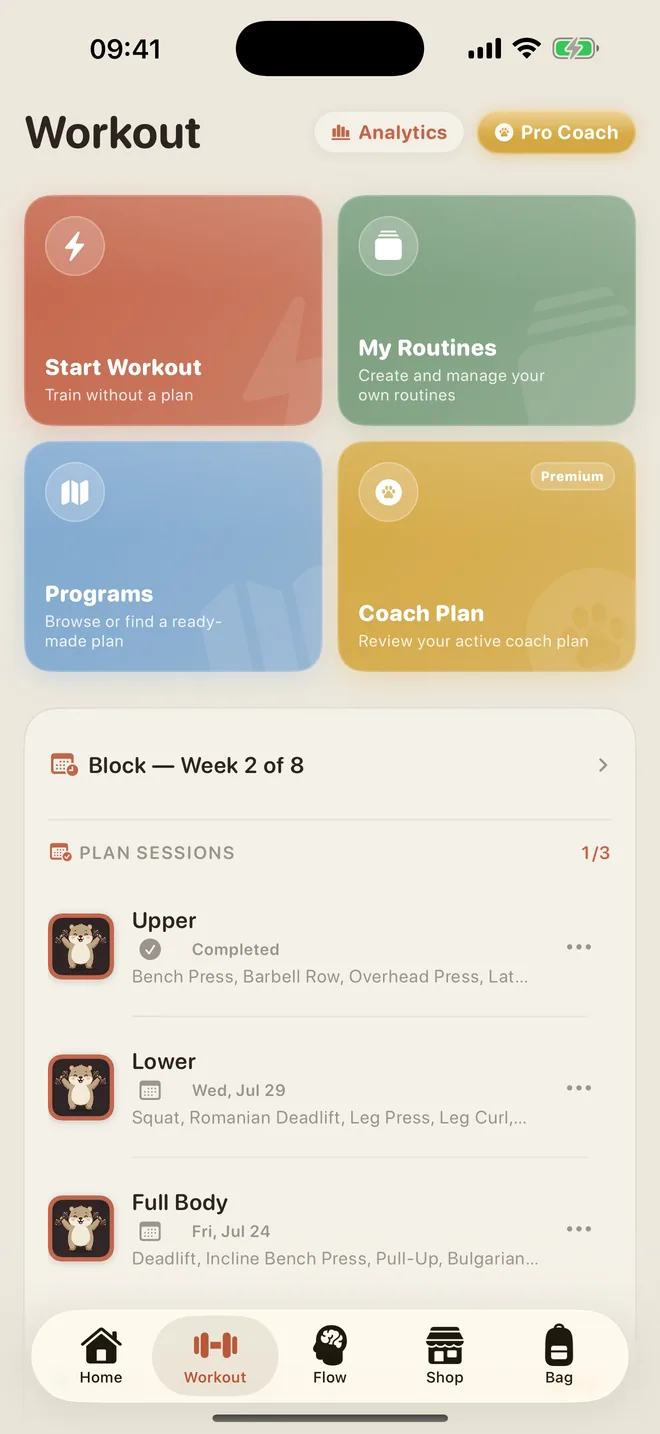
Step 1: name the calisthenics goal and style clearly
Separate skill unlock, strength, hypertrophy, and general fitness. A first-muscle-up block needs different exercise logic from a weighted-pull-up block. Also choose whether calisthenics, weighted calisthenics, or a hybrid combination is the main style.
The builder uses goal, experience, and available equipment to suggest movements. Pure calisthenics stays centered on bodyweight and rings; weighted calisthenics can include loaded variations and other equipment you make available.
Step 2: keep skill, strength, and volume days distinct
A hybrid block can include technical skill practice and measurable strength work in the same week without forcing both into one set. Fresh skill slots can remain separate from weighted pull-ups, dips, or supporting leg work.
The actual split depends on training days, goal, and equipment. A suggestion is not a universal plan. Check whether exercise count, order, and weekdays fit real life.
- Skill slots: one named variation and a clear technical repetition rule
- Strength slots: added load, repetition range, and target RPE
- Volume slots: a controlled set count rather than random extra work
- Hybrid slots: a second style with a defined job, not a leftovers category
Step 3: choose one primary progression for the block
Double progression can suit weighted basics: first develop repetitions within a range, then increase added load slightly. For skills, progression may mean cleaner repetitions, a longer controlled hold, or one clearly defined next variation.
RPE helps place intended demand across weeks. It remains a subjective estimate. Comparisons become limited when technique, variation, or range of motion changes.
Step 4: review every suggestion before starting
LiftPal can suggest weeks, workload, and planned recovery. Suggestions are editable and wait for your decision. The coach does not know your complete health, technique, sleep, or external training context.
Replace movements your equipment cannot support and remove unnecessary overlap. A climbing session, team sport, or heavy barbell day contributes to total demand even when it happens outside LiftPal.
Step 5: review after four to eight weeks
Review the history rather than only an end test: did repetitions or added load become more stable at comparable RPE? Did the skill variation remain the same? Which sessions changed or did not happen? That becomes the starting point for the next block.
A lighter week may be planned or used according to context; direct evidence on optimal deload design remains limited. Pain and unusual symptoms are not automatic deload questions and deserve qualified assessment. LiftPal guarantees no skill or strength gain and no injury prevention.
Sources
Primary sources and product details
The planning principles use original studies on progression and periodization plus primary deload research. Builder behavior was checked directly in the release candidate.
Progressive overload without progressing load? The effects of load or repetition progression on muscular adaptations
Plotkin et al. · PeerJ
Open original sourceComparison between linear and daily undulating periodized resistance training to increase strength
Prestes et al. · Journal of Strength and Conditioning Research
Open original sourceIntegrating Deloading into Strength and Physique Sports Training Programmes: An International Delphi Consensus Approach
Bell et al. · Sports Medicine - Open
Open original source