Calisthenics · Bodyweight & skills
Bring pull-ups, holds, and skill progressions into one history
Calisthenics progress develops through repetitions, controlled holds, and clearly named skill variations. LiftPal gives bodyweight exercises, rings, RPE, and skill milestones one continuous, readable history.
On this page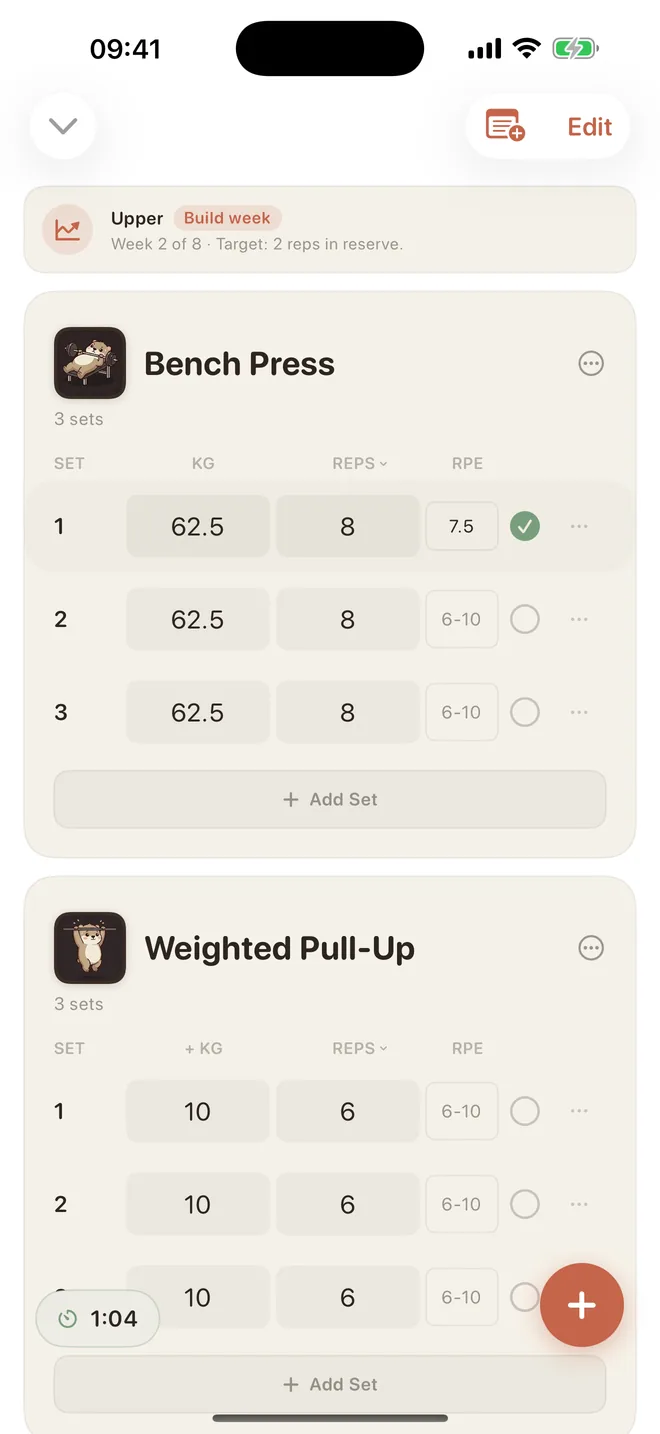
What you can record with LiftPal
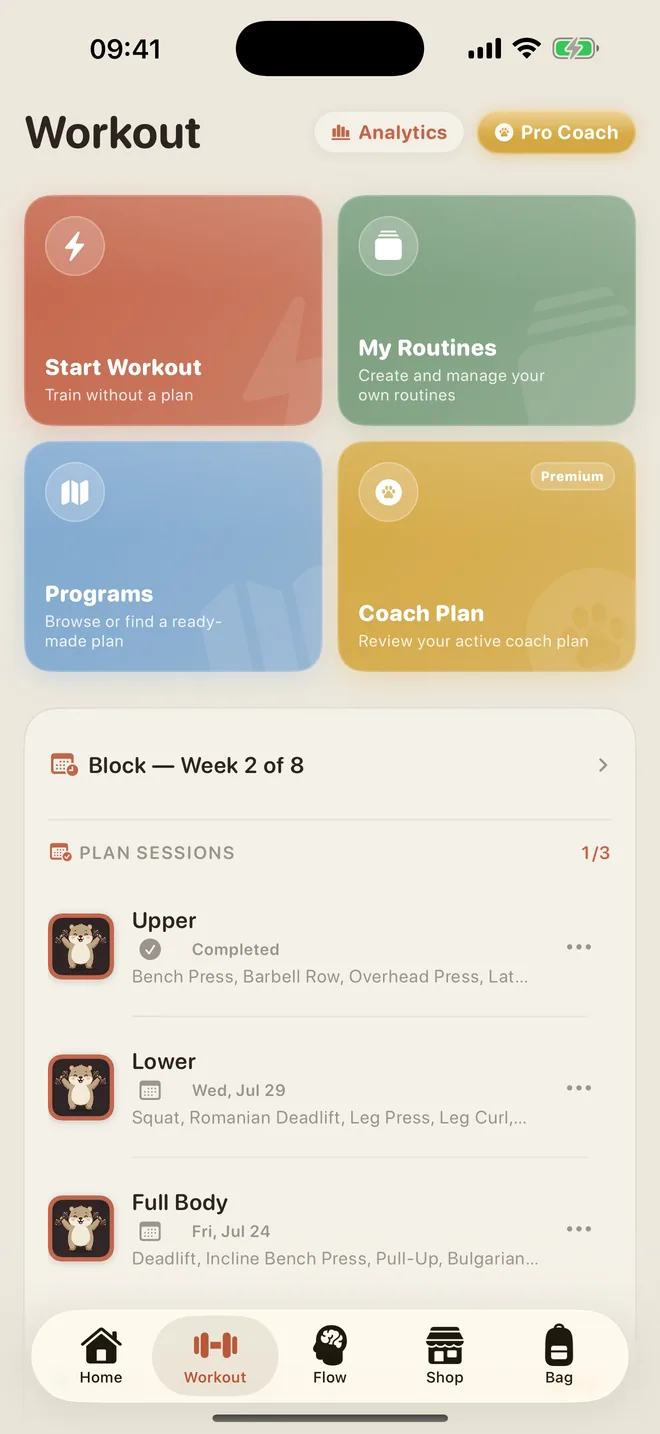
- Routines for bodyweight, rings, and skill practice
- Repetitions and hold duration matched to the exercise
- RPE context for leverage, technique, and daily readiness
- Skill milestones and four- to eight-week blocks
Calisthenics progression takes several forms
A better pull-up might mean another repetition, cleaner control, a harder variation, or more added load. The log therefore needs the exact exercise and its set history, not just a list sorted by kilograms.
Build pull, push, leg, and skill days as custom routines. Spontaneous workouts remain available when the park, rings, or time available changes the plan.
Track dynamic repetitions and static holds appropriately
Pull-ups, dips, and push-ups can use repetitions, while front-lever, L-sit, and other static variations can use seconds. The tracking type stays connected to the exact exercise.
RPE adds subjective set context. Training with added load has its own weighted calisthenics guide and history.
Skill work needs consistent exercise names
Handstands, levers, planche work, and ring skills often progress through distinct steps. Keep variations separate so an easier progression does not accidentally share a history with a harder one.
Only record measures you can judge consistently. An honest, repeatable definition of a clean repetition is more valuable than false precision.
Plan skill and strength work in one block
Premium can organize calisthenics sessions into four- to eight-week training blocks. Heavy basics, technical practice, and planned lighter periods can remain distinct without living in separate apps.
There is no universally correct block length. Training history, goal, recovery, and real life determine how much progression a plan can support. Coach suggestions do not replace qualified training or medical guidance.
No account, public feed, or advertising
LiftPal processes your calisthenics log locally on the device. There is no required profile, public performance comparison, or ad between sets. Apple Health permissions are optional and are not required for workout logging.
Quick answers
Calisthenics tracker FAQ
Can I track static holds in seconds?
Yes. Exercises can use repetitions or duration according to their tracking type.
Can I use LiftPal for skills such as handstands or planche?
You can include skill progressions and exercise variations in your routines. For a useful history, name variations consistently and keep your repetition criteria stable.
Do I need Premium for calisthenics tracking?
No. Routines, spontaneous workouts, set logging, RPE, the rest timer, and history remain free. Premium adds features such as training blocks, a mesocycle generator, and deeper coach analysis.
How does LiftPal support long-term skill and strength progression?
Consistent exercise variations, hold times or repetitions, RPE, and history create a comparable training record. Training blocks and coach analysis can organize that context for your next planning decision.
Sources
Research behind workload decisions
Progressive overload without progressing load? The effects of load or repetition progression on muscular adaptations
Plotkin et al. · PeerJ
Open original sourceProximity to Failure and Total Repetitions Performed in a Set Influences Accuracy of Intraset Repetitions in Reserve-Based Rating of Perceived Exertion
Zourdos et al. · Journal of Strength and Conditioning Research
Open original source