
Log strength training
A workout tracker that takes every set seriously
LiftPal records the details that become fuzzy after training: exercise, set, repetitions, weight, and RPE. Follow your own routine or start a spontaneous session without adopting somebody else’s programming system first.
On this page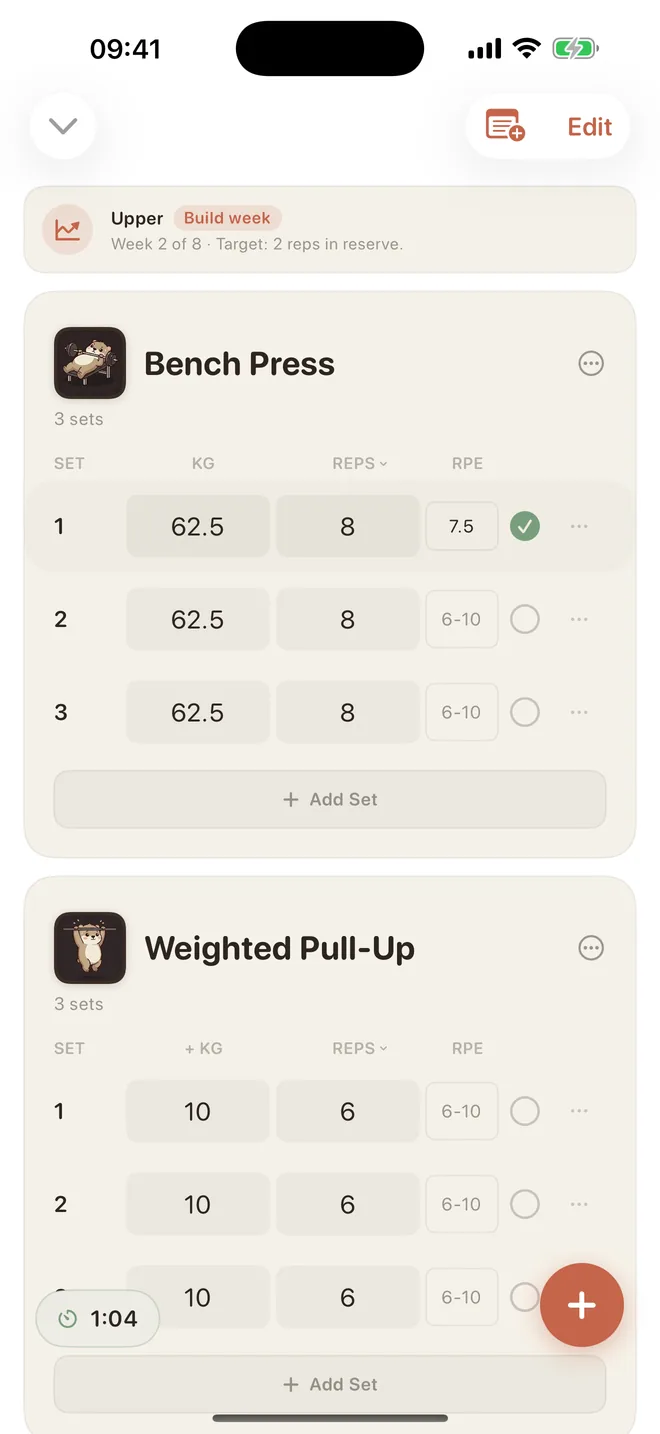
What you can record with LiftPal
- Custom routines and spontaneous workouts
- Sets, repetitions, weight, and RPE
- Rest timer, history, statistics, and personal records
- Local processing with no LiftPal account or ads
Use a routine when it helps. Train freely when it does not.
A useful workout log should not dictate how you train. LiftPal lets you create repeatable routines or begin a spontaneous workout immediately. That works for a fixed push-pull split and for a session adapted to the equipment or time available today.
Record each working set while it happens. The log stays close to the real session instead of becoming a reconstruction from memory later that evening.
More context than weight on the bar
Repetitions and weight describe what happened on paper. RPE adds how demanding the set felt. Two sessions with the same load can then remain meaningfully different after poor sleep, a technique change, or near the end of a training block.
The built-in rest timer makes recovery periods visible without turning them into rigid rules. You still decide when the next set makes sense.
Review progress in the training history
History, statistics, and personal records make previous sessions easy to retrieve. Before the next set, you can see what you actually completed last time instead of relying on a vague memory.
One record is not the entire story. Repetitions, load, and RPE together provide a more grounded view of whether a progression fits the current phase of training.
From a flexible log to a structured training block
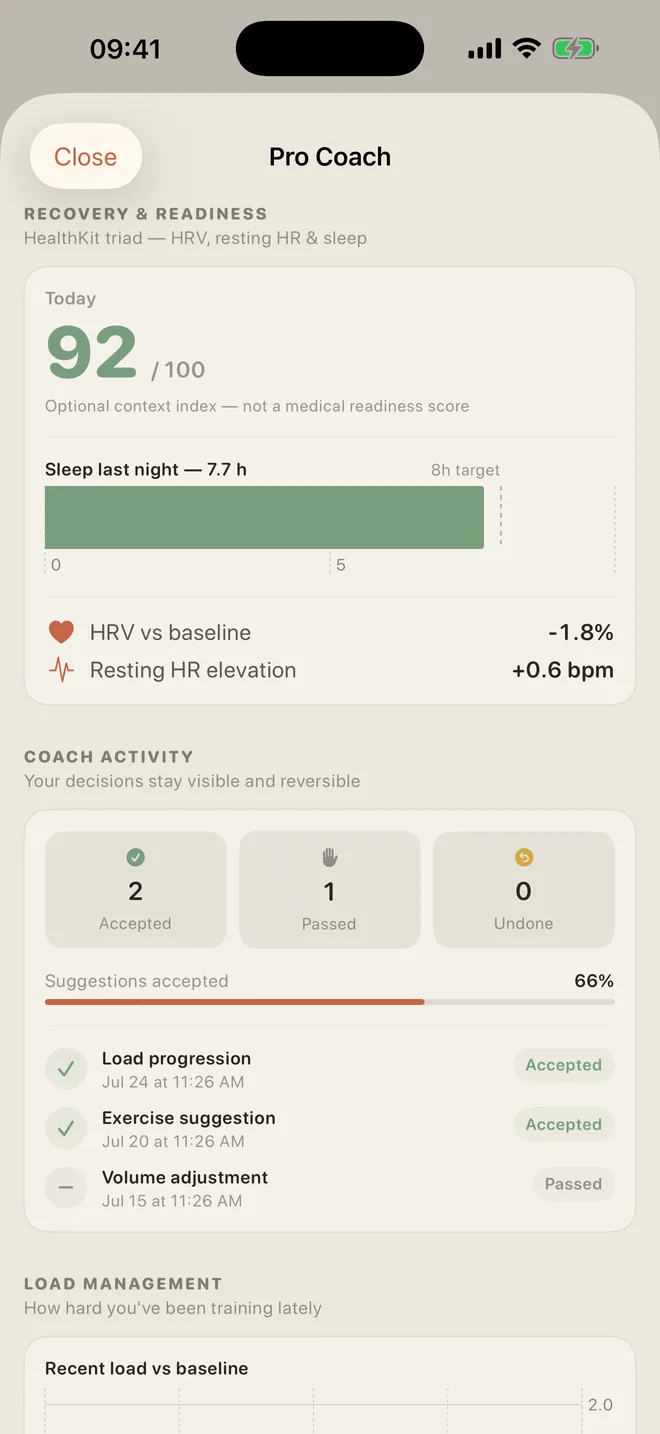
The workout log—including routines, set data, rest timer, history, statistics, and personal records—remains free. Premium adds custom training blocks, a mesocycle generator, coach suggestions, and deeper analysis when you want more structure.
Suggestions remain suggestions. LiftPal does not know your complete health context and cannot guarantee a specific performance or body-composition outcome.
Your workout stays a private training log
LiftPal requires no account or email address and shows no ads. Workout data is processed on your device. Exports you initiate, App Store purchases, and optional Apple Health permissions are separate, user-controlled processes.
Quick answers
Strength workout tracker FAQ
What can I record for each set?
You can log sets with repetitions, weight, and RPE. A rest timer, workout history, statistics, and personal records add context to those entries.
Can I start without a premade training plan?
Yes. Start a spontaneous workout or create your own routines for sessions you repeat.
Is the workout log free?
Yes. Core logging with routines, spontaneous workouts, set data, RPE, rest timer, history, statistics, and personal records remains free. Training blocks, the mesocycle generator, and additional coach analysis are Premium features.
Does LiftPal need an account or upload workouts to a cloud?
No. LiftPal requires no account, shows no ads, and processes workout data locally. Only actions you explicitly start—such as an export or optional Apple Health permission—leave that local workflow.
Sources
Research behind the planning principles
Progressive overload without progressing load? The effects of load or repetition progression on muscular adaptations
Plotkin et al. · PeerJ
Open original sourceProximity to Failure and Total Repetitions Performed in a Set Influences Accuracy of Intraset Repetitions in Reserve-Based Rating of Perceived Exertion
Zourdos et al. · Journal of Strength and Conditioning Research
Open original source