Who this plan is for
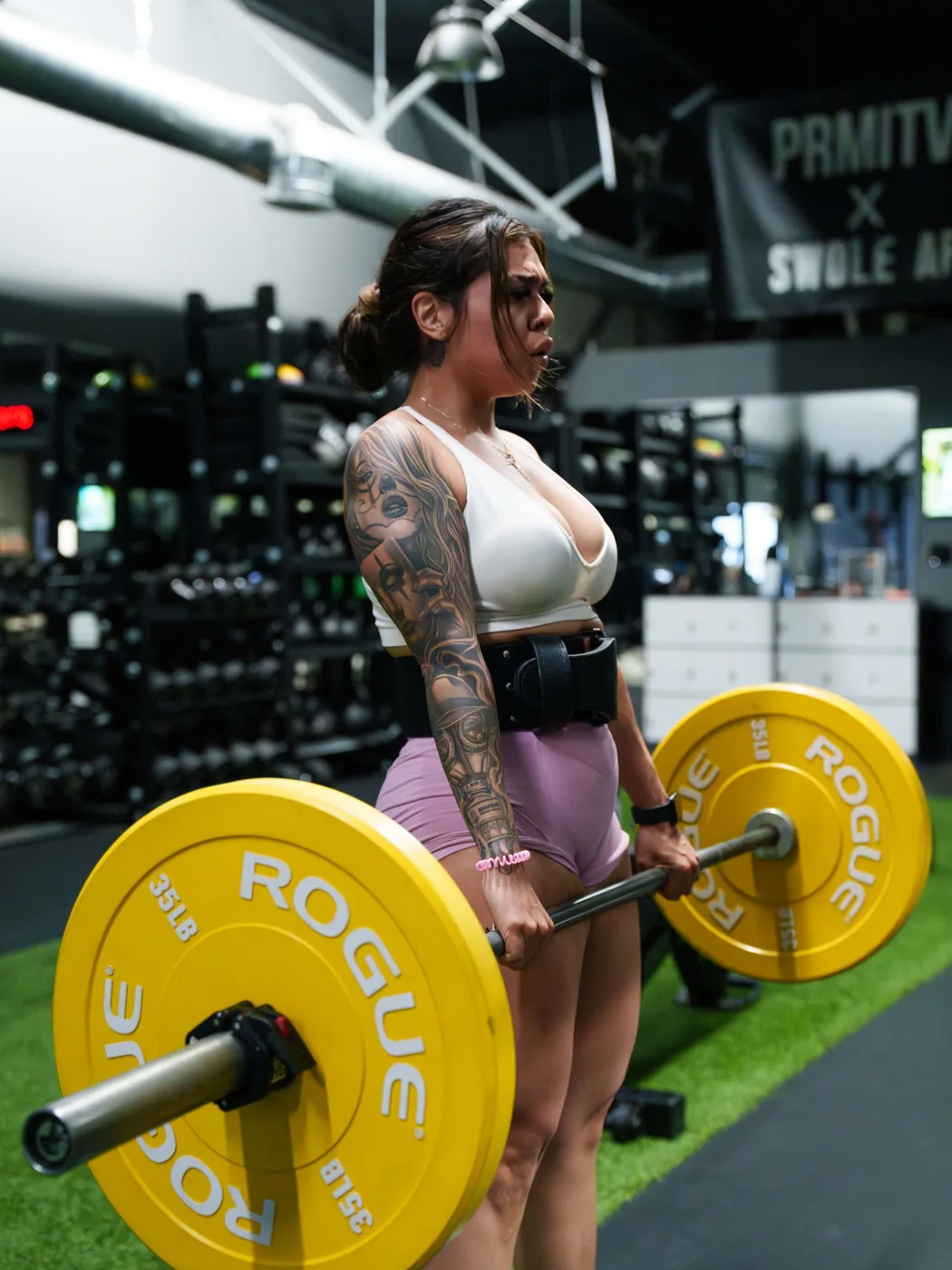
For lifters with established deadlift technique and experience judging effort. A focused main day is paired with Romanian deadlifts, avoiding three heavy pulling days. Squats and bench presses continue alongside them.
Your sessions
The tables show your working sets. Warm up each main lift with lighter sets first. Repetitions for unilateral exercises are per side. Rest three to five minutes between heavy sets, or longer when you need it.
Monday · Session A
- Sets
- 3
- Reps / duration
- 3
- Rest
- 3–5 minutes
- Sets
- 3
- Reps / duration
- 5
- Rest
- 3 minutes
- Sets
- 2
- Reps / duration
- 8–12
- Rest
- 2 minutes
Wednesday · Session B
- Sets
- 3
- Reps / duration
- 5
- Rest
- 3–5 minutes
- Sets
- 2
- Reps / duration
- 6
- Rest
- 3 minutes
- Sets
- 2
- Reps / duration
- 8–12
- Rest
- 2 minutes
Friday · Session C
- Sets
- 3
- Reps / duration
- 6
- Rest
- 3 minutes
- Sets
- 2
- Reps / duration
- 6
- Rest
- 3 minutes
- Sets
- 2
- Reps / duration
- 8–10
- Rest
- 2–3 minutes
Arrange your training week
Use Monday, Wednesday and Friday. Main deadlifts come first in the week; Romanian deadlifts come last, with squats between them. This makes it easier to see whether extra hinge work affects your next heavy session.
How to use the sessions
2 × 8–12 means eight to twelve repetitions, a rest, then a second set. For a single-sided movement, the number applies to each side. Follow the exercise order shown. For dumbbells, record the combined load here: two 10 kg dumbbells mean 20 kg. If you use just one dumbbell, record that one weight.
Rack, safeties and preparation
Set squat and bench safeties for your range of motion. Ask for an in-person demonstration and use an instructed spotter when appropriate. Maintain body tension during a paused repetition. The brief pause is a technique task, not a way to rest the weight on your body.
Move gently for a few minutes until you feel ready for the first exercises. Rehearse the first leg and pressing movements with a light load. Add another preparation set closer to your working load if needed. Finish these sets before they become tiring. A later exercise that is unfamiliar also deserves a light practice set.
Choose the right working weights
Start deliberately light on an unfamiliar exercise. For repetition-based movements, try the bottom of that exercise’s range and judge whether at least four clean reps would remain. If so, rest and try a small increase. For working sets, choose a load with two or three reps in reserve. For holds, begin with the shortest listed time and a variation that lets you breathe steadily while keeping your position.
The last repetitions can feel hard while still looking like the first. If you have to swing or cut the movement short, lower the weight. Finding the right load takes practice, especially at first. Note the seat setting and grip too, so you can set up quickly next time.
How to progress this plan
Leave roughly two repetitions in reserve on deadlifts and at least three on Romanian deadlifts. Increase the main load only when every triple stays controlled. If warm-ups repeatedly feel unusually hard, reduce the last accessory set and review recovery.
With a fixed prescription such as 2 × 5, the repetition target stays the same in every set. Choose a weight that allows you to meet it without forced repetitions. For exercises with a range, first build repetitions toward the upper limit. Only consider a small weight increase once all sets reach their target.
When an exercise stops progressing
- One weaker day is not a plateau. Compare the same exercise, similar rests and consistent technique across several sessions.
- Check whether sleep was short, rests were shorter or the previous exercise was harder. Repeat under comparable conditions first.
- After three or four comparable sessions without progress, drop the load by a small step and build reps again. Adding sets is not the first adjustment.
- If several exercises decline together and fatigue persists, reduce working sets for a week, for example from two to one. Resume with loads you can control.
When to end a set
End the set when you clearly shorten the movement, need momentum or lose control of your position. Muscular effort and faster breathing are expected. Sudden sharp pain, dizziness or unusual symptoms are reasons to stop the exercise or session. Have persistent or recurring pain assessed before continuing to load the affected movement.
Review after four weeks
The number on the bar can stay the same while the repetitions become much more confident. After four weeks, look at both the load and how you lift it. If your technique stays consistent and the weight feels easier, you have a useful starting point for the next increase. If a session keeps clashing with work or family, move the day. You do not need a completely new programme for that.
Try a tool
Read next
 Training stylesStarting powerlifting: squat, bench press and deadlift
 Learn exercisesHow to squat: stance, depth and the right variation
 Learn exercisesHow to bench press: setup, grip and variations
 Learn exercisesHow to deadlift: setup, technique and variationsPlans and progressBeginner powerlifting: a 2-day plan
Sources
- ACSM (2026): Resistance Training Prescription for Muscle Function, Hypertrophy, and Physical Performance in Healthy Adults ↗
- Zourdos et al. (2016): Repetitions-in-reserve RPE scale ↗
- International Powerlifting Federation: Technical Rules, effective 1 March 2026 ↗
sumsum / Pexels · Pexels License · Resized and converted to WebP for this website.
Giovanni Caprio / Pexels · Pexels License · Resized and converted to WebP for this website.
Andrea Piacquadio / Pexels · Pexels License · Resized and converted to WebP for this website.