
Give each workout a place in your week
Choose two training days with at least one day off between them, such as Monday and Thursday. Allow about 35 to 45 minutes per session, including preparation and moving between machines. Your first visit may take longer. Learning how the equipment works is a better use of that time than rushing through every set.
Alternate A and B. Both include lower-body work and upper-body pushing and pulling. Some exercises appear twice on purpose: there is less equipment to learn and more opportunity to compare like with like. Every exercise uses a machine, so you can follow this plan without moving into the free-weight area.
Your sessions
Use one working set in your first two sessions, then two. Add light preparation sets and leave two or three reps in reserve.
Machine workout A · about 35–45 minutes
- Sets
- 2
- Reps / duration
- 8–12
- Rest
- 2 min
- Sets
- 2
- Reps / duration
- 8–12
- Rest
- 2 min
- Sets
- 2
- Reps / duration
- 8–12
- Rest
- 2 min
- Sets
- 2
- Reps / duration
- 10–15
- Rest
- 2 min
- Sets
- 2
- Reps / duration
- 8–12
- Rest
- 2 min
Machine workout B · about 35–45 minutes
- Sets
- 2
- Reps / duration
- 8–12
- Rest
- 2 min
- Sets
- 2
- Reps / duration
- 8–12
- Rest
- 2 min
- Sets
- 2
- Reps / duration
- 8–12
- Rest
- 2 min
- Sets
- 2
- Reps / duration
- 10–15
- Rest
- 2 min
- Sets
- 2
- Reps / duration
- 10–15
- Rest
- 2 min
Save the settings before you forget them
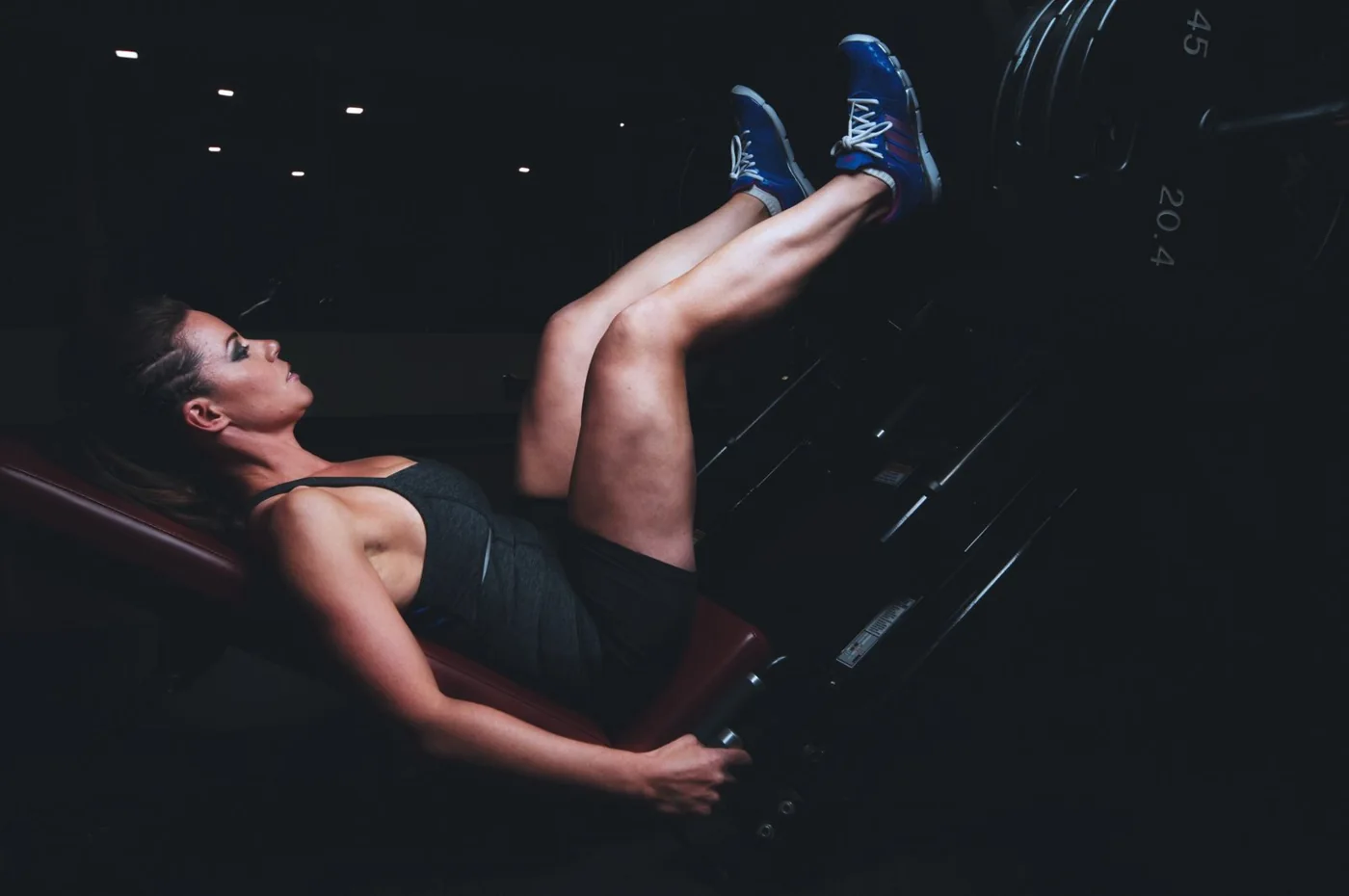
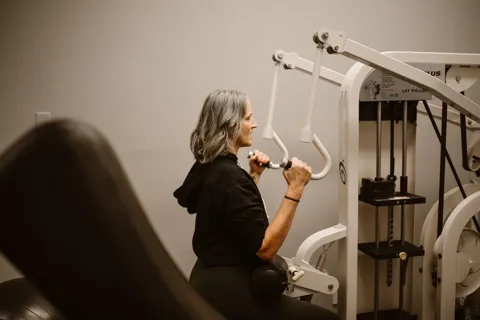
Ask a gym instructor to explain the seat, pads, movement range and safe exit for each machine. Set the chest-press handles around chest height. On the leg press, keep your back and pelvis against the pad and use a depth that allows you to maintain that position. Bring the pulldown bar in front of you without swinging your body.
Write down the machine or model and any seat numbers. “Chest press by the window, seat 4, middle grip” is useful next week. The same weight number on two different machines can feel very different because their mechanisms differ. If the setup still feels uncomfortable, ask for another suitable machine rather than forcing yourself into it.
Find a starting weight without a maximum test
Start with a very light practice set. Then choose a weight that lets you reach at least the bottom of the rep range with good control. Finish feeling that roughly two or three more repetitions would have been possible. There is no need to find the heaviest weight you can lift. An easier first session gives you room to learn.
The sets listed below are working sets, performed with your chosen training weight. Light preparation sets are additional. For the first two sessions, use one working set instead of two for every new exercise. Move up to two once the settings and movements feel familiar. Rest about two minutes between working sets, and longer if you are still breathing heavily.
Your two machine workouts
Complete the exercises in order. The row brings the handles towards your torso, while the seated leg curl bends your knees against resistance. Seated calf raises involve lifting your heels with your thighs under a pad. The shoulder press adds an overhead pushing movement. Ask for a demonstration of these settings too.
If a machine is occupied, move to the next exercise and return later. When you substitute another machine, choose one with a similar purpose and find its working weight afresh. A different chest press may need a different number on the stack. Record the change so it does not look like an unexplained drop in performance.
Know when to add weight
For an 8-to-12 rep range, your chest-press sets might progress from 10 and 9 to 11 and 10, then 12 and 12. When both sets reach the top with controlled movement and about two reps still available, increase by the smallest available step next time. Your reps may then drop back to 8 or 9.
If the next weight-stack jump is too large, stay where you are for now. Better control and more repetitions within the range are useful progress too. You do not need to add extra sets every visit. Give the two workouts four to six weeks so you can learn how they fit your schedule and how your performance changes.
Make the plan easy to continue
Missed a day? Continue the sequence at your next suitable visit: A is followed by B, even if a new week has started. Do not double the sets to make up for it. With mild, familiar soreness, start gently and see whether you can move normally. Significant pain or altered movement is a reason to stop the affected exercise.
If five machines feel like too much at first, keep the one-set version a little longer. Finding the same exercises regularly and learning to perform them well is a useful first step. Once both sessions feel manageable, you can deliberately add volume or choose another plan. Moving to free weights is an option, not a requirement for progressing.
Pick up where you left off in LiftPal
Save A and B as routines in LiftPal, then record the weights and reps you actually complete. Keep equipment settings in your notes. Next time you will know, for example, that your last two sets on that particular chest press were 10 and 9 reps.
The exercise order and set counts are a practical starting programme. ACSM guidance supports regular resistance training for the major muscle groups; it does not prescribe this exact sequence. Over the next few weeks, look for workouts you can complete, increasingly confident movement and gradually improving performance.
Try a tool
Read next
Sources
- ACSM (2026): Resistance Training Prescription for Muscle Function, Hypertrophy, and Physical Performance in Healthy Adults ↗
- Hernández-Belmonte et al. (2023): Free-weight and machine-based resistance training ↗
Scott Webb / Pexels · Pexels License · Resized and converted to WebP for this website.
RDNE Stock project / Pexels · Pexels License · Resized and converted to WebP for this website.
@marcuschanmedia | IG / Pexels · Pexels License · Resized and converted to WebP for this website.