
Building LiftPal · Goal Tracker
I wanted a goal tracker that takes partial progress seriously
My goals do not all work the same way. Stretching for ten minutes is simple. Studying for forty hours is different. A normal task list puts both things in the same box. That was the problem I wanted to solve differently in LiftPal.
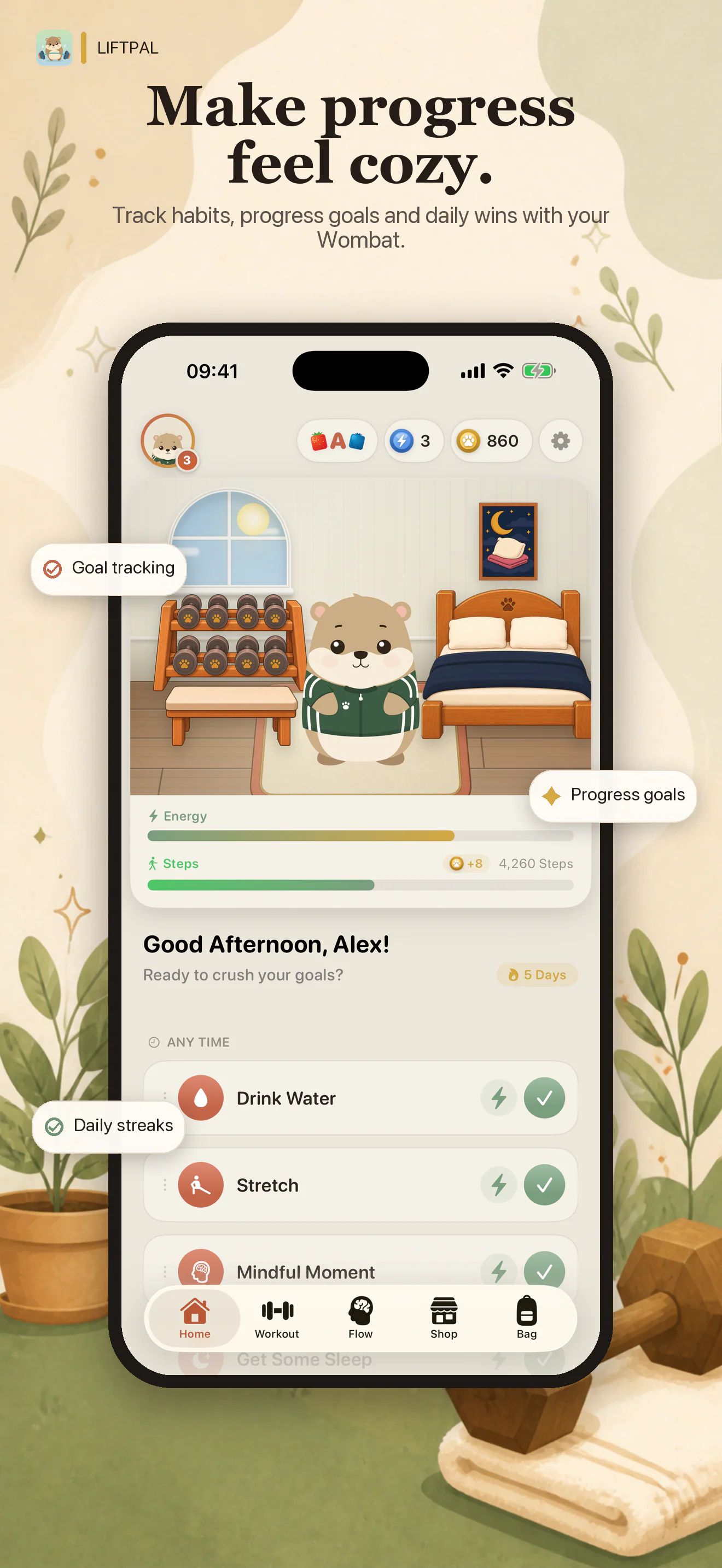
Habits and progress goals need different rules
Stretching for ten minutes is usually clear. I either did it or I did not. With forty hours of study, every single hour matters even when the finish line is still far away. One checkmark felt too blunt for that.
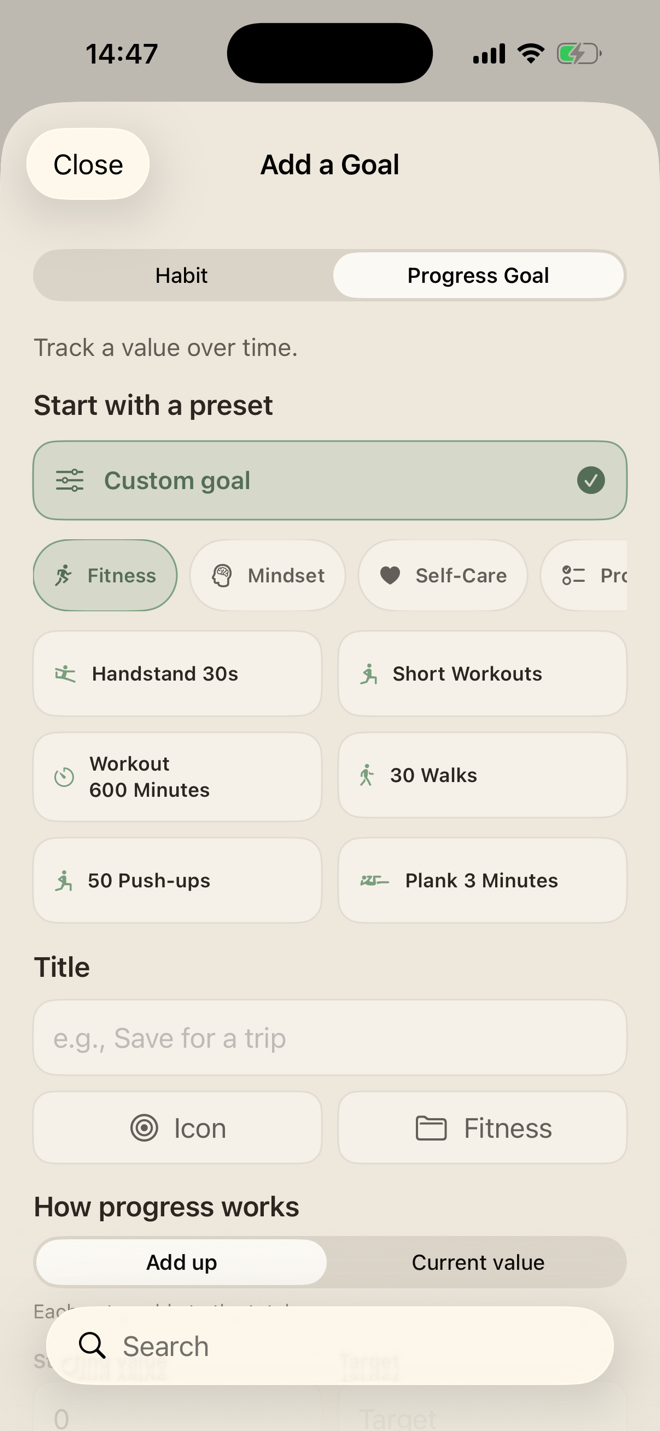
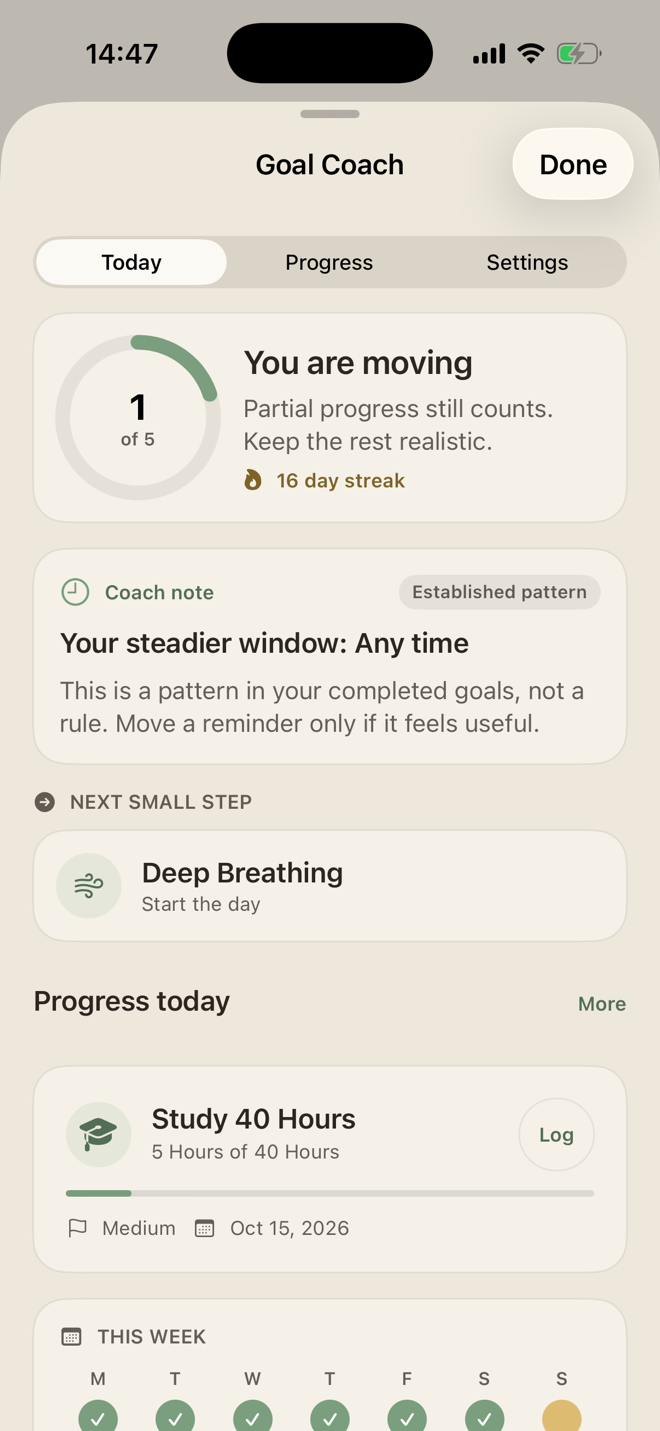
That is why LiftPal separates habits from progress goals. A habit appears on a planned day or within a time window. A progress goal grows through multiple entries. In the example, five of forty study hours are logged. The goal is not finished, but the progress is real and remains visible.
A new progress entry can be added to the existing total. It can also set a new current total. That makes the same tool useful for accumulated hours, repetitions, minutes, weight, or another measurable value without pretending they all work identically.
I can start quickly without being trapped by a template
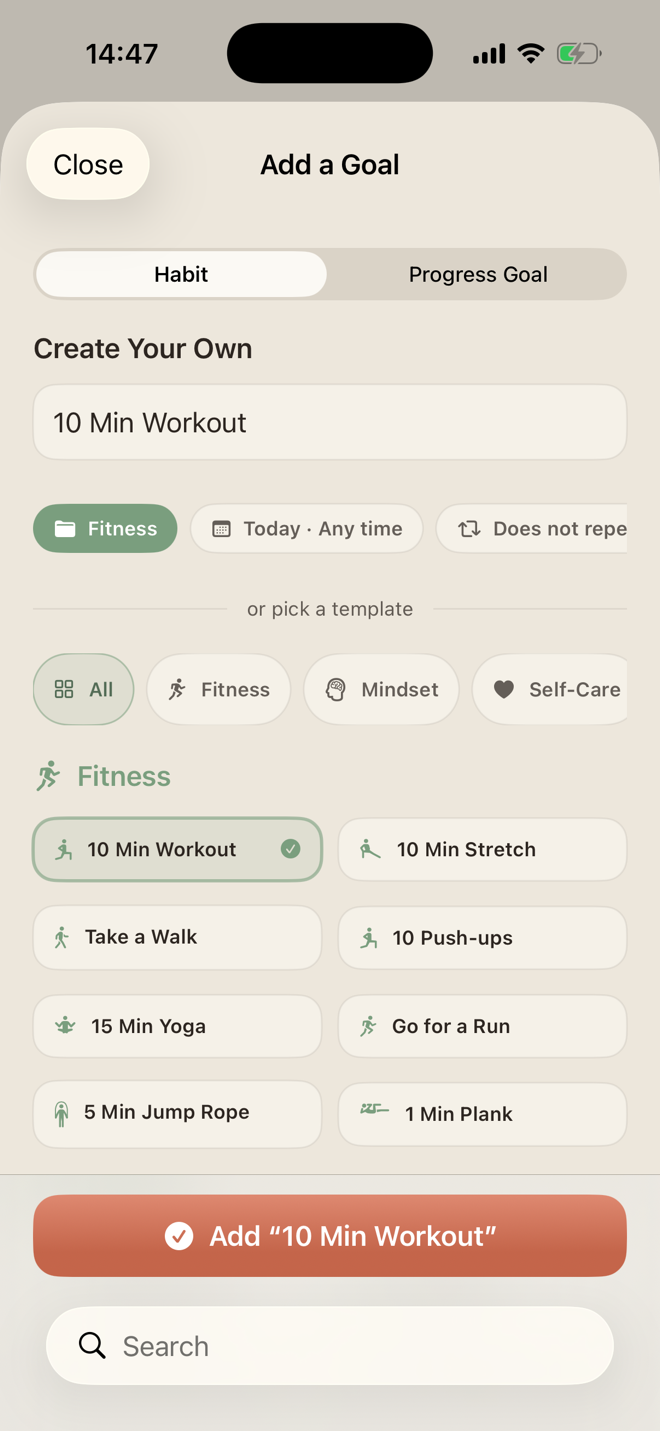
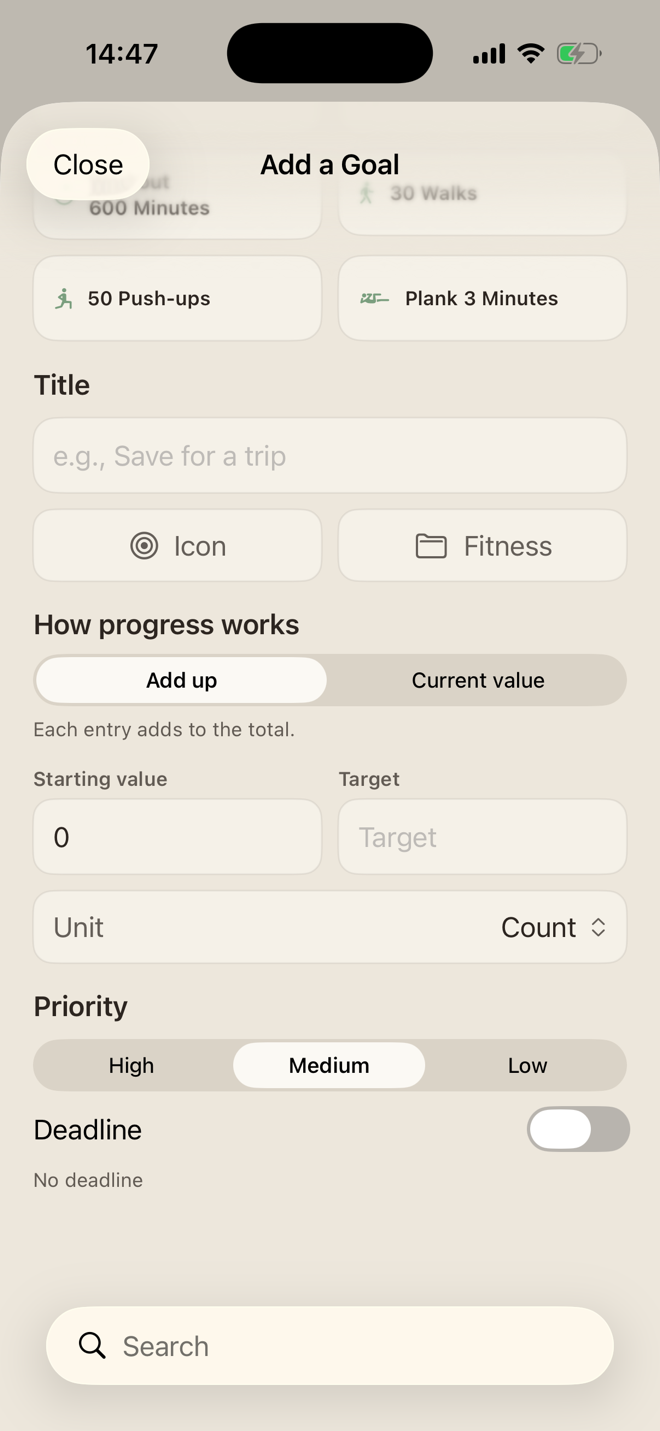
Sometimes I just want to create a goal and get on with my day. LiftPal includes templates for a short workout, stretching, yoga, running, jumping rope, or holding a plank. A template is only the beginning.
I can change the title, icon, category, time window, and repeat schedule. I can also start with an empty custom goal. That mattered to me because a goal tracker becomes tiring when one small intention requires its own setup project.
- Habits for planned or recurring actions
- Progress goals for values that grow across entries
- Templates for a quick start and custom goals for awkward cases
- Starting value, target, unit, priority, and optional deadline
The home screen should show what actually matters today
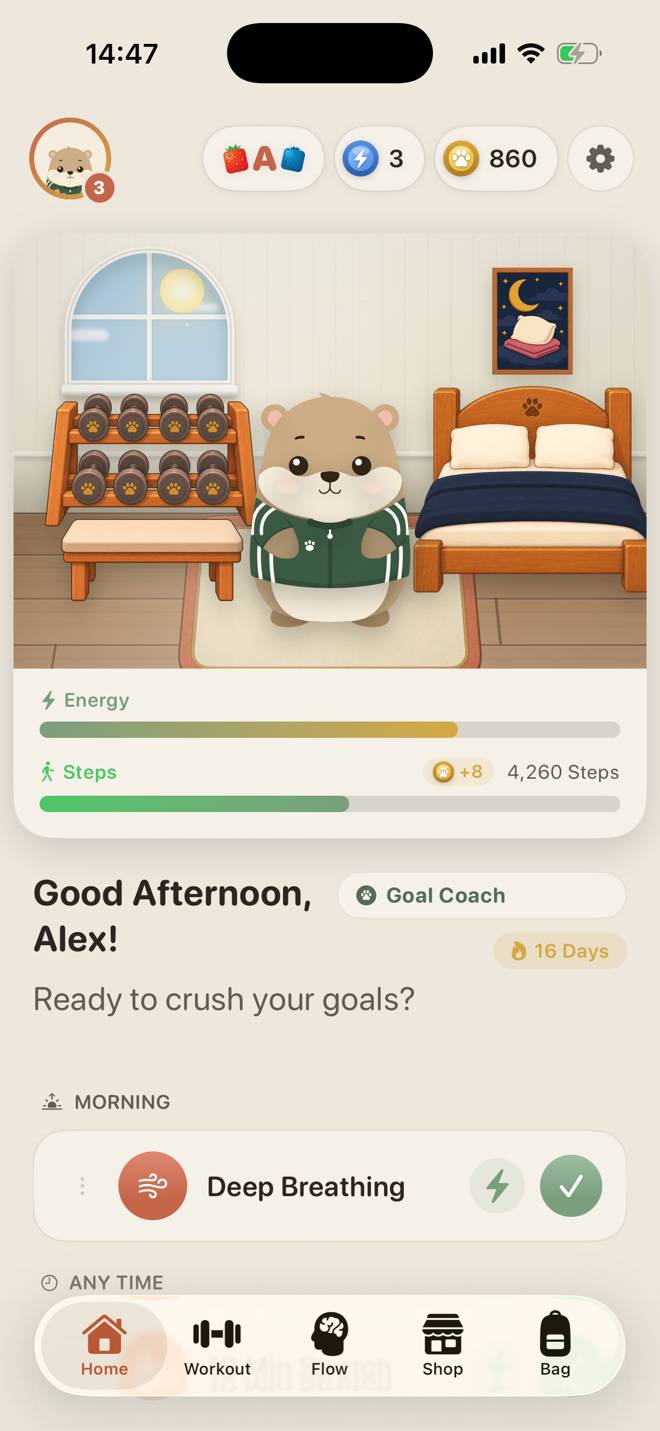
The home screen groups habits by their time window. A goal can appear in the morning or remain available at any time. Completed items can be collapsed so the screen does not turn into a wall of checkmarks.
Progress goals sit in their own section. I can see the current value, the target, and the next small entry. I wanted daily goals and long-term goals in one place without acting as if they were the same thing.
A streak can help, but it should not become guilt
Streaks motivate me sometimes. On other days, they turn one missed day into far more drama than it deserves. That is why the streak display in LiftPal is optional.
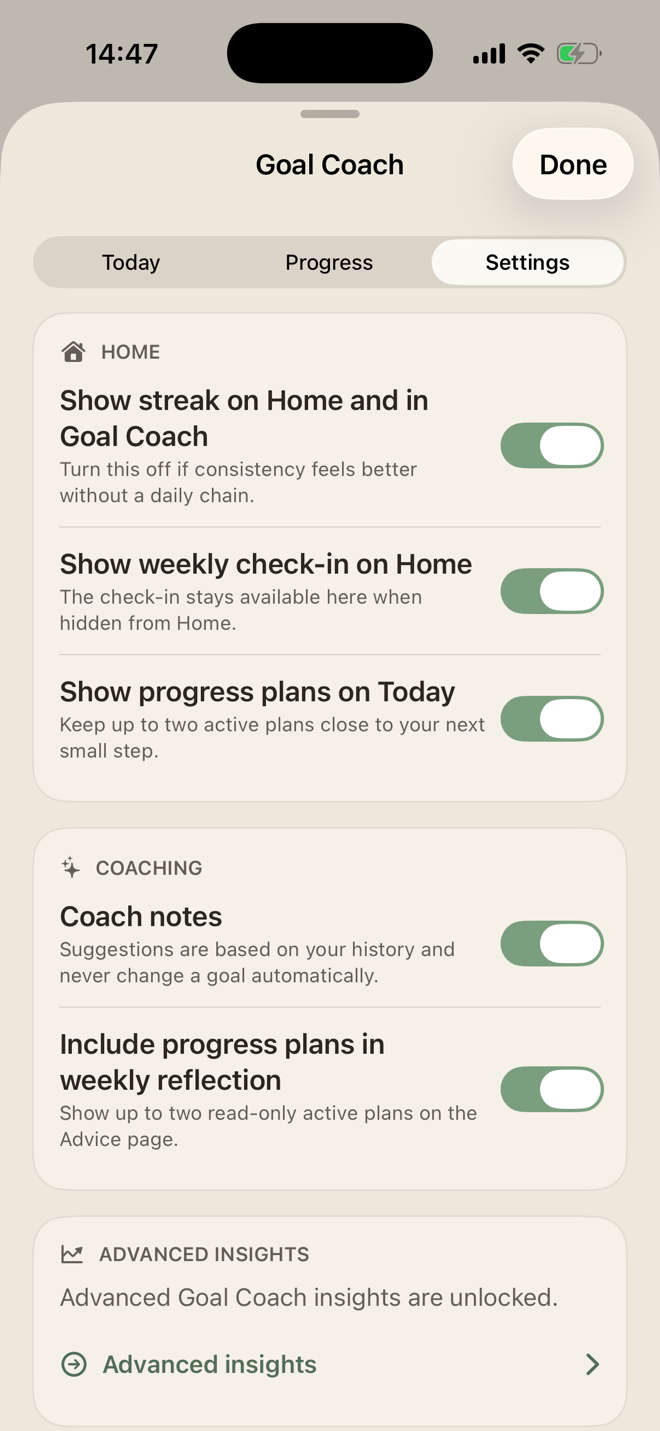
It can appear on the home screen and inside Goal Coach, but it does not have to. If consistency feels better without a daily chain, I can turn it off. The point is not to make every day look perfect. The point is to find a sensible next step again.
Goal Coach should observe, not take control
Goal Coach looks at the history of completed goals and surfaces patterns. In the example, it notices that goals were completed more consistently in a flexible time window. It describes that observation as a pattern, not a rule.
Partial progress counts too. If only one of five goals is complete today, LiftPal does not reduce the whole day to a red failure state. Goal Coach suggests keeping the rest realistic and brings the next small step forward.
Coach notes use the history. They never change a goal automatically. I still decide whether a reminder, time window, or goal should be adjusted.
The weekly check-in asks about more than numbers
A goal counter can tell me how many boxes I checked. It cannot tell me whether the week felt easy, exhausting, or completely chaotic.
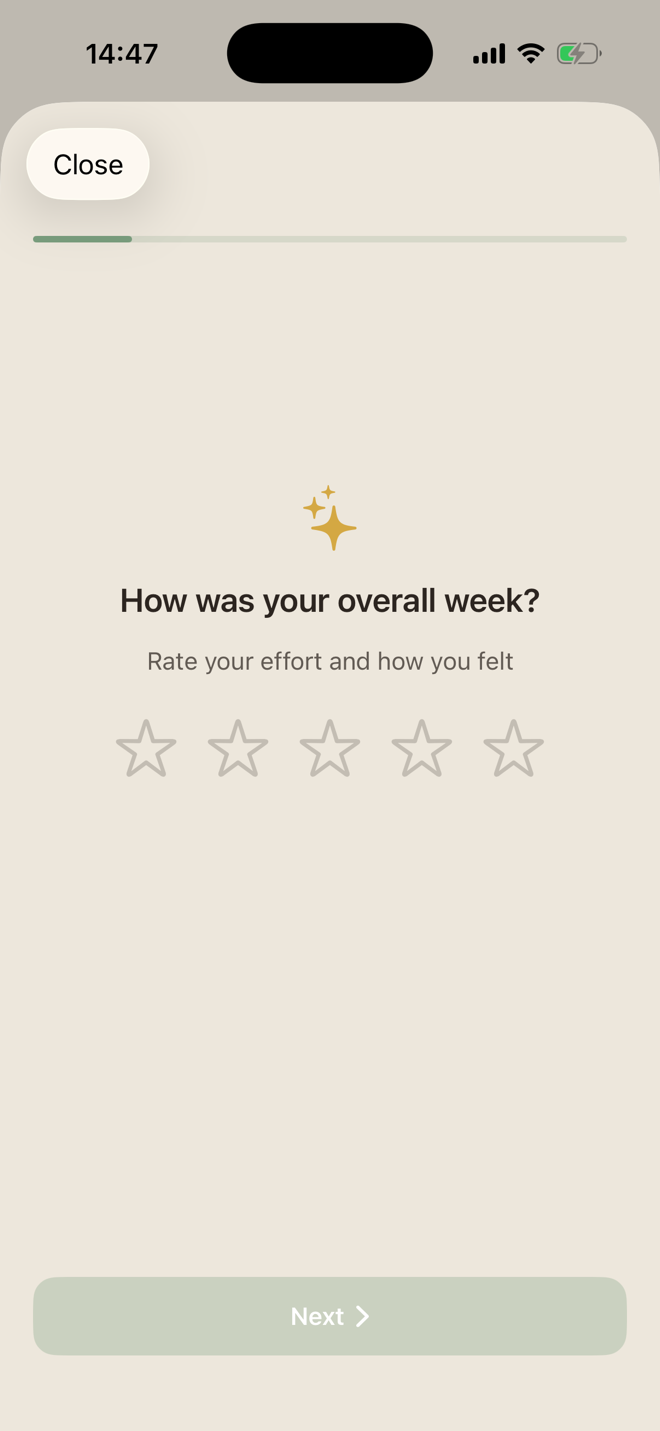
The weekly check-in asks for my own assessment. How was the week overall? How much effort did it take, and how did I feel? This short reflection is not a test. It is a way to describe the week a little more honestly.
The check-in can also be hidden from the home screen and opened later inside Goal Coach.
The goal tracker stays personal without making decisions for me
I did not want LiftPal to become a cold productivity dashboard. The goal tracker lives in the same warm space as the Wombat, its room, workouts, and small daily routines.
The Wombat is part of the experience, but it does not make decisions for me or turn every unfinished goal into a minigame. That is the balance I like: something personal that still works as a tool I can understand quickly and close again.
I am especially interested in goals that do not fit neatly into a normal task list. Which unit is missing? What repeat schedule do you need? When does a streak help, and when does it become pressure? Send those edge cases to support@liftpal.app.
Goal Coach suggestions are planning aids. They are not medical or therapeutic advice.
LiftPal · App
How the LiftPal Goal Tracker looks in practice
Quick answers
Frequently asked questions about the LiftPal goal tracker
What can I track with the LiftPal goal tracker?
You can create recurring habits and measurable progress goals. Examples include short routines, fitness goals, study hours, repetitions, minutes, and custom values.
What is the difference between a habit and a progress goal?
A habit is completed on a planned day or within a time window. A progress goal grows through multiple entries until it reaches a target value.
Can I create a completely custom goal?
Yes. You can choose the title, icon, category, time window, repeat schedule, and other settings. Templates are only quick starting points.
Can LiftPal add values and store a current value?
Yes. A progress goal can add each entry to the existing total or treat an entry as the new current value.
Do I have to use a streak?
No. The streak display can be turned off in settings. The goal tracker continues to work without a daily chain.
Does Goal Coach change my goals automatically?
No. Coach notes use your history to surface patterns, but they never change a goal automatically.
What happens during the weekly check-in?
You rate the week and reflect on the effort it required and how you felt. The check-in can appear on the home screen or remain available inside Goal Coach.
Is the goal tracker only for fitness goals?
No. Templates include areas such as fitness, mindset, and self-care. Custom goals and categories support many other uses.
Sources
Product details and privacy
This personal development note describes the current visible Goal Tracker and Goal Coach features. The App Store listing, LiftPal product documentation, and privacy policy support product status and data-processing details. The features do not guarantee behavior change and do not replace professional advice.
LiftPal - Body & Mind
LiftPal · Apple App Store
Open original sourceLiftPal features for goals, habits, and progress plans
LiftPal · LiftPal product documentation
Open original sourcePrivacy at LiftPal
LiftPal · LiftPal privacy policy
Open original source